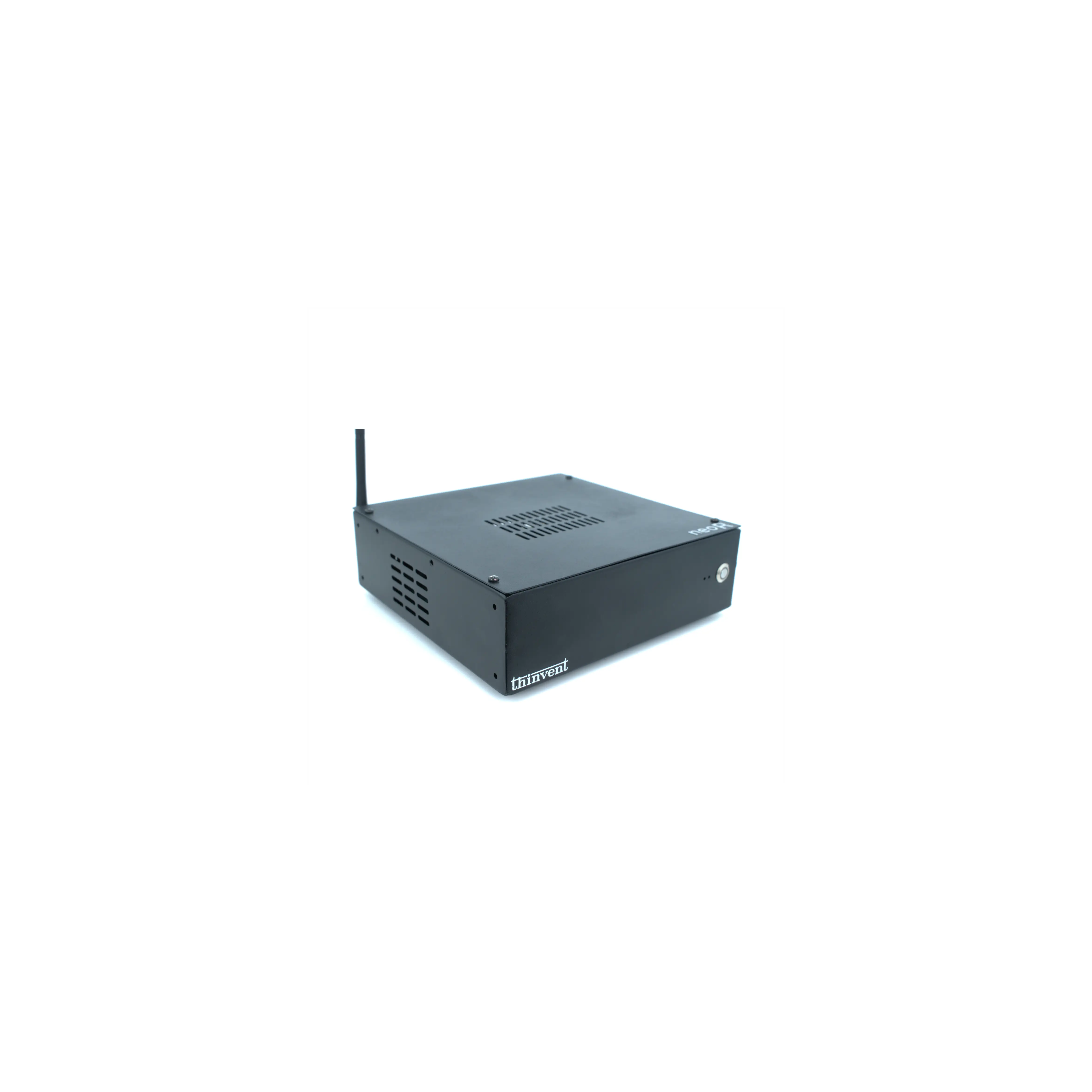
Compact Mini PCs are powerful, space-saving computing solutions designed to deliver desktop-level performance in a fraction of the footprint. These systems are engineered for reliability and efficiency, making them ideal for modern business and industrial environments where space, power consumption, and thermal management are critical concerns. They typically feature low-power processors, fanless cooling for silent operation, and versatile connectivity options to support a wide range of peripherals and displays.
Key Specifications and Technical Details
A robust compact Mini PC, such as those powered by the Intel® N100 processor, offers a balanced set of features for demanding applications. Core specifications often include:
-
Processor: Modern, efficient CPUs like the Intel N100 (4 cores, up to 3.4 GHz, 6MB cache) from the 12th Generation.
-
Memory: Ample RAM, such as 16GB DDR4, for smooth multitasking.
-
Storage: Fast solid-state drives (SSD) like 128GB for quick boot times and application loading.
-
Power: Low-voltage operation (e.g., 12V DC) for energy efficiency and compatibility with industrial power systems.
-
Design: Compact, ruggedized chassis often with VESA mount capability and fanless cooling for dust-free, silent operation in harsh environments.
-
OS Flexibility: Available with various operating systems including Windows 11 IoT/Pro, DOS, or Linux distributions (Ubuntu, Thinux™) for specialized software compatibility.
Use Cases and Applications
These versatile computers are deployed across numerous sectors:
-
Digital Signage & Kiosks: Driving high-definition displays in retail, hospitality, and public information points.
-
Industrial Automation: Serving as a control unit for PLCs, HMIs, and monitoring systems on the factory floor.
-
Thin Client & VDI: Acting as endpoints for virtual desktop infrastructure, centralizing IT management and security.
-
Edge Computing: Processing data locally in IoT networks for retail analytics, smart cities, and transportation.
-
Office Productivity: A clutter-free desktop solution for general office work, conferencing, and call centers.
Comparison: Compact Mini PC vs. Traditional Desktop
| Feature | Compact Mini PC | Traditional Desktop Tower |
|---|---|---|
| Form Factor | Extremely small, mountable behind displays | Large, requires dedicated desk/floor space |
| Cooling | Often fanless (silent, no moving parts) | Active fans (can be noisy, dust intake) |
| Power Usage | Very low, energy-efficient (e.g., 12V DC) | Higher, uses standard AC power |
| Deployment | Flexible (desk, wall, rack), ideal for space-constrained areas | Limited to desk or floor placement |
| Ruggedness | Designed for 24/7 operation in varied temperatures | Typically for controlled office environments |
| Typical Use | Business, industrial, embedded, digital signage | General-purpose computing, gaming, workstations |
Thinvent Compact Mini PCs for Business and Industry
Thinvent offers a range of high-performance Compact Mini PCs built for reliability in commercial and industrial settings. Our Thinvent® Aero Mini PC series exemplifies this commitment, featuring the efficient Intel® N100 processor, 16GB RAM, and SSD storage. Key advantages include:
-
Robust Build: Designed for continuous operation with fanless, dust-proof construction.
-
Software Choice: Available with Windows 11 IoT/Pro for managed environments, or lightweight Linux OS (Ubuntu, Thinux™) for embedded and kiosk applications.
-
Deployment Ready: Options include bundles with a Thinvent® Keyboard and Mouse set for a complete out-of-the-box solution.
-
Global Support: Engineered to meet the demands of a worldwide customer base across diverse sectors from digital signage to factory automation.