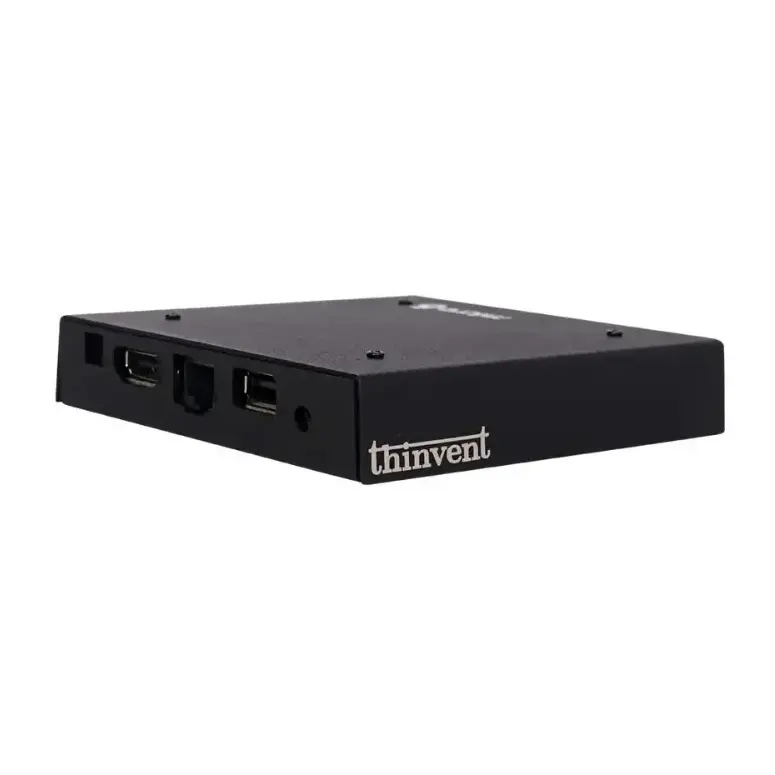
What Are Compact Mini Servers for Edge Computing?
Compact mini servers are small form-factor computing devices designed to bring server-grade processing, storage, and networking capabilities to the network edge. Unlike traditional bulky servers, these systems are optimized for space-constrained environments such as retail stores, factory floors, remote offices, and IoT gateways. They typically feature low-power processors, fanless cooling for silent operation, and ruggedized designs to withstand harsh conditions. Their primary role is to process data locally near the source, reducing latency and bandwidth usage compared to sending all data to a centralized cloud or data center.
Key Specifications and Technical Details
For reliable edge computing, a mini server should balance performance, power efficiency, and durability. Key specifications include:
-
Processor: Intel® Core™ i3/i5 or N-series processors (e.g., N100, i3-1215U, i5-1240P) offer up to 12 cores and 4.4 GHz boost, handling moderate workloads like data aggregation, local AI inference, or virtualization. ARM Cortex-A processors are suitable for ultra-low-power, single-purpose tasks.
-
Memory: 8GB to 32GB DDR4 RAM supports multiple containerized applications or virtual machines.
-
Storage: 128GB to 512GB SSD ensures fast boot times and reliable data caching.
-
Connectivity: Dual Ethernet ports (1GbE) are common for network redundancy or linking edge devices. WiFi and USB-C enable flexible deployment.
-
Cooling: Fanless designs (often aluminum chassis) ensure silent operation and longevity in dusty or hot environments.
-
Operating System: Linux-based systems (Ubuntu, Thinux™) are preferred for stability and low overhead, while Windows 11 IoT provides enterprise integration.
Use Cases and Applications
Compact mini servers excel in diverse edge computing scenarios:
-
Industrial IoT: Collect sensor data from factory equipment, perform real-time analytics, and trigger maintenance alerts without cloud dependency.
-
Retail & Hospitality: Run point-of-sale systems, digital signage, and local inventory management with minimal footprint.
-
Remote Offices: Serve as a local file server, DNS/DHCP host, or VPN gateway for branch locations.
-
Smart Buildings: Manage security cameras, access control, and HVAC systems with low-latency processing.
-
Telecommunications: Power 5G edge nodes or network function virtualization (NFV) at cell sites.
Comparison of Typical Mini Server Configurations
| Feature | Entry-Level (e.g., N100) | Mid-Range (e.g., i3-1215U) | High-Performance (e.g., i5-1240P) |
|---|---|---|---|
| Cores/Threads | 4/4 | 6/8 | 12/16 |
| Max Clock Speed | 3.4 GHz | 4.4 GHz | 4.4 GHz |
| RAM | 4-8 GB | 8-16 GB | 16-32 GB |
| Storage | 128-256 GB SSD | 256-512 GB SSD | 512 GB+ SSD |
| Power Consumption | ~6W TDP | ~15W TDP | ~28W TDP |
| Best For | Light IoT, sensors | Multi-service edge | Virtualization, AI |
Thinvent's Range of Compact Mini Servers
Thinvent offers a comprehensive portfolio of mini servers tailored for edge computing. Our Aero Mini PC series (powered by Intel Core i3/i5) provides the performance needed for demanding workloads, while the Treo and Industrial PC lines (featuring Intel N100) deliver ultra-reliable, low-power operation. For specialized applications, the Micro series with ARM Cortex processors offers extreme efficiency. All models feature fanless cooling, wide voltage support, and multiple mounting options, ensuring seamless integration into any edge environment. Whether you need a silent home server or a rugged industrial gateway, Thinvent has a compact mini server solution.