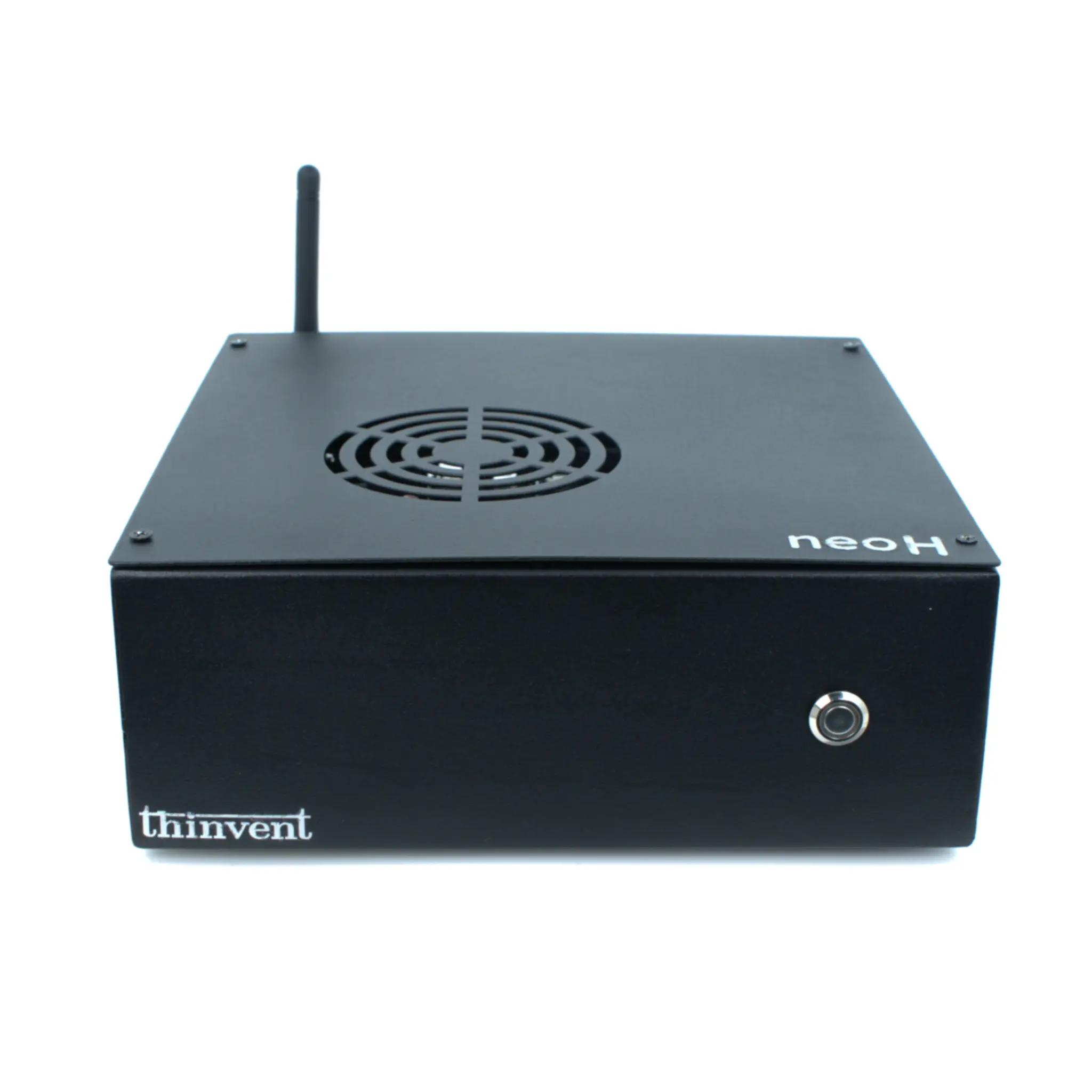
A workstation is a high-performance computer designed for technical or scientific applications, demanding more power and stability than a standard personal computer. While traditionally associated with large tower cases, modern compact fanless workstations provide the same professional-grade reliability and processing power in a significantly smaller, silent, and rugged form factor. These systems are engineered for intensive tasks like CAD/CAM, 3D modeling, data analysis, software development, and media production, offering a perfect balance of performance, durability, and space efficiency.
Key Specifications and Technical Details
True workstations are defined by their robust specifications that ensure stability under sustained load. Key components include:
-
High-Performance Processors: Multi-core CPUs from Intel's Core i5, i7, or i9 series (e.g., 12th, 13th, or 14th Generation) are essential for parallel processing.
-
Ample Memory: 16GB of RAM is a practical minimum, with 32GB or 64GB being standard for handling large datasets and complex models.
-
Fast, Reliable Storage: NVMe SSDs (512GB or 1TB+) provide the high-speed data access required for professional applications.
-
Robust Connectivity: Multiple high-speed ports like USB 3.2 Gen 2, USB-C, and dual HDMI/DisplayPort outputs are crucial for connecting peripherals and multi-monitor setups.
-
Industrial-Grade Design: Fanless cooling with robust metal chassis ensures silent, dust-proof operation and longevity in demanding 24/7 environments.
Use Cases and Applications
Compact workstations excel in environments where space, noise, and reliability are critical.
-
Engineering & Design: Running CAD (AutoCAD, SolidWorks), CAM, and Finite Element Analysis (FEA) software.
-
Digital Content Creation: Video editing, 3D animation, and graphic design where rendering performance is key.
-
Scientific & Financial Computing: Data analysis, simulation, and algorithmic trading platforms.
-
Software Development: Compiling code, running virtual machines, and testing in integrated development environments (IDEs).
-
Industrial Control Rooms: As a silent, reliable node for monitoring and control systems.
Comparison: Mini PC vs. Workstation Mini PC
| Feature | Standard Mini PC | Workstation-Grade Mini PC |
|---|---|---|
| Primary Use | General computing, office tasks, media playback | Professional applications, heavy computational loads |
| Processor | Entry-level (Celeron, Intel N-series) | High-performance (Core i5/i7/i7, higher TDP) |
| Cooling | Often fanless or small fan | Advanced fanless heatsink for sustained performance |
| Memory & Storage | Moderate (8-16GB RAM, 256GB SSD) | High (16-64GB RAM, 512GB-2TB NVMe SSD) |
| Durability | Standard commercial | Industrial-grade, wider operating temperature range |
| I/O & Expandability | Basic connectivity | Extensive ports, potential for additional storage/GPUs |
Thinvent's Compact Workstation Solutions
Thinvent offers a range of industrial-grade compact computers that meet the rigorous demands of a workstation. Our fanless mini PCs are built with high-performance Intel processors, support ample DDR4/DDR5 memory and fast NVMe storage, and feature a rugged aluminum chassis for superior heat dissipation. Designed for 24/7 operation in challenging environments, Thinvent systems provide the stable, powerful, and silent computing platform required for professional engineering, design, and analytical tasks worldwide.