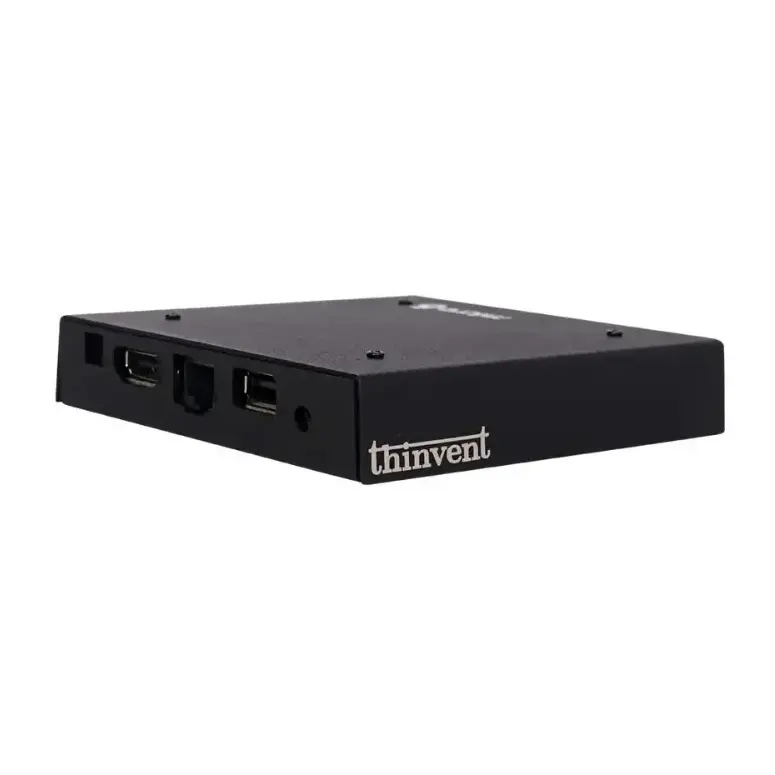
What Are Nano Computers?
Nano computers, also known as ultra-compact PCs or mini PCs, are complete computing systems engineered into an exceptionally small form factor, often not much larger than a smartphone. They are designed to deliver reliable computing power with minimal physical footprint, low power consumption, and fanless, silent operation. These devices are not toys or hobbyist kits; they are robust industrial-grade computers built for 24/7 operation in demanding environments where space, heat, and reliability are critical constraints.
Key Specifications and Technical Details
A typical industrial nano computer features a low-power, high-efficiency processor (like Intel's N-series), integrated graphics, and soldered memory for enhanced durability. They operate without moving parts, using passive heat sinks for fanless cooling, which eliminates dust ingress and mechanical failure points. Standard connectivity includes multiple USB ports, HDMI/DisplayPort outputs, and Gigabit Ethernet. Storage is typically via M.2 SSDs or eMMC modules. Their power draw is remarkably low, often under 15W, allowing them to be powered via a simple DC adapter or Power-over-Ethernet (PoE) in some models.
Use Cases and Applications
The compact and rugged nature of nano computers makes them ideal for embedded solutions and space-constrained installations. Common applications include:
-
Digital Signage & Kiosks: Powering interactive displays and information points in retail, hospitality, and public transport.
-
Industrial Automation: Acting as a controller for PLCs, HMIs, or as a gateway for IoT sensor networks on the factory floor.
-
Thin Client & VDI: Providing a secure, centralized desktop experience for office, education, and healthcare environments.
-
Edge Computing: Processing data locally in smart cities, transportation systems, and retail analytics to reduce latency and bandwidth.
-
Home & Office: Serving as a discreet media center, compact workstation, or network-attached storage (NAS) server.
Comparison: Nano PC vs. Traditional Desktop
| Feature | Industrial Nano Computer | Traditional Desktop Tower |
|---|---|---|
| Form Factor | Ultra-compact (e.g., 120mm x 120mm) | Large, requires significant space |
| Cooling | Fanless, silent, dust-proof | Active fans, can be noisy, draws in dust |
| Power Consumption | Very low (10-25W) | High (65W to several hundred watts) |
| Deployment | Wall-mountable, VESA mountable, hidden installation | Desk or floor placement only |
| Ruggedness | Designed for wide temperature ranges, shock/vibration resistant | Consumer-grade, for controlled environments |
| Typical Use | Embedded, industrial, dedicated applications | General-purpose computing, gaming, high-performance workstations |
Thinvent Nano Computer Solutions
Thinvent specializes in manufacturing robust, fanless nano computers engineered for professional and industrial use. Our Aero series, for example, leverages efficient Intel processors like the N100 to deliver reliable performance in a palm-sized chassis. These systems are built with industrial-grade components for long-term stability and come configured with a range of operating systems, including Windows, Linux, and Thinvent's own embedded Thinux™ platform, to suit diverse application needs. Explore our range to find the perfect ultra-compact computing solution for your project.