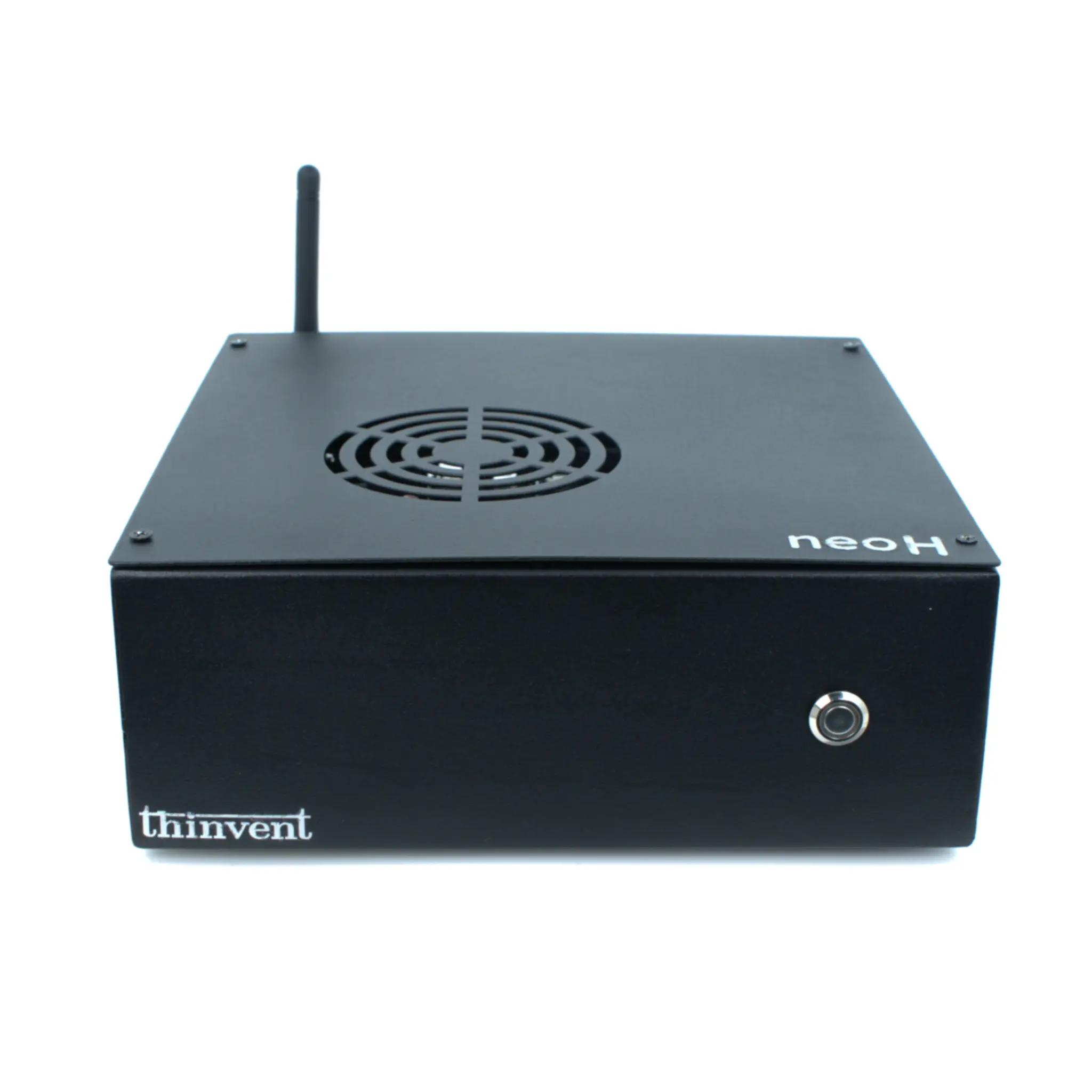
A NAS barebone is a compact, pre-built computer chassis designed specifically to function as a Network Attached Storage (NAS) server. It typically includes the core hardware—motherboard, processor, power supply, and chassis—but allows users to customize and install their own storage drives (HDDs/SSDs) and, in some cases, memory (RAM). This provides a flexible, cost-effective foundation for building a dedicated, always-on storage solution for home or business networks.
Key Specifications for NAS Barebones
The ideal NAS barebone prioritizes reliability, low power consumption, and robust connectivity over raw computational power. Key technical features to look for include:
-
Fanless Design: Passive cooling ensures silent, dust-resistant, and maintenance-free 24/7 operation, which is critical for a device running constantly in a living or office space.
-
Efficient Processors: Modern, low-TDP (Thermal Design Power) CPUs from Intel's N-series (e.g., N100, N95) or Celeron series provide ample performance for file serving, media transcoding, and running lightweight applications without excessive heat or power draw.
-
Multiple Drive Bays: Support for 2.5" and/or 3.5" SATA drives is essential, with some models offering hot-swap capabilities for easy maintenance.
-
High-Speed Connectivity: Multiple Gigabit Ethernet (1GbE) ports are standard, with some advanced units featuring 2.5GbE for faster network throughput. USB 3.2 ports are useful for connecting external backup drives or peripherals.
-
Expandable Memory: Support for user-upgradable SODIMM RAM allows you to tailor the system's performance to your needs, especially if you plan to run containerized applications or a virtual machine.
Applications and Use Cases
NAS barebones are versatile solutions for centralized data management:
-
Home Media & Backup: Store family photos, videos, and documents securely, with automated backups from all household devices. Many support media server software like Plex or Jellyfin.
-
Small Office/Home Office (SOHO): Provide a centralized file server for document collaboration, network backups for multiple workstations, and a platform for hosting business applications.
-
Surveillance Storage: Act as a dedicated Network Video Recorder (NVR) for IP security camera systems, storing weeks or months of continuous footage.
-
Lightweight Server Hosting: Run applications like a personal cloud (Nextcloud), a home automation server (Home Assistant), or a download manager in a low-power, always-on package.
Comparison of Common NAS Configurations
| Feature | Basic Home NAS (2-Bay) | Prosumer/SMB NAS (4-Bay+) | High-Performance NAS |
|---|---|---|---|
| Typical Use | File storage, media streaming, PC backups | Multi-user file sharing, surveillance, virtualization | 4K media transcoding, database hosting, intensive apps |
| Processor | Intel Celeron/N-Series (2-4 cores) | Intel Core i3/i5 or equivalent (4+ cores) | Intel Core i5/i7 or Xeon (6+ cores) |
| RAM | 4-8 GB (expandable) | 8-32 GB (expandable) | 32 GB+ (expandable) |
| Drive Bays | 2 | 4-8 | 8+ (often with expansion units) |
| Network | 1-2 x 1GbE | 2-4 x 1GbE or 2.5GbE | 10GbE + multiple 1/2.5GbE |
| Form Factor | Compact Mini PC | Desktop/Tower | Rackmount or Large Tower |
Thinvent NAS-Ready Solutions
Thinvent offers a range of industrial-grade mini PCs that serve as excellent foundations for building a reliable NAS. Our fanless Aero Mini PC series, for example, features the efficient Intel N100 processor, robust metal chassis for heat dissipation, and multiple high-speed I/O ports. These systems are built for 24/7 operation in diverse environments, from a living room cabinet to an industrial control room. Their compact size, silent operation, and support for various operating systems (including Linux distributions popular for NAS software like TrueNAS or OpenMediaVault) make them a powerful and dependable choice for your custom network storage project.