What is a NAS and How Much Does It Cost?
A Network Attached Storage (NAS) device is a dedicated file storage server that connects to a network, allowing multiple users and client devices to access data from a centralized location. The price of a NAS system varies significantly based on its core components, performance capabilities, and intended scale. For a basic, energy-efficient NAS built around an industrial mini PC, you can expect a starting point that is highly cost-effective, especially when compared to pre-built commercial NAS enclosures. The total cost is influenced by the processor, RAM, storage drives, and the software you choose to run (like TrueNAS, OpenMediaVault, or UnRAID).
Key Specifications for a NAS Build
When building or selecting a mini PC for NAS duties, several specifications are critical for reliable performance:
-
Processor: Modern, low-power Intel processors like the N100 are ideal. They offer sufficient performance for file serving, running Docker containers, and light media transcoding while maintaining excellent energy efficiency.
-
Memory (RAM): 8GB is a practical minimum for a basic NAS with a few services. 16GB or more is recommended for running multiple applications, virtual machines, or for use as a ZFS cache.
-
Storage Connectivity: While the internal SSD (e.g., 128GB or 256GB) hosts the operating system, a true NAS requires external storage. Look for systems with multiple high-speed USB 3.2 Gen 2 ports or, ideally, models with built-in SATA ports or M.2 slots for direct drive attachment.
-
Networking: Gigabit Ethernet (1000 Mbps) is standard and essential for fast file transfers across the network. Some advanced builds may benefit from 2.5GbE options.
-
Form Factor & Cooling: A compact, fanless industrial mini PC is perfect for a silent, dust-resistant NAS that can run 24/7 in a home or office environment.
Ideal Use Cases and Applications
A mini PC-based NAS is versatile and suits numerous scenarios:
-
Home & SOHO File Server: Centralize documents, photos, and media for all household devices.
-
Media Server: Stream movies, music, and TV shows to devices using applications like Plex, Jellyfin, or Emby.
-
Backup Destination: Provide a network target for automated backups from computers and mobile devices.
-
Lightweight Application Server: Host personal cloud services (Nextcloud), home automation (Home Assistant), or development projects via Docker.
-
Surveillance Storage: Act as a network video recorder (NVR) for IP security cameras.
Comparing NAS Build Approaches
| Feature | DIY Mini PC NAS | Pre-Built Consumer NAS |
|---|---|---|
| Cost | Typically lower upfront cost for core hardware. | Higher initial purchase price. |
| Performance | Highly flexible; depends on selected CPU/RAM. | Often uses specialized, lower-power ARM or Intel chips. |
| Flexibility | Maximum control over OS, software, and upgrades. | Limited to vendor's ecosystem and app store. |
| Power Efficiency | Excellent with modern low-TDP processors (e.g., N100). | Generally optimized for low power consumption. |
| Ease of Setup | Requires more technical knowledge to configure. | Designed for plug-and-play user experience. |
Thinvent Products for Your NAS Project
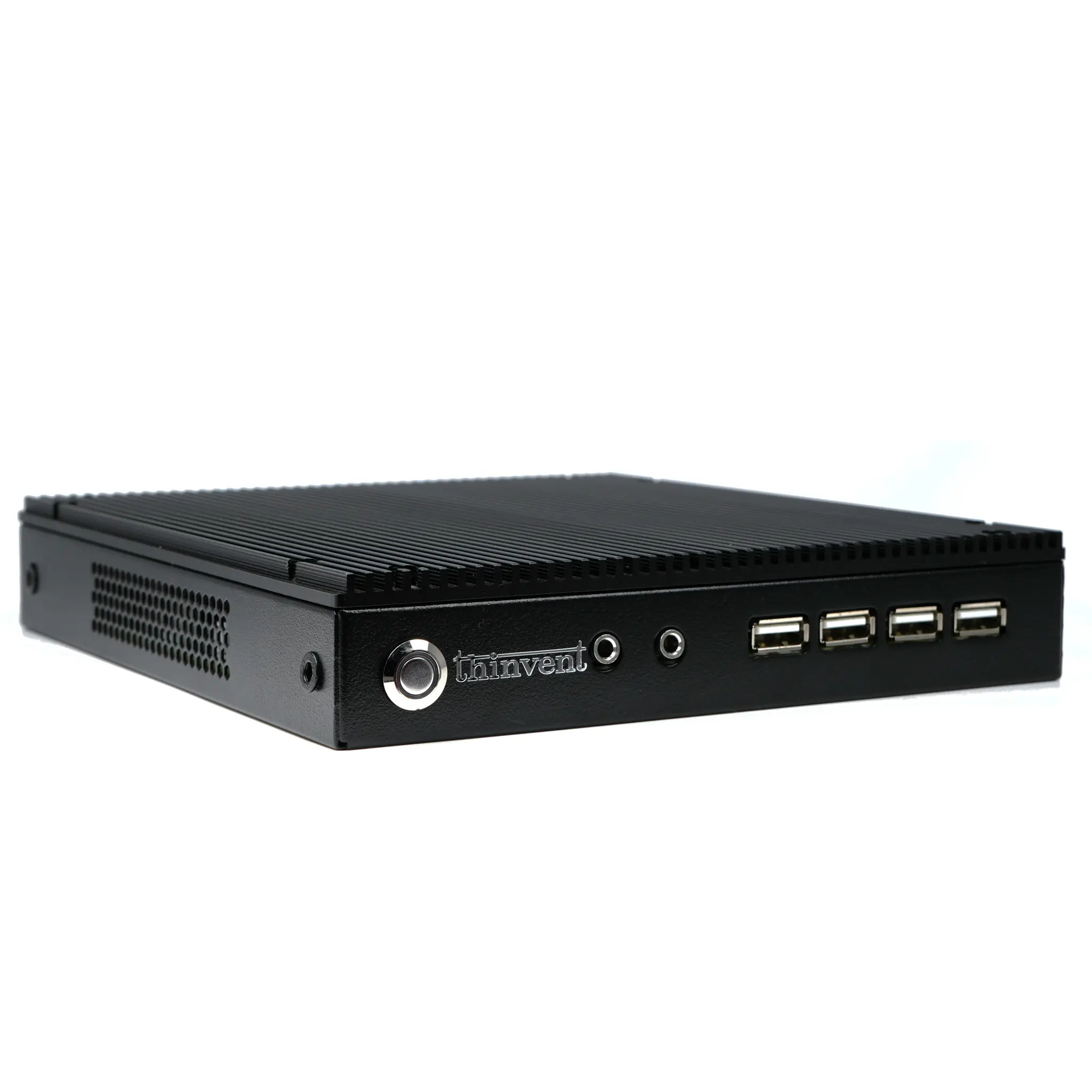
Thinvent's range of industrial mini PCs provides an excellent, reliable foundation for building a cost-effective NAS. Our fanless systems, like the Aero series featuring the Intel N100 processor, are engineered for 24/7 operation in diverse environments. Their compact size, robust construction, and low power draw make them ideal for silent, always-on storage servers. You can install your preferred NAS operating system on the internal SSD and connect external USB drives or enclosures to create a powerful and customizable storage solution. Explore our selection to find the perfect balance of performance, connectivity, and value for your specific data storage needs.