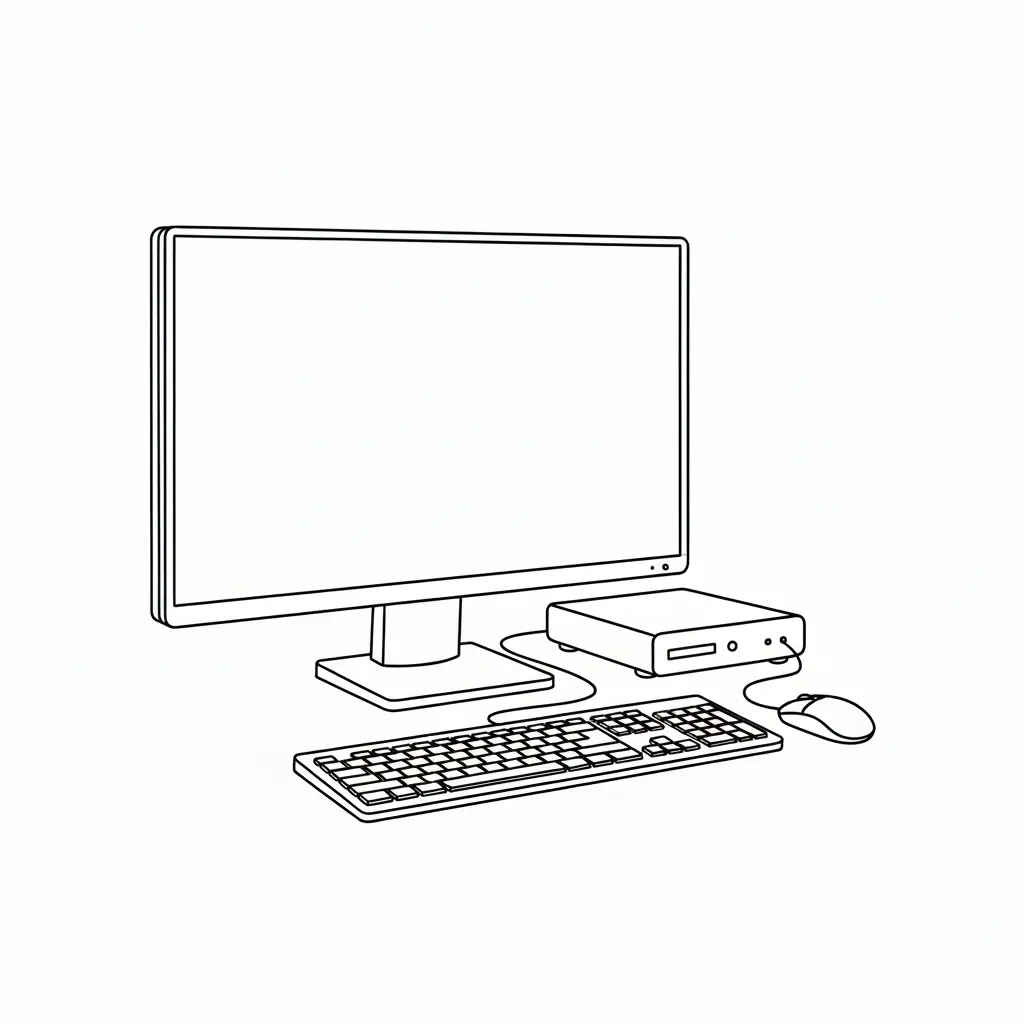
The Ncomputing L300 is an Ethernet-based virtual desktop device that runs with vSpace Server. For buyers looking for an alternative, the Thinvent Neo S Thin Client and the Thinvent Micro 5R Thin Client are the closest matches in our range, offering a compact, ready-to-deploy thin client with a choice of Intel or ARM processing.
Ncomputing L300 vs Thinvent Thin Client Alternatives
| Feature | Ncomputing L300 | Thinvent Neo S Thin Client, Intel Celeron J1900 | Thinvent Micro 5R Thin Client, ARM Cortex A53 |
|---|---|---|---|
| Processor | Not stated | Intel Celeron J1900 | ARM Cortex A53 |
| Cores/Threads | Not stated | 4 cores | 4 cores |
| RAM | Not stated | 4 GB to 8 GB | 2 GB |
| Storage | Not stated | 32 GB to 256 GB | 16 GB |
| Form Factor | Not stated | Thin Client | Thin Client |
| Wireless | Not stated | No WiFi | Wi-Fi 6 (802.11ax), Bluetooth 5 |
| Operating System | vSpace Server | DOS | Thinux Embedded Linux |
Key differences
-
Thinvent Neo S offers RAM of 4 GB to 8 GB and storage of 32 GB to 256 GB, giving more room for applications than the Micro 5R.
-
Thinvent Micro 5R includes Wi-Fi 6 and Bluetooth 5 for wireless connectivity, which the Neo S does not offer.
-
Thinvent Micro 5R runs Thinux embedded Linux, a lightweight operating system suited to thin client deployments.
-
Thinvent Neo S uses a 4-core Intel Celeron J1900 processor running up to 2.4 GHz with 2 MB cache.
-
Both Thinvent models include HDMI output, and the Micro 5R supports HDMI 2.0.
Which one should you choose?
Choose the Thinvent Neo S if you need more memory and storage for multi-application workloads. Choose the Thinvent Micro 5R if you need built-in Wi-Fi 6 and Bluetooth with a Linux-based thin client.