What is NComputing and What Hardware Does It Require?
NComputing is a desktop virtualization and thin client technology that allows multiple users to share the resources of a single host computer. Users connect via dedicated hardware terminals or compatible devices to access a centralized virtual desktop. For optimal NComputing support, you need hardware that meets specific requirements for connectivity, performance, and compatibility with the vSpace server software.
Key Specifications for NComputing-Compatible Devices
A device suitable for use as an NComputing terminal must have reliable network connectivity, adequate local processing for display protocols, and support for the required peripherals. Key technical details include:
-
Processor: A modern, efficient CPU like an Intel Celeron or Intel N-series processor is ideal for handling the display remoting protocols with low power consumption.
-
Memory (RAM): 4GB to 8GB of RAM is typically sufficient for a smooth thin client experience.
-
Storage: A small SSD (128GB or 256GB) is adequate for the host operating system and client software.
-
Connectivity: Gigabit Ethernet (1000 Mbps) is crucial for a stable, low-latency connection to the host server. Multiple USB ports are needed for keyboards, mice, and other peripherals.
-
Operating System: The device should support a lightweight OS like a customized Linux build, Windows IoT, or a standard Windows Pro edition for management.
Use Cases and Applications
NComputing and similar thin client solutions are deployed in environments requiring centralized management, security, and cost-efficiency.
-
Education: Computer labs in schools and universities, where IT staff can manage dozens of stations from a single server.
-
Healthcare: Nurse stations and reception desks, providing secure access to patient records without storing data locally.
-
Call Centers & Offices: For task workers who need access to a limited set of centralized applications.
-
Public Access Terminals: In libraries or government offices, where hardware can be easily locked down and secured.
Comparison: Thin Client vs. Traditional Mini PC for Virtualization
| Feature | Dedicated Thin Client | General-Purpose Mini PC as Thin Client |
|---|---|---|
| Primary Use | Solely for connecting to a virtual desktop/server. | Can function as a standalone PC or a thin client. |
| Management | Often includes specialized management software. | Managed via standard OS tools (e.g., Group Policy). |
| Hardware Flexibility | Fixed specifications, less upgradeable. | Configurable RAM/Storage, more versatile. |
| Cost | Lower upfront cost per unit. | Slightly higher cost, but offers more functionality. |
| Best For | Large, homogeneous deployments with identical needs. | Mixed-use environments or future-proofing needs. |
Thinvent Solutions for NComputing Environments
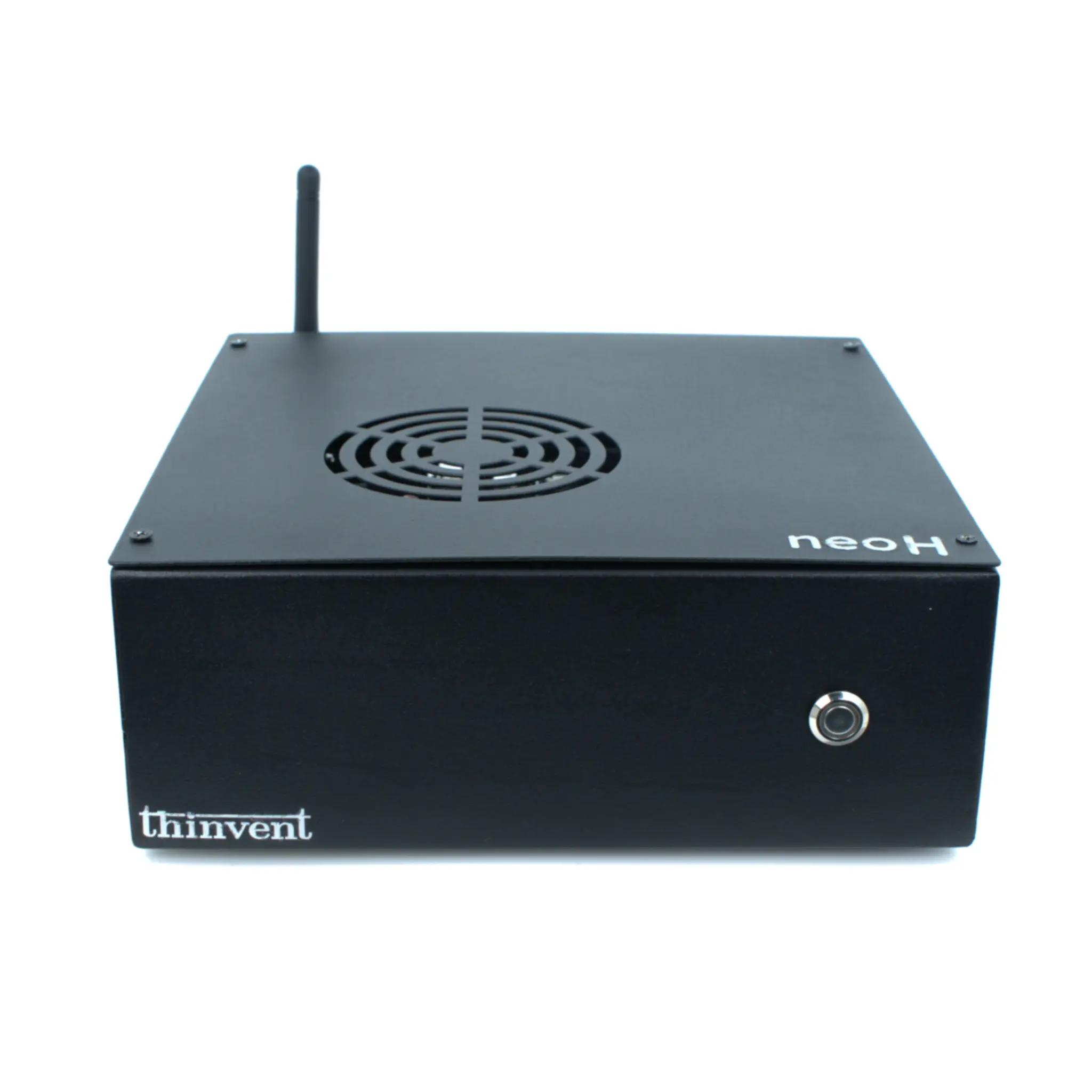
Thinvent's range of industrial-grade mini PCs are excellent, reliable hardware choices for setting up NComputing or similar thin client infrastructures. Our fanless, compact devices are built for 24/7 operation in diverse environments, from classrooms to factory floors. Models featuring Intel N-series processors, such as the N100, provide the perfect balance of efficiency and performance for virtualization clients. They come with multiple OS options, including lightweight Linux distributions and Windows IoT, allowing for easy integration into your existing vSpace or other virtualization management systems. Their robust construction ensures long-term reliability for your centralized computing deployment.