What is an NPU (Neural Processing Unit)?
A Neural Processing Unit (NPU) is a specialized microprocessor designed to accelerate artificial intelligence (AI) and machine learning (ML) workloads. Unlike general-purpose CPUs or even graphics-focused GPUs, NPUs are architecturally optimized to efficiently handle the mathematical computations fundamental to neural networks, such as scalar, vector, and tensor operations. This specialization allows them to perform AI inference tasks—like image recognition, natural language processing, and predictive analytics—with significantly higher performance and lower power consumption. NPUs are a key component in the shift towards on-device AI, enabling intelligent processing directly at the source of data generation, or the "edge."
Key Specifications and Technical Details
NPUs are characterized by their ability to handle low-bitwidth operations (e.g., INT4, INT8, FP8, FP16) which are common in AI models, balancing precision with computational efficiency. A common performance metric is TOPS (Trillions of Operations Per Second), which indicates raw computational throughput for AI workloads. Modern NPUs, such as the Intel® Neural Processing Unit found in Core™ Ultra processors, are integrated directly into the system-on-a-chip (SoC). They operate within a heterogeneous computing architecture, working alongside the CPU and integrated GPU to intelligently offload and accelerate specific AI tasks, thereby improving overall system efficiency and responsiveness.
Primary Use Cases and Applications
The integration of an NPU unlocks a wide range of applications that benefit from efficient, localized AI processing. Key use cases include:
-
Smart Vision & Surveillance: Real-time object detection, facial recognition, and behavioral analysis for security and retail analytics.
-
Industrial Automation: Predictive maintenance, visual quality inspection, and robotic process control on the factory floor.
-
Digital Signage & Retail: Interactive kiosks that can analyze customer demographics and engagement.
-
Healthcare Edge Devices: Portable diagnostic equipment that can run AI models for image analysis.
-
Next-Generation Computing: Enhancing user experiences in PCs with features like background blur, eye contact correction, and AI-assisted content creation directly on the device without cloud dependency.
NPU vs. CPU vs. GPU: A Simplified Comparison
| Processor Type | Primary Function | AI/ML Workload Suitability | Power Efficiency for AI | Typical Use Case |
|---|---|---|---|---|
| CPU (Central Processing Unit) | General-purpose computing, complex serial tasks. | Low to Moderate (handles diverse tasks). | Lower | Running the operating system, applications, and logic. |
| GPU (Graphics Processing Unit) | Parallel processing for graphics and compute. | High for training large models. | Moderate to High (when heavily utilized). | Gaming, video rendering, AI model training. |
| NPU (Neural Processing Unit) | Accelerating neural network inference. | Very High for on-device inference. | Very High (specialized hardware). | Real-time AI inference at the edge (e.g., object detection, speech recognition). |
Thinvent Products Featuring NPU Technology
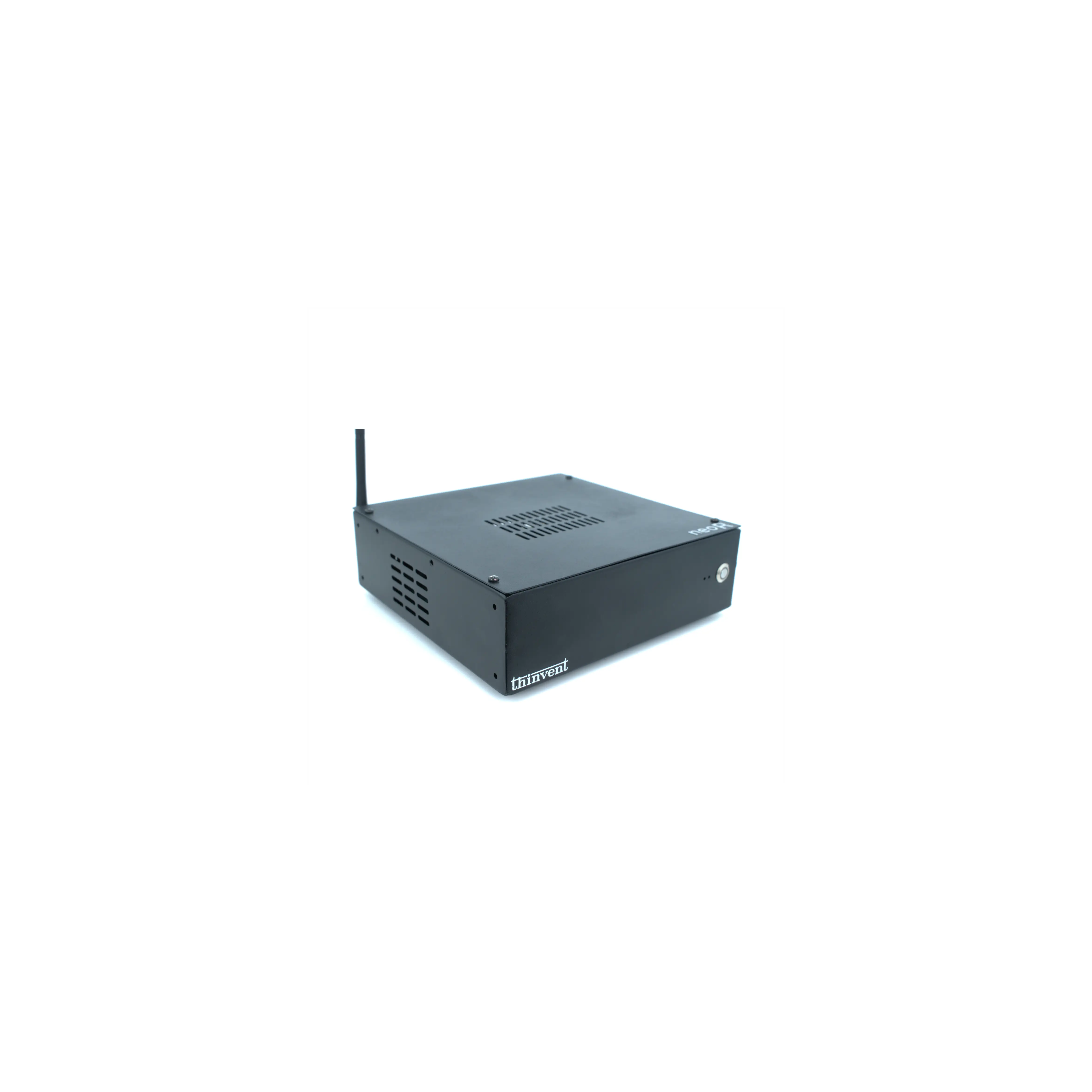
Thinvent is at the forefront of integrating advanced processing technologies into reliable, industrial-grade computing solutions. Our product roadmap includes systems powered by the latest Intel® Core™ Ultra processors, which feature a dedicated Intel® Neural Processing Unit (NPU). This integration is targeted for our next-generation Industrial PCs and Mini PCs, designed for demanding edge AI applications. These fanless, rugged systems will deliver the perfect balance of CPU performance, GPU graphics, and NPU acceleration for intelligent automation, machine vision, and smart city infrastructure. By bringing efficient AI processing directly to our compact and durable form factors, Thinvent empowers businesses to deploy smarter, more responsive, and energy-efficient solutions at the network edge.