What is the Odroid N2?
The Odroid N2 is a high-performance single-board computer (SBC) developed by Hardkernel, featuring an ARM-based processor. It is designed for developers, hobbyists, and professionals seeking a powerful yet energy-efficient platform for embedded computing, media centers, and lightweight server applications. Unlike traditional x86 systems, the Odroid N2 leverages an Amlogic S922X system-on-chip (SoC), which combines a hexa-core CPU (quad-core ARM Cortex-A73 and dual-core Cortex-A53) with a Mali-G52 GPU. This architecture provides a balance of computational power and low power consumption, making it suitable for always-on and fanless operations.
Key Specifications and Technical Details
The Odroid N2's specifications make it a versatile choice for various projects. Its core technical features include:
-
Processor: Amlogic S922X SoC with 4x Cortex-A73 cores (up to 1.8GHz) and 2x Cortex-A53 cores (up to 1.9GHz).
-
GPU: ARM Mali-G52 MP6 GPU.
-
Memory: Typically available in 2GB or 4GB LPDDR4 configurations.
-
Storage: Supports eMMC 5.0 storage modules and includes a microSD card slot for booting.
-
Connectivity: Features Gigabit Ethernet, USB 3.0 and USB 2.0 ports, and HDMI 2.0 output supporting 4K resolution.
-
Power: Operates on a 12V DC input, emphasizing energy efficiency for continuous operation.
Use Cases and Applications
This SBC is ideal for projects requiring reliable, low-power computing. Common applications include:
-
Home Media Centers: Its 4K HDMI 2.0 output and hardware video decoding make it perfect for Kodi-based media boxes.
-
Lightweight Servers: Can function as a network-attached storage (NAS) controller, web server, or IoT gateway.
-
Embedded Development: Serves as a platform for prototyping and deploying industrial automation, digital signage, or robotics projects.
-
Educational Tool: Used in computer science and electronics courses to teach ARM architecture and Linux system administration.
Comparison with x86 Mini PCs
While ARM SBCs like the Odroid N2 excel in power efficiency and cost for specific tasks, x86-based industrial mini PCs offer broader software compatibility and higher single-threaded performance for general computing.
| Feature | Odroid N2 (ARM SBC) | Typical x86 Industrial Mini PC (e.g., Intel N-Series) |
|---|---|---|
| Architecture | ARM (Amlogic S922X) | x86 (e.g., Intel Processor N100) |
| Primary Use | Embedded projects, media centers, lightweight servers | General computing, industrial automation, digital signage, edge computing |
| Software Ecosystem | Linux-based (Android, Ubuntu, Armbian) | Full Windows/Linux support, broader commercial software compatibility |
| Power Consumption | Very Low (typically <10W) | Low to Moderate (e.g., 6W-28W TDP) |
| Performance Profile | Efficient for parallel tasks, media decoding | Strong single-core performance, wider I/O support (PCIe, multiple displays) |
| Form Factor | Exposed board (requires a case) | Enclosed, ruggedized chassis for industrial environments |
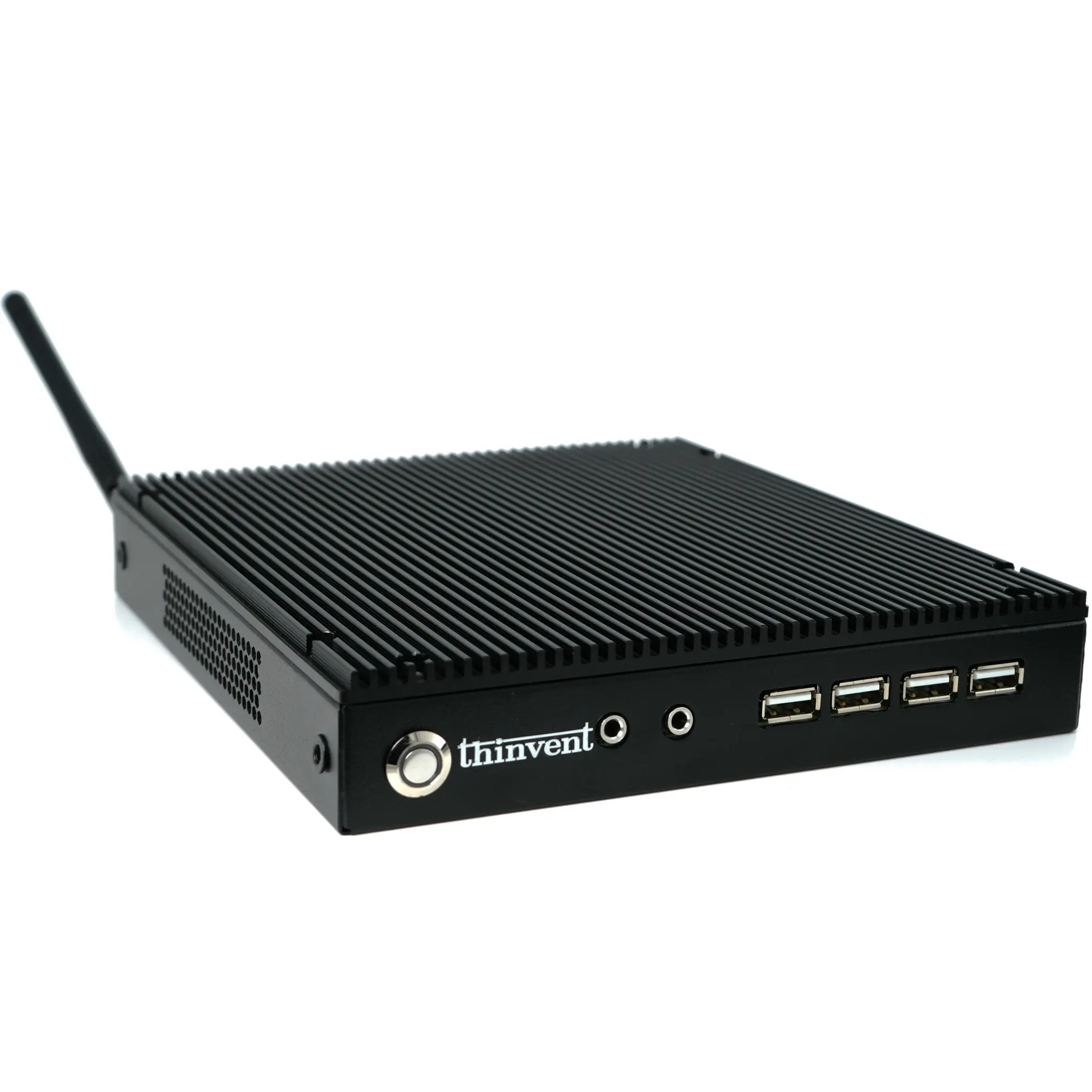
Thinvent's Industrial Computing Solutions
While Thinvent specializes in robust, fanless x86 industrial computers, we understand the need for diverse computing architectures. Our product range, such as the Aero Mini PC series powered by Intel processors, offers a compelling alternative for applications where the broad software support, industrial durability, and consistent performance of the x86 platform are critical. For projects requiring reliable operation in demanding environments—such as digital signage, kiosks, factory automation, or thin client setups—Thinvent's sealed, fanless designs with wide operating temperature ranges provide superior longevity and reliability compared to exposed consumer-grade SBCs.