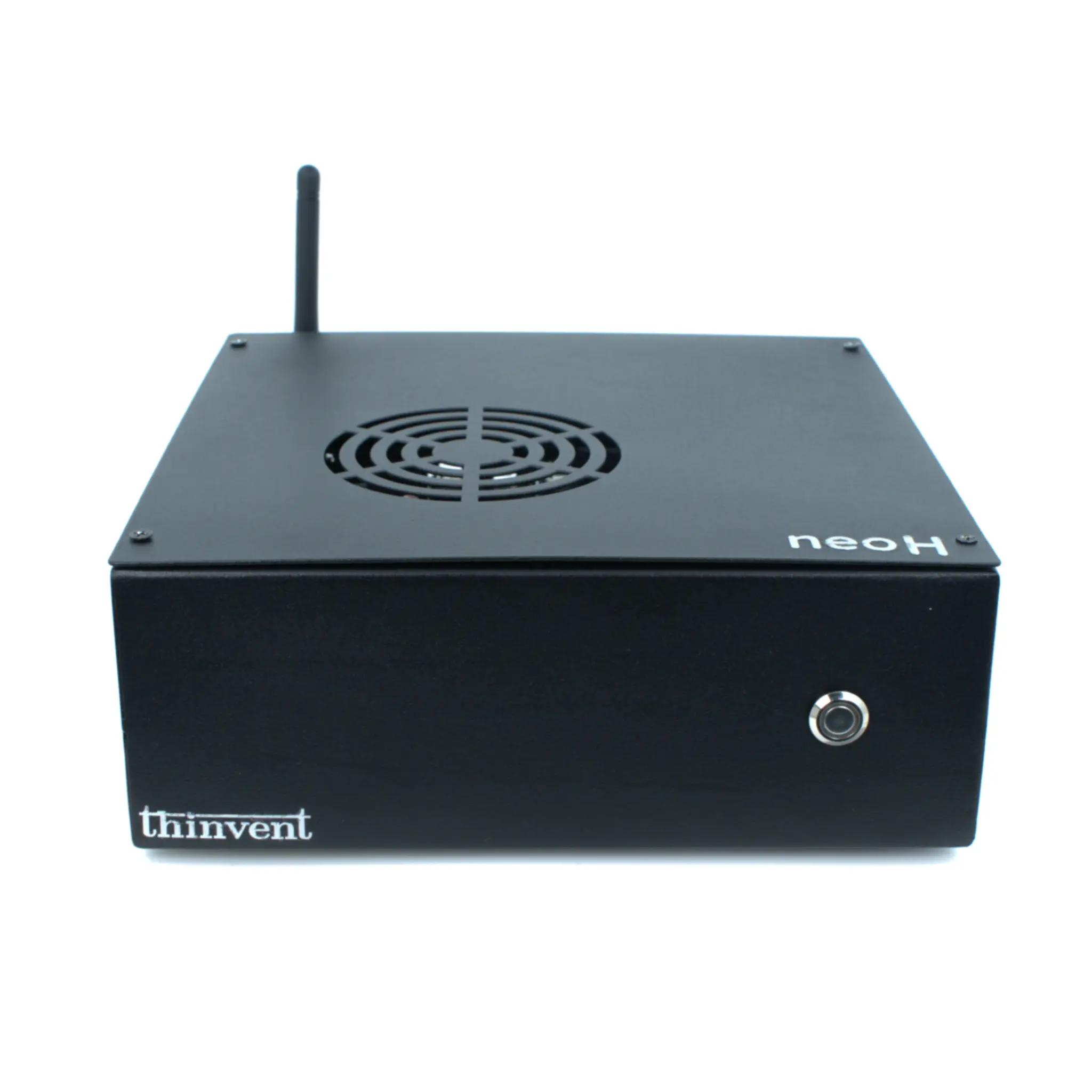
What Are Fanless Industrial Computers?
Fanless industrial computers are compact, rugged computing systems designed for operation in demanding environments where reliability, durability, and silent operation are critical. By eliminating moving parts like fans, these systems achieve superior dust and particulate resistance, lower maintenance requirements, and enhanced long-term stability. They are engineered to withstand wide temperature ranges, shock, and vibration, making them ideal for deployment in industrial automation, digital signage, transportation, and outdoor applications.
Key Specifications and Technical Advantages
The core of a modern fanless industrial PC is a low-power, high-efficiency processor, such as the Intel® N-series. These processors generate minimal heat, enabling effective passive cooling through advanced heatsink designs. Typical configurations include 4 to 16GB of RAM and solid-state storage (SSD) for fast, reliable data access. Key technical features include:
-
Rugged Construction: Often housed in all-metal, IP-rated enclosures for protection against dust and moisture.
-
Wide Operating Temperature: Capable of functioning in extremes from -20°C to 70°C.
-
Rich I/O Connectivity: Multiple Gigabit Ethernet ports, USB 3.2, HDMI/DisplayPort outputs, and serial ports (COM) for industrial peripherals.
-
Flexible Power Input: Supports wide-range DC input (e.g., 9-36V DC) for vehicle and unstable power environments.
-
Multiple Mounting Options: VESA, DIN-rail, and wall-mount compatibility for versatile installation.
Primary Use Cases and Applications
The robustness of fanless industrial PCs makes them suitable for a wide array of applications beyond the standard office. In Industrial Automation, they serve as controllers for PLCs, HMIs, and machine vision systems on the factory floor. For Digital Signage and Kiosks, their silent operation and reliability are perfect for retail, hospitality, and public information displays. In Transportation and Fleet Management, they withstand the vibrations and temperature swings inside vehicles. They are also ideal for Thin Client and Edge Computing deployments in schools, hospitals, and call centers, where space, noise, and maintenance are concerns.
Comparison: Fanless Industrial PC vs. Standard Desktop
| Feature | Fanless Industrial PC | Standard Desktop PC |
|---|---|---|
| Cooling Method | Passive (Heatsink) | Active (Fans) |
| Durability | High (Shock/Vibration Resistant) | Standard |
| Operating Temp. | Wide Range (e.g., -20°C to 70°C) | Narrow (e.g., 5°C to 40°C) |
| Noise Level | Silent (0 dB) | Audible Fan Noise |
| Maintenance | Low (No moving parts to fail) | Higher (Fan dusting/replacement) |
| Typical Use Case | Harsh Environments, 24/7 Operation | Office, Home, Controlled Environments |
Thinvent Fanless Industrial Computing Solutions
Thinvent offers a comprehensive range of fanless industrial computers designed for reliability and performance in challenging conditions. Our Aero Series Mini PCs exemplify this commitment, featuring efficient Intel® processors like the N100 in a compact, rugged metal chassis. These systems provide the essential connectivity, wide-temperature operation, and silent performance required for industrial IoT, edge computing, and embedded applications. Built for 24/7 duty, Thinvent's fanless solutions deliver the durability and stability needed for mission-critical deployments worldwide.