What "Padai" Means for a Computer Buyer
"Padai" (पढ़ाई) is the Hindi word for study or learning, and a search for "padai me" usually comes from someone setting up a computer for students, tuition classes, coaching centres or home learning. The good news is that study workloads — online classes, video lectures, document writing, spreadsheets, PDF reading, coding practice and light research — are not demanding. What they need is a computer that starts quickly, stays quiet, sips power, and keeps working year after year without maintenance. A compact desktop with a modest, efficient processor and a solid-state drive fits this far better than a large, power-hungry tower.
Why Compact, Fanless Desktops Suit Study Rooms
A study corner is usually a small table in a bedroom or a shared room. A mini PC that mounts behind a monitor or sits under a stand frees up the entire desk for books and notebooks. Because fanless designs have no moving parts and no vents pulling in air, they run silently — helpful when several students share a room or when classes happen at night. No fan also means no dust build-up inside, so the machine does not need periodic cleaning or servicing, which matters in dusty environments and in classrooms where many people use the same system.
What Specifications Actually Matter
For learning and light office work, four processor cores, 8–16 GB of memory and a 128–256 GB SSD are more than enough. The SSD is the single biggest factor in how responsive the machine feels: documents, browsers and video players open almost instantly. Look for at least one HDMI output for a monitor or projector, several USB ports for a keyboard, mouse, pen drive and webcam, and gigabit Ethernet for stable wired internet — far more reliable than Wi-Fi in a crowded coaching centre.
| Study Requirement | Recommended Specification |
|---|---|
| Online classes, video lectures | 4-core processor, 8 GB RAM, 128 GB SSD |
| Multi-tab browsing and documents | 8–16 GB RAM, 256 GB SSD |
| Coding and programming practice | 16 GB RAM, 256–512 GB SSD, Ubuntu or Windows |
| Shared lab or classroom bench | Wired gigabit Ethernet, multiple USB ports, no moving parts |
| Projector or large display | HDMI output, dual-display support |
Software Choices for Students
Windows 11 Pro is the familiar choice for school and college coursework, Microsoft Office and most educational software. Ubuntu Linux and embedded Linux builds are excellent for programming, computer science labs and low-maintenance lab deployments, and they keep older hardware feeling quick. Some institutions prefer a system shipped without an operating system so their own image and licensing can be applied. Whichever you pick, keep the storage on an SSD and back up assignments to cloud storage or a USB drive.
Use Cases Beyond the Study Table
The same class of machine works well in tuition centres, school computer labs, library reference desks, exam registration counters and small offices. It also handles digital signage for campus notice boards, attendance terminals, and remote-learning setups where a reliable, low-power box is left running all day. Because these systems draw very little power and produce almost no heat, several can run in one room without stressing the electrical wiring.
Thinvent Products for Study and Learning
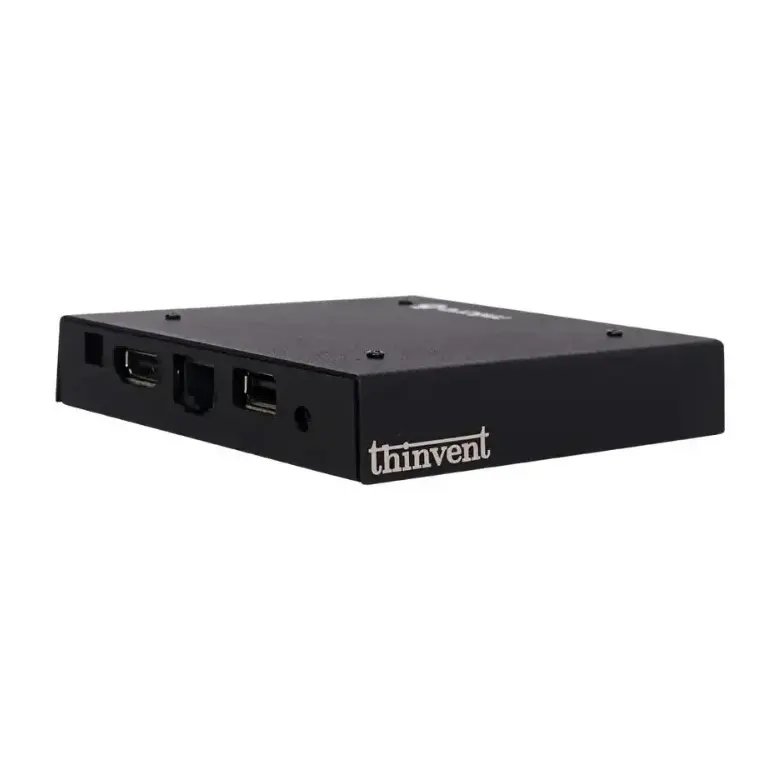
Thinvent builds compact, fanless mini PCs, thin clients, industrial computers and all-in-one PCs designed for quiet, low-maintenance operation. The Aero Mini PC family pairs an Intel processor with DDR4 memory and SSD storage, and is available with Windows 11 Pro, Windows 11 IoT, embedded Linux or without an operating system, so a single platform can serve a student desk, a coaching centre or a full computer lab. Thinvent systems are deployed by customers worldwide who need dependable computing that simply keeps running.