A PC for 3D modeling and rendering requires a balanced combination of high-performance components to handle complex calculations, large datasets, and real-time visualization. The primary demands are on the CPU for modeling and simulation tasks, and on the GPU for rendering and viewport performance. For professional use, a system should feature a multi-core processor (i5/i7/i9 or Ryzen 7/9), a dedicated graphics card with ample VRAM (NVIDIA RTX or AMD Radeon Pro series), at least 32GB of RAM, and fast NVMe SSD storage. Efficient cooling and robust power delivery are also critical for maintaining performance during long rendering sessions.
Key Specifications for 3D Workstations
The ideal workstation prioritizes raw compute power and fast data throughput. Key components include:
-
Processor (CPU): A high core-count CPU (6 cores minimum, 12+ cores recommended) from Intel's Core i5/i7/i9 series (12th Gen or newer) or AMD's Ryzen 7/9 series. This accelerates tasks like simulation, physics calculations, and CPU-based rendering in engines like Blender Cycles or V-Ray.
-
Graphics Card (GPU): A dedicated, professional-grade GPU is non-negotiable. NVIDIA's RTX series (e.g., RTX 4060, 4070, 4080) or workstation-class Quadro cards are preferred for their CUDA cores and OptiX ray-tracing support, which dramatically speed up GPU rendering.
-
Memory (RAM): 32GB is the recommended starting point for professional work. 64GB or more is advisable for handling large scenes, high-poly models, and complex simulations without slowdowns.
-
Storage: A primary NVMe PCIe SSD (512GB or 1TB) for the OS and active projects ensures fast file loading and saving. A secondary high-capacity SATA SSD or HDD is useful for archiving completed work.
Applications and Use Cases
These high-performance systems are essential across various industries:
-
Architectural Visualization (ArchViz): Creating photorealistic renders of buildings and interiors using software like 3ds Max, V-Ray, and Lumion.
-
Product Design & Engineering: Developing detailed 3D models and prototypes in SolidWorks, Autodesk Inventor, or CATIA, often requiring precise simulations.
-
Animation & VFX: Character modeling, rigging, animation, and visual effects production in Maya, Blender, or Cinema 4D.
-
Game Development: Creating assets, environments, and characters, followed by real-time rendering and baking within game engines like Unreal Engine or Unity.
Recommended System Configurations
| Workload Intensity | Recommended CPU | Recommended GPU | Recommended RAM | Ideal For |
|---|---|---|---|---|
| Entry-Level / Learning | Intel Core i5 / AMD Ryzen 5 | NVIDIA RTX 4060 | 16GB - 32GB | Students, hobbyists, simple models |
| Professional / Mainstream | Intel Core i7 / AMD Ryzen 7 | NVIDIA RTX 4070 / 4070 Ti | 32GB - 64GB | Freelancers, small studios, architectural viz |
| High-End / Production | Intel Core i9 / AMD Ryzen 9 | NVIDIA RTX 4080 / 4090 or Quadro | 64GB+ | Large studios, complex simulations, 4K rendering |
Thinvent Industrial Solutions for Demanding Environments
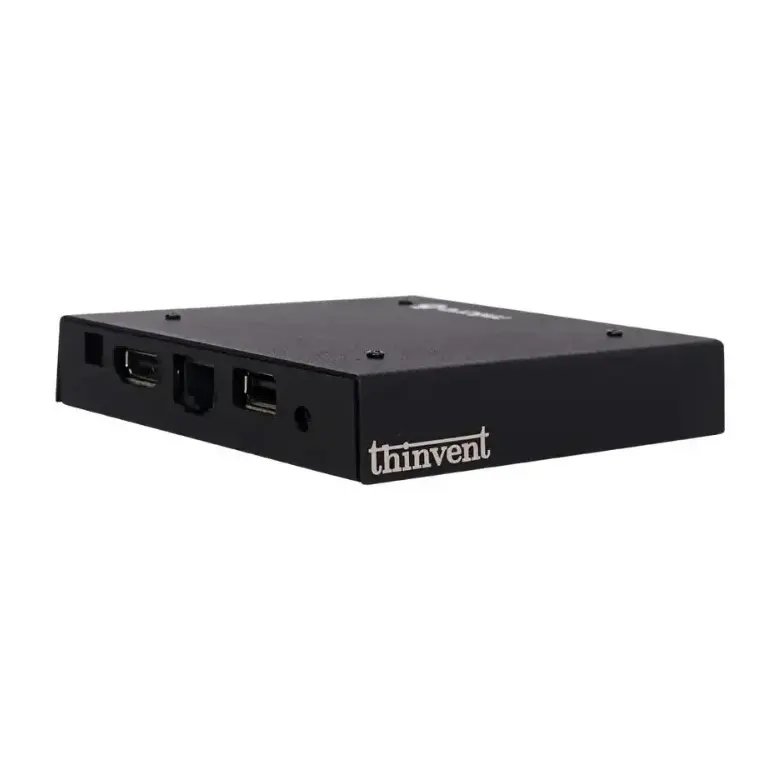
While the sample products listed are compact, fanless systems ideal for embedded applications, Thinvent offers a broader range of industrial computing solutions that can form the backbone of a 3D workstation setup in challenging environments. For instance, a powerful Thinvent Industrial PC with a high-core-count Intel processor (e.g., i5-1250P, i7-13700H) can serve as a reliable node in a render farm or a durable workstation for digital signage content creation in industrial settings. Their robust, fanless designs ensure dust-free operation and longevity, which is crucial for 24/7 rendering operations or use in factories and workshops where reliability is paramount. For visualization tasks in control rooms, Thinvent's All-in-One PCs with large, high-resolution displays provide an integrated solution.