What is a Fanless PC Power Supply?
A fanless PC power supply, often referred to as a "PC Netzteil ohne Lüfter" in German, is a critical component in fanless computing systems. It refers not to a standalone ATX-style PSU, but to the integrated power delivery system within a fanless computer. These systems are designed to operate without any moving parts, such as cooling fans, by using passive cooling techniques like heat sinks and heat pipes to dissipate heat. This design is central to the reliability and durability of industrial PCs, as it eliminates common points of failure like fan bearings and prevents dust accumulation.
Key Specifications and Technical Details
Fanless PCs achieve silent operation through low-power, efficient processors and intelligent thermal design. Key technical aspects include:
-
Low-TDP Processors: Utilizing processors with a low Thermal Design Power (TDP), typically between 6W and 15W, which generate minimal heat.
-
Passive Cooling: A large, often all-aluminum chassis acts as a massive heat sink, directly conducting heat away from the CPU and other components.
-
External Power Adapters: Many compact fanless systems use an external 12V or 19V DC power adapter (like a 12V 2A brick), moving the AC/DC conversion and its associated heat outside the main unit.
-
Wide Operating Temperature: A robust fanless design allows these PCs to operate reliably in a wide temperature range, often from -20°C to 60°C or higher.
-
Solid-State Components: The use of SSDs instead of HDDs further reduces heat generation and mechanical failure risk.
Use Cases and Applications
The primary benefits of fanless PCs—silence, reliability, and dust resistance—make them ideal for demanding environments:
-
Industrial Automation: On factory floors for machine control, monitoring, and HMI applications where dust and vibration are concerns.
-
Digital Signage & Kiosks: In public spaces like retail stores, museums, and transportation hubs where silent operation is essential.
-
Medical & Laboratory Equipment: In sensitive environments where fan noise and airborne contaminants must be avoided.
-
Embedded & Edge Computing: For IoT gateways, in-vehicle systems, and outdoor installations exposed to harsh conditions.
-
Quiet Office Environments: For reception areas, libraries, or recording studios where background noise is disruptive.
Comparison: Fanless vs. Traditional Air-Cooled PCs
| Feature | Fanless Industrial PC | Traditional Air-Cooled PC |
|---|---|---|
| Noise Level | Completely silent (0 dB from fans) | Audible fan noise, varies with load |
| Reliability | Higher (no moving parts to fail) | Lower (fans and HDDs are common failure points) |
| Dust Resistance | Excellent (sealed chassis) | Poor (fans draw in dust and debris) |
| Maintenance | Minimal to none | Requires periodic fan and dust filter cleaning |
| Operating Temp Range | Wider (e.g., -20°C to 60°C) | Narrower (typically 5°C to 40°C) |
| Form Factor | Often compact, ruggedized designs | Standard tower or mini-tower sizes |
Thinvent Fanless Computing Solutions
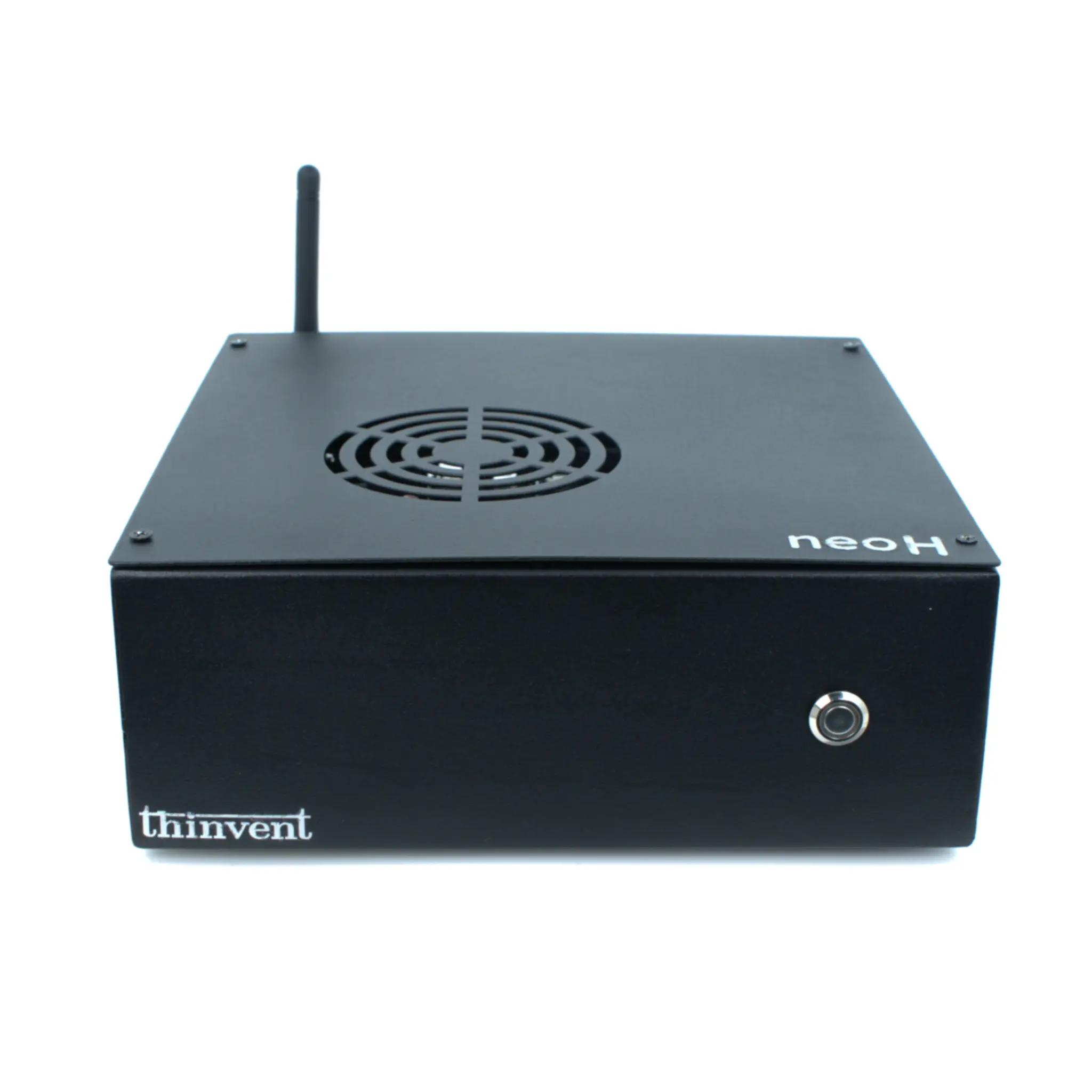
Thinvent specializes in robust, fanless industrial computers built for 24/7 operation in challenging environments. Our product range includes compact Mini PCs and versatile Industrial PCs, all featuring efficient, fanless thermal designs. For example, our Aero Mini PC series utilizes Intel's low-power N-series processors, such as the quad-core Intel N100, within a completely fanless aluminum chassis. These systems come with various memory (up to 16GB DDR4) and storage (128GB SSD) configurations and support multiple operating systems, including Windows 11 IoT, Windows 11 Pro, and Linux distributions like Ubuntu. Thinvent's fanless PCs are engineered to deliver reliable, silent performance for digital signage, industrial automation, edge computing, and other critical applications worldwide.