What Is A PC Stick Computer?
A PC Stick is an ultra-compact, portable computer in a form factor similar to a large USB flash drive or a small media streaming stick. It is designed to plug directly into an HDMI port on a monitor, TV, or projector, transforming it into a fully functional computer. For 2025, these devices represent the pinnacle of space-saving computing, offering modern performance in a package that prioritizes minimalism and ease of deployment. They are ideal for digital signage, light office tasks, and as dedicated kiosk systems where a traditional desktop PC would be impractical.
Key Specifications & Technical Details
Modern PC Sticks are powered by efficient, low-TDP processors like the Intel N-series (e.g., N100), which provide a balance of performance and passive, fanless cooling. Typical configurations include 4 to 8 GB of LPDDR4/LPDDR5 RAM and 128GB to 512GB of eMMC or NVMe SSD storage. Connectivity is centered around the integrated HDMI port for video and audio, supplemented by USB ports (often USB-C for power delivery and USB-A for peripherals), Wi-Fi 6, and Bluetooth. Their defining characteristic is an extremely small physical footprint, often drawing power directly from the display's USB port or via a small external adapter.
Use Cases and Applications
The compact nature of PC Sticks makes them exceptionally versatile for commercial and light industrial environments. Common applications include:
-
Digital Signage & Kiosks: Driving content on displays in retail, hospitality, and corporate lobbies.
-
Thin Client & VDI: Acting as an endpoint for virtual desktop infrastructure, perfect for call centers or secure office environments.
-
Media Centers: Transforming any HDMI display into a smart TV for streaming, light gaming, and media playback.
-
Lightweight Office Workstations: Supporting web browsing, document editing, and video conferencing when paired with a monitor.
-
Embedded IoT Gateways: Serving as a compact hub for data collection and control in IoT deployments.
Comparison: PC Stick vs. Traditional Mini PC
| Feature | PC Stick | Traditional Mini PC |
|---|---|---|
| Form Factor | Extremely compact, HDMI stick-style. | Small box, typically palm-sized. |
| Installation | Plugs directly into display's HDMI port. | Requires separate HDMI cable and placement. |
| Performance | Optimized for efficiency; suitable for light to moderate tasks. | Broader range, from entry-level to high-performance models. |
| Expandability | Very limited; fixed RAM/storage, few ports. | Often allows for RAM/SSD upgrades, more I/O ports. |
| Cooling | Almost exclusively passive (fanless). | Can be fanless or include active cooling for higher power CPUs. |
| Ideal For | Space-constrained, fixed-function deployments. | Versatile desktop replacement requiring more power or connectivity. |
Thinvent's Compact Computing Solutions
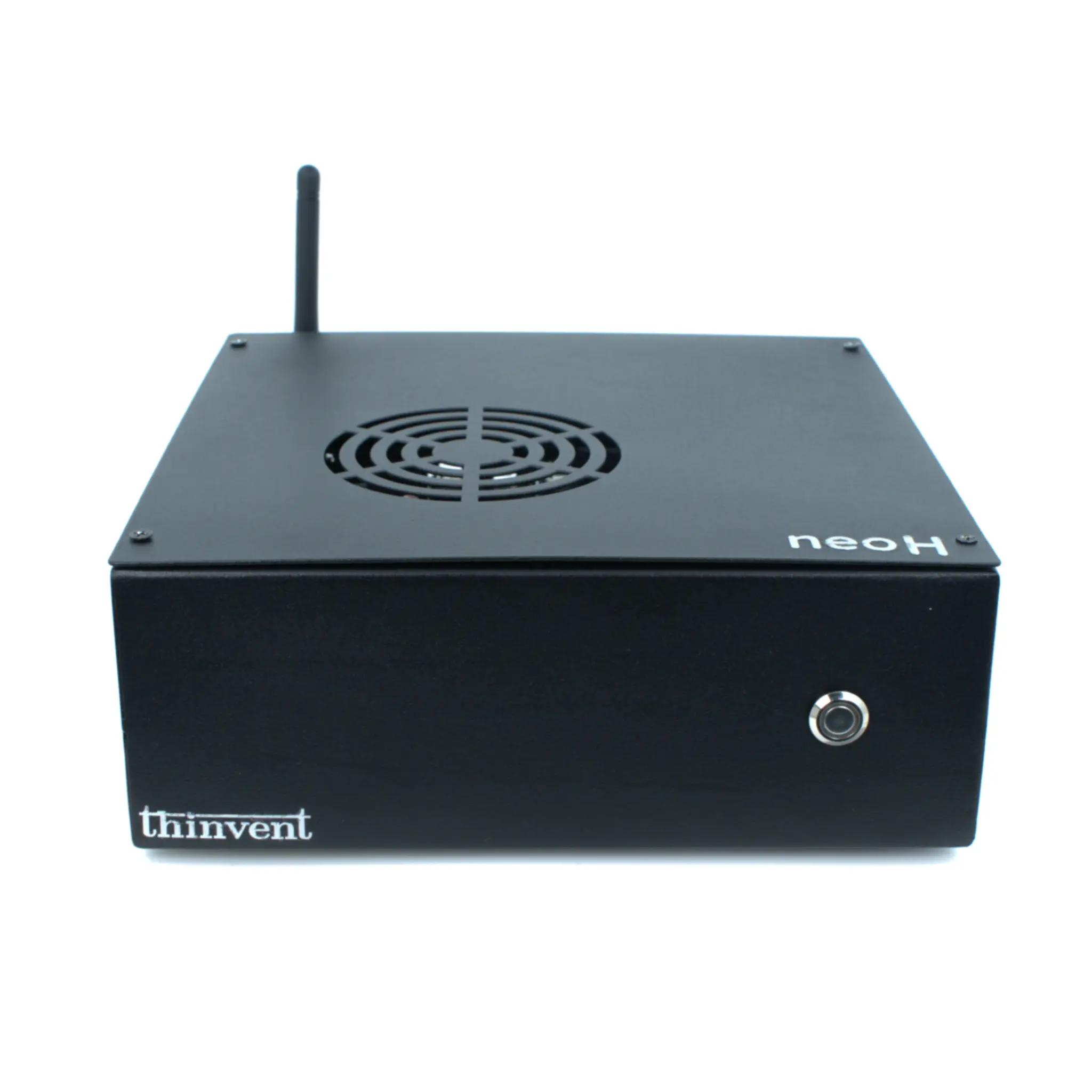
While Thinvent specializes in robust industrial-grade systems, our product philosophy of reliability and efficiency extends to our most compact form factors. Our range includes fanless mini PCs and industrial computers that share the core benefits of a PC Stick—such as low power consumption, silent operation, and a small footprint—while offering enhanced durability, wider operating temperature ranges, and greater I/O flexibility for demanding environments. These systems are engineered for 24/7 operation in applications like factory automation, transportation, and outdoor digital signage, providing the ruggedness required for industrial use alongside the convenience of compact design.