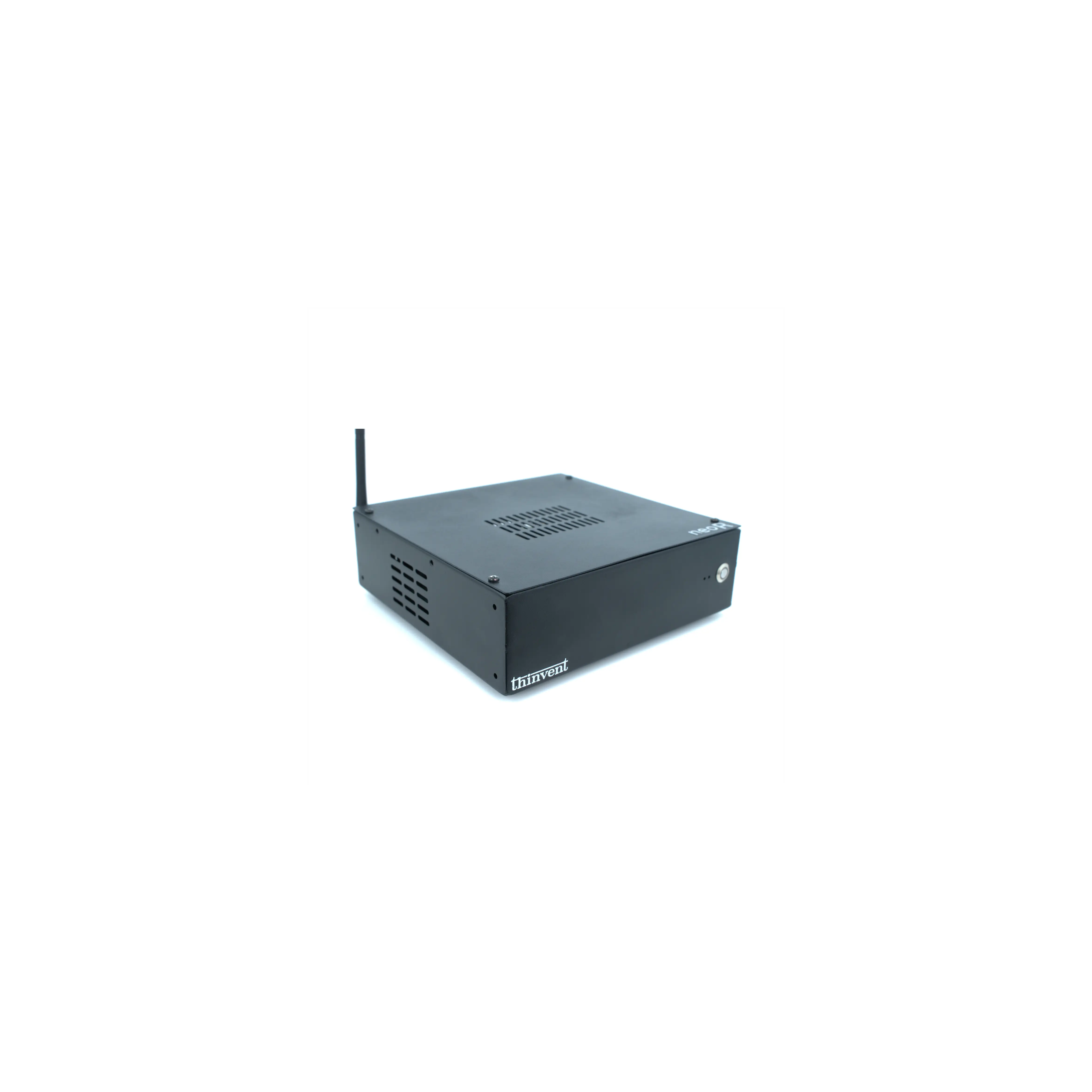
What Are PC Tower Form Factors?
A PC tower form factor refers to the physical size, shape, and layout of a desktop computer's main chassis. In industrial computing, these form factors are designed not just for performance but for durability, reliability, and integration into specific environments. Unlike consumer towers, industrial PC towers are built to withstand harsh conditions like extreme temperatures, dust, vibration, and continuous operation. They prioritize features like fanless cooling for silent operation, extensive connectivity for peripherals, and robust construction for long-term deployment in manufacturing, automation, and digital signage.
Key Specifications and Technical Details
Industrial PC towers are characterized by their scalable internal architecture. Key specifications include support for a wide range of processors (from efficient Intel Celeron/N-series to high-performance Core i3/i5/i7), expandable RAM slots for up to 64GB or more, and multiple drive bays for SSDs and HDDs. They feature rich I/O panels with numerous USB ports (including USB 3.2 Gen 2 and Type-C), multiple display outputs (HDMI, DisplayPort), and industrial-grade Ethernet ports for network reliability. A critical feature is their cooling design; many utilize fanless, heatsink-based systems to eliminate moving parts, reducing failure points and allowing operation in dusty environments. Power supplies are often wide-range (e.g., 12V-24V DC input) for flexibility in industrial settings.
Use Cases and Applications
The robust design of industrial PC towers makes them ideal for demanding applications. In Factory Automation and Control, they serve as the central brain for PLCs, SCADA systems, and machine vision, requiring 24/7 uptime. For Digital Signage and Kiosks, their reliable, fanless operation ensures silent performance in public spaces. They are also deployed in Transportation and Logistics for fleet management and warehouse automation, where resistance to vibration is key. In Edge Computing and IoT Gateways, these towers aggregate data from sensors and devices, processing it locally before sending it to the cloud. Their expandability allows for adding specialized cards for networking, data acquisition, or additional storage.
Comparison of Common Industrial Form Factors
While "tower" is a broad category, it's helpful to distinguish it from other common industrial form factors.
| Form Factor | Typical Size & Mounting | Key Characteristics | Best For |
|---|---|---|---|
| Industrial Tower | Larger chassis, desktop or rack-mount. | Maximum expandability, multiple PCIe slots, high-performance components, robust cooling. | Heavy-duty automation, server-grade edge computing, data-intensive processing. |
| Mini PC / Box PC | Compact, small footprint, VESA/wall-mountable. | Space-saving, low-power, often fanless, limited expansion. | Digital signage, thin clients, kiosks, space-constrained environments. |
| Panel PC / All-in-One | Integrated display and computer. | Touchscreen interface, sealed design, saves space. | Human-Machine Interface (HMI), control panels, interactive kiosks. |
| Rackmount Server | Standard 19" rack width. | Designed for server rooms/data centers, high density, hot-swappable components. | Centralized control rooms, data servers, network operations. |
Thinvent's Industrial PC Towers
Thinvent offers a range of robust industrial PC towers engineered for reliability in challenging environments. Our towers feature efficient, fanless cooling systems for silent and maintenance-free operation, supporting processors from Intel's latest generations. They are built with industrial-grade components to ensure longevity and stable performance for applications like factory automation, edge analytics, and digital signage. With customizable I/O, expandable memory and storage, and support for various operating systems, Thinvent's PC towers provide a scalable and durable computing foundation for global industrial deployments.