What is a PCoIP Zero Client?
A PCoIP Zero Client is a specialized endpoint device designed to connect users to virtual desktops and workstations hosted on a central server. Unlike a traditional thin client or mini PC, a true zero client has no local operating system (like Windows or Linux), no local storage (hard drive or SSD), and typically no general-purpose CPU. Instead, it uses dedicated firmware and hardware to run a single protocol: the PC-over-IP (PCoIP) protocol developed by Teradici. Its sole function is to receive, decode, and display encrypted pixel data from a remote host, sending back only user input like keyboard and mouse commands. This architecture makes it an extremely secure and manageable endpoint for Virtual Desktop Infrastructure (VDI).
Key Specifications and How They Work
True PCoIP Zero Clients are defined by their minimalistic hardware. They contain a specialized processor (often an ASIC or SoC) optimized for decoding the PCoIP stream, video output ports (like DisplayPort or DVI), network interfaces (Gigabit Ethernet), and USB ports for peripherals. Crucially, they lack standard PC components—there is no x86 CPU, no RAM for running applications, no local storage for data, and often no cooling fan. All application processing and data reside securely in the data center. Configuration and firmware updates are managed centrally through a management console, ensuring consistency and reducing on-site IT overhead.
Primary Use Cases and Applications
PCoIP Zero Clients are ideal for environments demanding high security, simplicity, and centralized management. Common applications include:
-
Financial Services and Government: Where data sovereignty and protection from data theft or malware are paramount, as no data ever leaves the secure data center.
-
Healthcare (HIPAA Compliance): Protects sensitive patient health information (PHI) by ensuring it is never stored or processed on the endpoint device.
-
Engineering and Design Studios: When paired with GPU-accelerated hosts, they provide a secure way to deliver high-performance 3D CAD or media editing workstations to any location.
-
Call Centers and Task Workers: Offers a reliable, low-maintenance, and consistent user experience that is easy to deploy and replace.
PCoIP Zero Client vs. Thin Client vs. Mini PC
It's important to distinguish a zero client from other endpoint solutions.
| Feature | PCoIP Zero Client | Standard Thin Client | Mini PC / Industrial PC |
|---|---|---|---|
| Local OS | None (Firmware only) | Yes (Often lightweight OS) | Yes (Full OS: Windows, Linux) |
| Local Storage | None | Limited (for OS) | Yes (SSD/HDD for OS & apps) |
| Processing | Dedicated PCoIP decoder | General-purpose CPU | General-purpose CPU |
| Primary Function | Display remote desktop only | Connect to various VDI protocols | Run applications locally |
| Security | Very High (No data at edge) | High | Managed locally |
| Management | Centralized firmware updates | Centralized OS/image management | Individual device management |
Thinvent Solutions for Virtual Desktop Endpoints
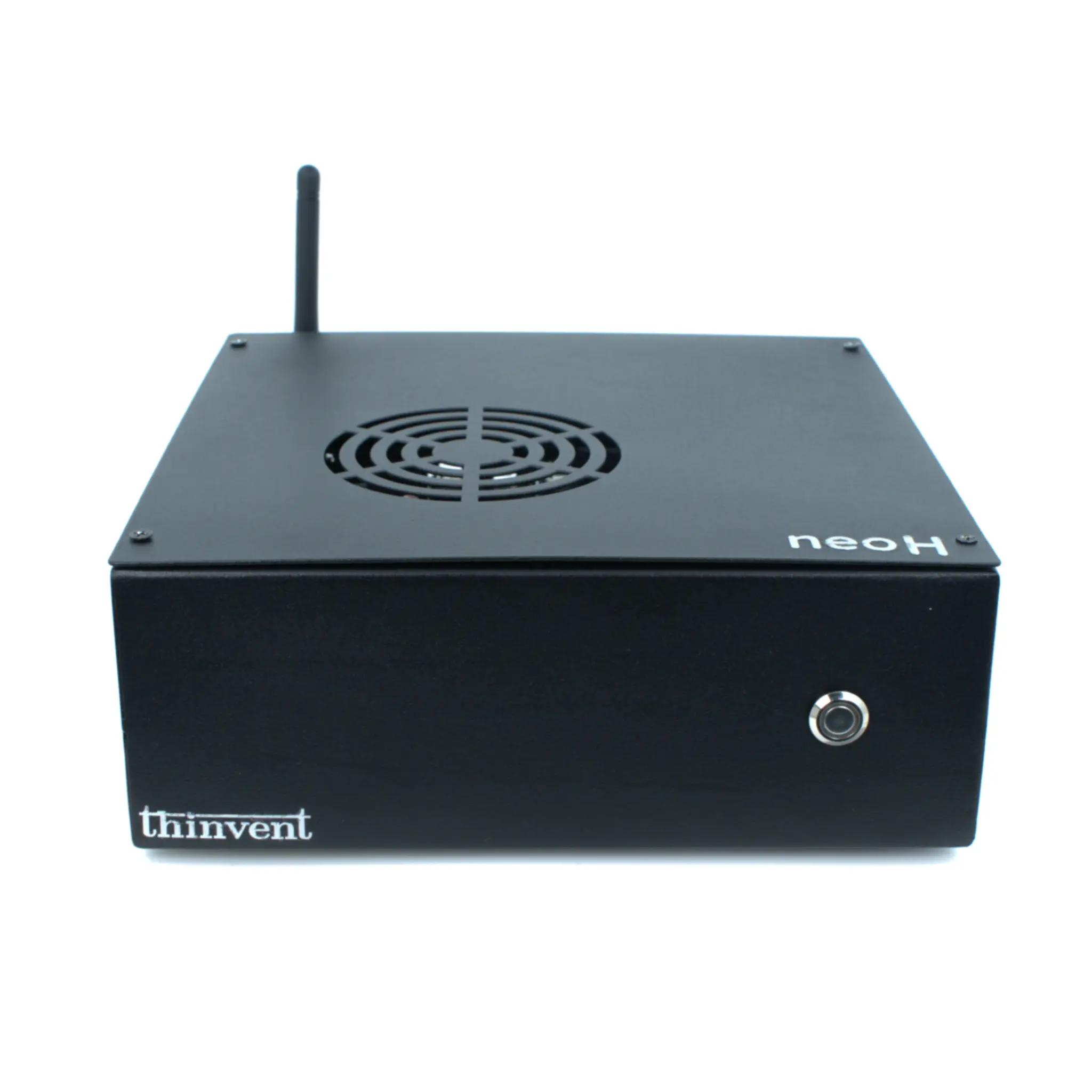
While Thinvent specializes in robust Thin Clients and Mini PCs that can be configured as excellent VDI endpoints, it is important to note that these are not "true" zero clients as defined above. Our devices run full operating systems (like Windows 11 IoT, Thinux™, or Ubuntu) and contain local storage and processing power. However, they are perfectly suited for environments that require the flexibility of a managed thin client with local processing capability or for protocols beyond PCoIP.
Our Aero Mini PC series, for example, features efficient Intel processors like the N100, ample RAM, and SSD storage. These devices can be configured as PCoIP-ready thin clients by installing the appropriate Teradici client software, providing a versatile and cost-effective endpoint solution that balances security, performance, and manageability for a wide range of VDI and cloud computing scenarios.