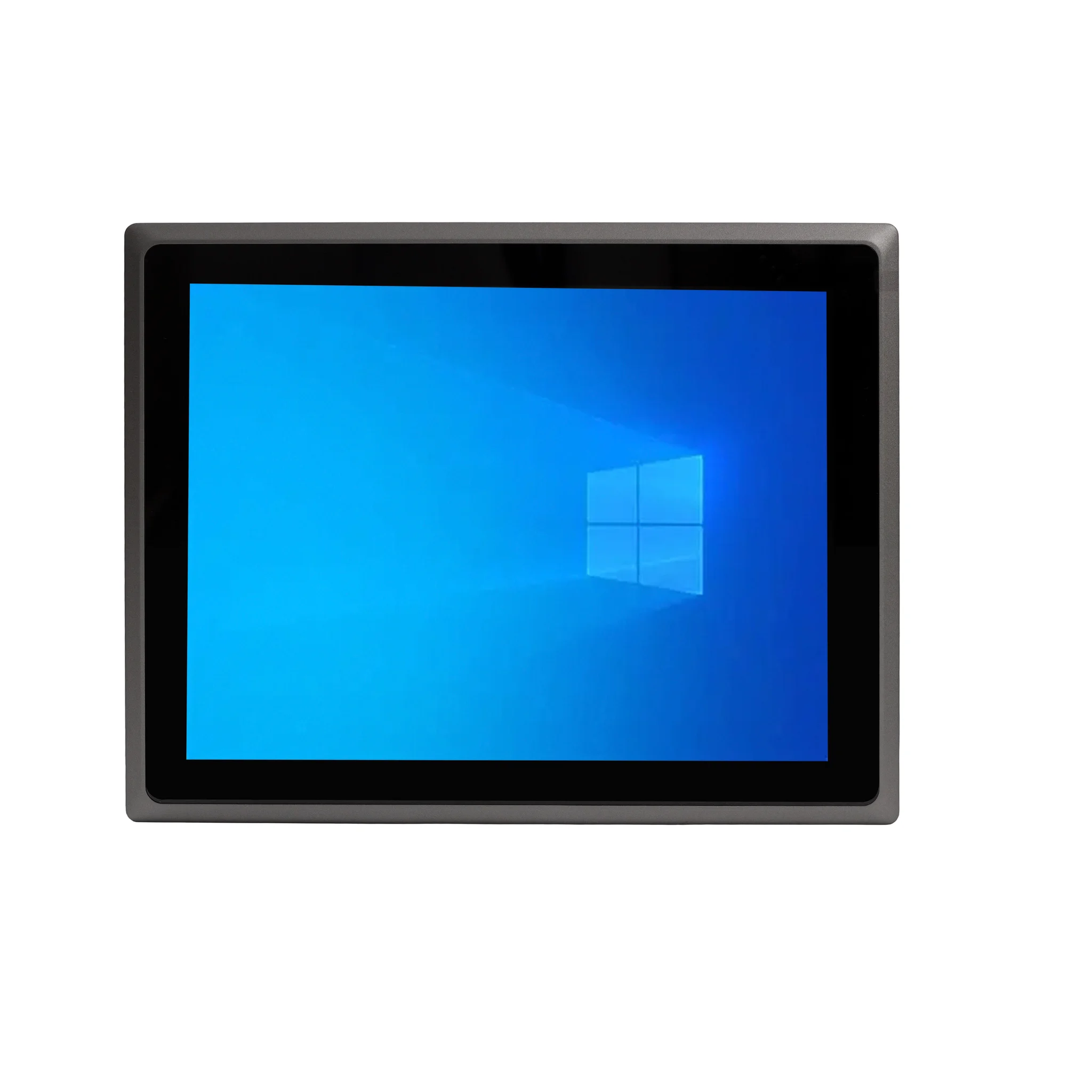
Portable servers are compact, rugged computing systems designed to bring server-grade functionality to remote or constrained environments. Unlike traditional rack-mounted servers, these units are small, often fanless, and built for deployment at the network's edge—where data is generated. They provide reliable compute power for processing, storage, and networking tasks directly on-site, reducing latency and bandwidth usage by minimizing the need to send all data to a central cloud or data center.
Key Specifications and Design
The core of a modern portable server is its efficient, low-power system-on-a-chip (SoC) architecture. A prime example is the Intel® processor N100, a 12th-generation chip with 4 cores, a max frequency of 3.4 GHz, and 6 MB of cache. Paired with 16GB of DDR4 RAM and a 128GB SSD, this configuration offers a balance of performance and energy efficiency crucial for 24/7 operation. The fanless design is a critical feature, eliminating moving parts that can fail due to dust, vibration, or extreme temperatures. This makes the systems completely silent and highly reliable for industrial settings. Power is typically supplied via a simple 12V DC adapter, allowing for flexible power sourcing, including from PoE (Power over Ethernet) injectors or vehicle power systems.
Applications and Use Cases
These compact servers are indispensable for edge computing scenarios. Common applications include:
-
Industrial IoT Gateways: Aggregating and pre-processing data from sensors and PLCs on the factory floor before sending insights to the cloud.
-
Digital Signage & Kiosk Control: Reliably managing content playback for multiple displays in retail, transportation, or public venues.
-
Field Data Acquisition: Deploying in mobile units, temporary sites, or harsh environments for scientific data collection, environmental monitoring, or construction site management.
-
Network Appliances: Functioning as a compact firewall, VPN gateway, or network-attached storage (NAS) device for small offices or remote branches.
-
Thin Client Hosting: Acting as a centralized host for virtual desktop infrastructure (VDI) in space-constrained environments.
Operating System Flexibility
A significant advantage of portable servers is their software agnosticism. They can be deployed with various operating systems to suit the specific application: | Operating System | Ideal For | | :--- | :--- | | Windows 11 IoT / Pro | Environments requiring specific Windows-based industrial software, .NET applications, or easy remote management via familiar tools. | | Ubuntu Linux | Development, web servers, containerized applications (Docker), and open-source software stacks. Offers high customization and control. | | Thinux™ Embedded Linux | Ultra-stable, lightweight, and secure deployments for dedicated single-purpose applications. Often used in kiosks and digital signage. | | DOS | Legacy industrial applications or scenarios where a minimal, instant-boot environment is required for custom software. |
Thinvent Portable Server Solutions
Thinvent offers robust portable server solutions built around these principles. The Thinvent® Aero Mini PC series exemplifies this category, featuring the efficient Intel® N100 processor in a compact, fanless chassis. Available with 16GB RAM and 128GB SSD storage, these systems are designed for 24/7 reliability at the edge. Customers can select the optimal software environment for their project, from Windows 11 IoT/Pro for commercial applications to Ubuntu or Thinvent's own Thinux™ Embedded Linux for specialized deployments. The option to bundle with a Thinvent® Keyboard and Mouse set provides a complete, out-of-the-box solution for setup and configuration. These portable servers are engineered for global deployment, offering the durability and performance needed for the most demanding edge computing tasks.