What Are High-Performance Industrial PC Processors?
High-performance industrial PC processors are specialized CPUs designed to deliver reliable, consistent computing power in demanding, non-office environments. Unlike standard consumer processors, these industrial-grade chips are engineered for longevity, stability, and operation under challenging conditions such as wide temperature ranges, constant 24/7 uptime, and exposure to dust or vibration. They form the computational heart of systems that control machinery, manage digital signage, process data at the edge, and run critical automation software.
Key Specifications and Technical Details
When evaluating an industrial processor, several key specifications determine its suitability for a task. Core count and clock speed (measured in GHz) define raw processing capability for multitasking and speed. Cache memory (e.g., 6 MB) acts as high-speed onboard memory for the CPU, drastically improving efficiency. Processor generation (e.g., 12th Gen) indicates architectural advancements in performance and power efficiency. For industrial applications, features like support for ECC (Error-Correcting Code) memory, extended lifecycle availability, and robust integrated graphics are also critical considerations.
Ideal Use Cases and Applications
These powerful processors are indispensable across numerous industrial and commercial sectors. In manufacturing, they drive machine vision systems, PLCs (Programmable Logic Controllers), and HMI (Human-Machine Interface) panels. In the realm of digital signage and retail, they power 4K media players and interactive kiosks. For networking and edge computing, they serve as firewall appliances, network-attached storage (NAS) controllers, and IoT gateways. Their reliability also makes them perfect for transportation systems, medical devices, and any application where system failure is not an option.
Comparing Processor Series for Industrial Use
Different processor series cater to varying performance and power profiles. The Intel N-series, like the quad-core N100, offers an excellent balance of modern performance and exceptional power efficiency, often enabling fanless, silent designs perfect for space-constrained or noise-sensitive environments. For higher performance needs, Core i3, i5, and i7 series processors provide more cores, higher frequencies, and enhanced graphics. The table below outlines a general comparison:
| Feature | Intel N-Series (e.g., N100) | Intel Core i-Series (e.g., i5) |
|---|---|---|
| Primary Focus | Power Efficiency & Cost-Effectiveness | High Performance & Multitasking |
| Typical Use | Lightweight computing, Digital Signage, IoT Gateways | Machine Control, Data Analytics, Advanced HMIs |
| Thermal Design | Very low TDP, often fanless | Higher TDP, may require active cooling |
| Graphics | Integrated, capable for basic media & displays | Enhanced integrated graphics (Iris Xe) |
| Ideal For | Space-constrained, silent, always-on applications | Compute-intensive industrial automation |
Thinvent's Industrial PCs Featuring High-Performance Processors
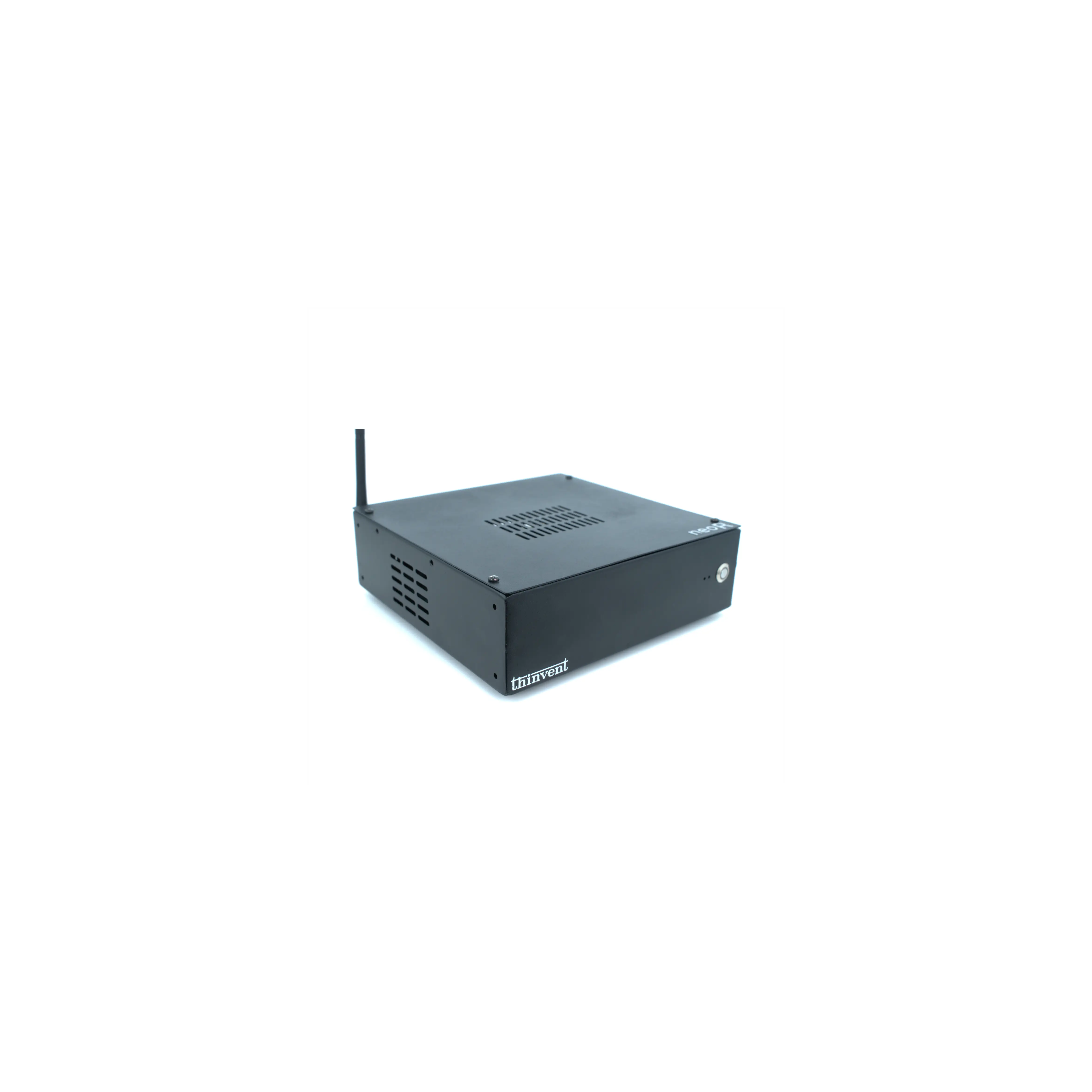
Thinvent integrates these robust processors into its diverse range of reliable industrial computing solutions. A prime example is the Thinvent® Aero Mini PC, which harnesses the efficient power of the Intel® processor N100. This 12th-generation chip, with 4 cores, a 3.4 GHz max frequency, and 6 MB cache, is paired with substantial 16GB DDR4 RAM to ensure smooth operation for a wide array of industrial tasks. Thinvent offers this platform with multiple operating system choices—including Windows 11 IoT, Windows 11 Pro, DOS, and various Linux distributions like Ubuntu and Thinux™—providing ultimate flexibility for system integrators. Built for durability and available in configurations with or without peripherals, Thinvent's Aero Mini PC exemplifies how high-performance industrial processing is delivered in a compact, versatile, and dependable package for global deployment.