Understanding Dell Computer Pricing
Dell offers a broad range of computers spanning home desktops, business laptops, all-in-ones, and compact mini PCs. Pricing varies widely depending on the processor, memory, storage, form factor, and whether the system is aimed at consumer, business, or enterprise use. Because Dell frequently refreshes its line-up and runs promotional pricing, the most accurate figure for any specific model is always the current listing on Dell's own site or an authorised reseller. As a general guide, entry-level desktops and compact mini PCs sit at the lower end of the range, mainstream business systems occupy the middle, and high-performance workstations and premium laptops sit at the top.
What Drives the Price of a Dell Computer
Several factors determine what you pay:
-
Processor: Newer generations and higher-tier chips (Core i5, i7, i9) cost more than entry Celeron or Pentium-class options.
-
Memory and storage: 4–8 GB RAM with a small SSD is common at the entry level; 16–32 GB and 512 GB–1 TB drives push the price up.
-
Form factor: A compact mini PC or thin client typically costs less than a full tower or premium all-in-one with a large display.
-
Operating system and licensing: Windows 11 Pro and business management tools add cost versus a system shipped without an OS.
-
Warranty and support: Extended on-site service and business SLAs increase the total.
Typical Price Tiers at a Glance
| Tier | Typical Use | Common Specs |
|---|---|---|
| Entry | Browsing, kiosks, basic office | Celeron/N-series, 4–8 GB RAM, 128–256 GB SSD |
| Mainstream | Business productivity | Core i3/i5, 8–16 GB RAM, 256–512 GB SSD |
| Performance | Multitasking, light creation | Core i5/i7, 16–32 GB RAM, 512 GB–1 TB SSD |
| Workstation | CAD, engineering, heavy workloads | Core i7/i9 or Xeon, 32–64 GB RAM, large SSD |
Where Thinvent Fits as an Alternative
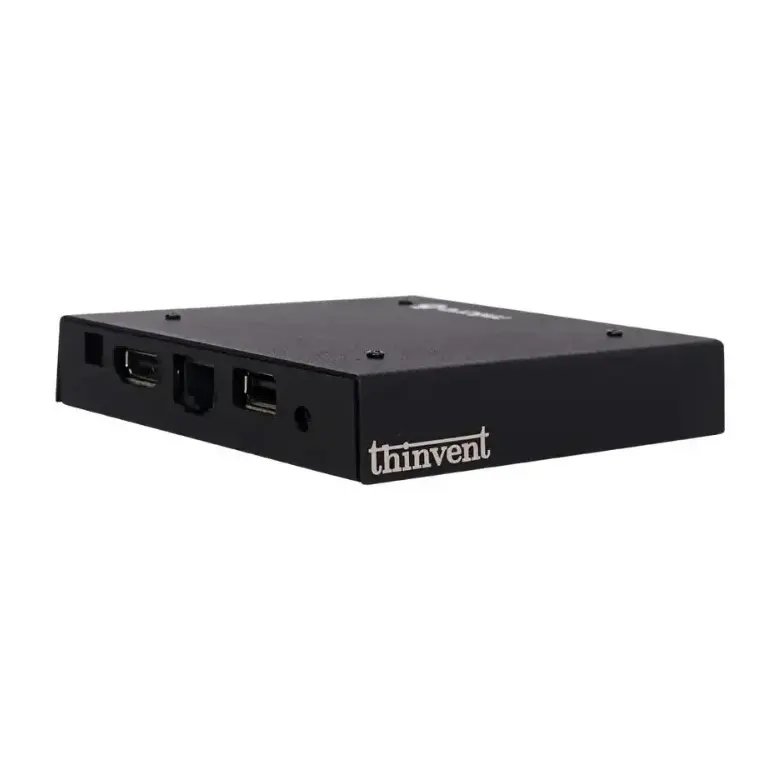
For buyers comparing Dell computers on price, Thinvent offers a focused range of industrial computers, mini PCs, thin clients, and all-in-one PCs built for reliability in demanding environments. Where a Dell business desktop might list at a mainstream price, a Thinvent Aero Mini PC delivers a compact, energy-efficient Intel-based system suitable for office, retail, and industrial deployments. Thinvent systems are designed for long life cycles, fanless or low-noise operation, and consistent availability — useful when you need to standardise a fleet rather than buy one-off units.
Choosing on Total Cost, Not Just Sticker Price
The purchase price is only part of the picture. Power draw, cooling, service life, and the cost of managing many units over several years often matter more than the initial figure. Thinvent mini PCs and thin clients are engineered to run cool and draw little power, which lowers running costs across a deployment. For organisations comparing Dell pricing against alternatives, it is worth evaluating the full ownership picture: hardware cost, energy use, reliability, and support over the system's working life.
Thinvent Products Built for Value and Reliability
Thinvent manufactures industrial computers, mini PCs, thin clients, and all-in-one PCs powered by Intel and ARM processors, with configurations ranging from entry-level Celeron and N-series chips to higher-performance Core i3 and i5 options. Memory options span 4 GB to 64 GB, storage from 128 GB to 1 TB SSD, and operating systems including Windows 11 Pro, Ubuntu Linux 24.04 LTS, and FreeDOS. Whether you need a compact desktop replacement, a thin client for virtualised desktops, or a rugged industrial PC, Thinvent provides dependable hardware at competitive pricing for customers worldwide.
Thinvent Alternatives to Dell
| Specification | Dell Desktop Computer | Thinvent Aero Mini PC |
|---|---|---|
| Processor | Intel Core i5-1145G7 (2.60 GHz) | Intel Celeron N5095A (up to 2.9 GHz) |
| Cores/Threads | 4 Cores | 4 Cores |
| RAM (max) | 32GB DDR4 | 16GB |
| Storage | 256GB SSD | 128GB SSD |
| Form Factor | Ultra Small Form Factor | Mini PC |
View these products:
The Thinvent Aero Mini PC is the closest match in our lineup, sharing the compact mini/ultra-small form factor and a 4-core processor design suited to everyday productivity, browsing, and office workloads. The honest trade-off is that the Aero uses an entry-level Intel Celeron N5095A with 16GB RAM and 128GB storage, so it offers less raw processing power and expandability than a Core i5 configuration with 32GB RAM and larger SSD options. For lighter, cost-conscious desktop use, the Aero remains a capable and modern alternative.