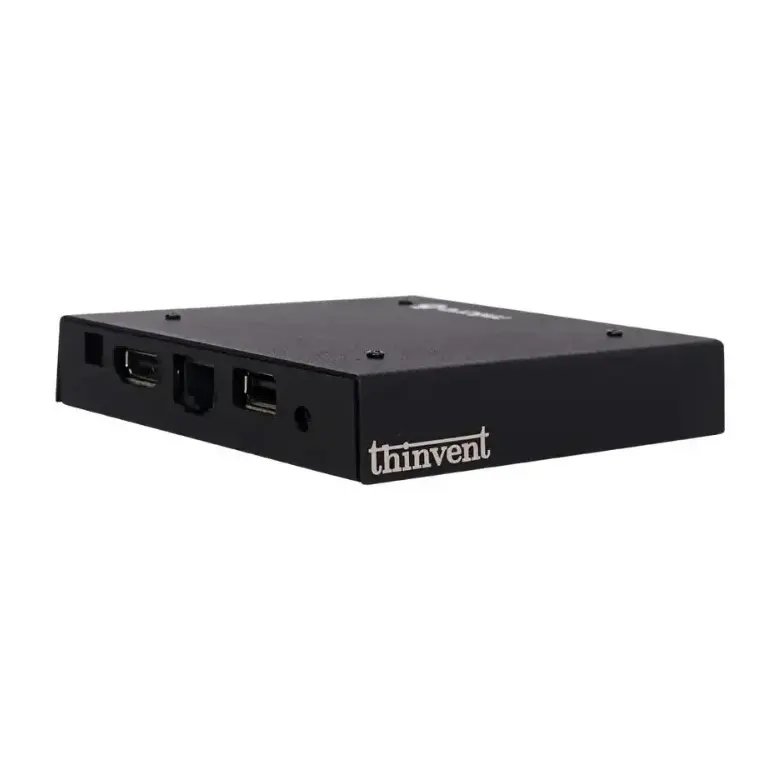
A rackmount PC is a computer system designed to be mounted within a standard 19-inch equipment rack, commonly used in data centers, server rooms, and industrial control cabinets. Unlike desktop towers, these systems are built for high-density deployment, offering superior organization, efficient cooling, and easier cable management in professional environments. They are engineered for 24/7 operation, featuring robust construction, enhanced thermal management, and support for multiple expansion cards to handle demanding workloads.
Key Specifications and Design
Rackmount PCs are characterized by their form factor, measured in rack units (U), where 1U equals 1.75 inches in height. Common sizes are 1U, 2U, and 4U, with larger units allowing for more internal components and expansion slots. Core specifications include:
-
Form Factor: 1U, 2U, or 4U rackmount chassis.
-
Processors: Support for a wide range, from efficient Intel Celeron/N-series for edge computing to high-performance Intel Core i3/i5/i7 and Xeon processors for server applications.
-
Memory & Storage: Typically support ECC (Error-Correcting Code) RAM for data integrity and multiple drive bays (2.5"/3.5") for RAID configurations.
-
Expansion: Multiple PCI/PCIe slots for adding network cards, GPUs, or specialized I/O cards.
-
Connectivity: Abundant ports including multiple Gigabit Ethernet, USB, and often serial ports for industrial device communication.
-
Power: Redundant hot-swappable power supplies are common in critical applications to ensure uptime.
Primary Use Cases and Applications
These computers are indispensable in environments where reliability, scalability, and space efficiency are paramount.
-
Data Center & Server Hosting: Acting as web servers, database servers, or network appliances (firewalls, routers).
-
Industrial Automation & Control: Deployed in manufacturing plants for PLC supervision, HMI systems, and data acquisition (SCADA).
-
Digital Signage & Media Servers: Powering video walls and content distribution networks in control rooms or public venues.
-
Telecommunications: Serving as network function virtualization (NFV) platforms or edge computing nodes.
-
Security & Surveillance: Functioning as centralized network video recorders (NVRs) for processing feeds from multiple IP cameras.
Rackmount PC vs. Traditional Desktop
| Feature | Rackmount PC | Traditional Desktop Tower |
|---|---|---|
| Form Factor | Standardized 19-inch rack width (1U-4U height) | Varied, standalone design |
| Deployment | High-density, vertical stacking in racks | Singular, occupies desk/floor space |
| Cooling | Optimized for front-to-rear airflow in confined spaces | Relies on case fans; less standardized |
| Expandability | Multiple PCIe slots; designed for add-in cards | Limited slots; consumer-grade |
| Durability | Built for 24/7 operation, often with metal chassis | For general office/consumer use |
| Primary Use | Data centers, industrial settings, servers | Personal computing, office workstations |
Thinvent Rackmount Industrial Computing Solutions
Thinvent offers a robust lineup of rackmount industrial PCs designed for mission-critical applications. Our systems combine the reliability of fanless or intelligently cooled designs with the performance needed for server and edge computing tasks. Built with industrial-grade components, Thinvent rackmount PCs ensure stable operation in demanding environments, from factory floors to telecom cabinets. Explore our range to find solutions featuring the latest Intel processors, scalable memory and storage options, and versatile I/O to meet your specific rack-mounted computing requirements.