What is a Radxa Cubie?
The term "Radxa Cubie" refers to a series of compact, single-board computers (SBCs) and development boards, similar to the popular Raspberry Pi. These boards are designed for developers, hobbyists, and industrial applications requiring a small, low-power, and versatile computing platform. They typically feature ARM-based processors, multiple connectivity options (like GPIO pins, USB, and Ethernet), and support for various operating systems, including Linux distributions. Their primary value lies in their open-source nature, modularity, and suitability for prototyping and embedded system development.
Key Specifications and Technical Details
While specific models vary, a typical Radxa Cubie board includes an ARM processor (such as Rockchip or Amlogic SoCs), integrated graphics, and onboard memory. Common features across many SBCs include:
-
Processor: ARM Cortex-A series CPUs (e.g., Quad-core or Octa-core).
-
Memory: 2GB to 8GB of LPDDR4 RAM.
-
Storage: eMMC flash storage and microSD card support.
-
Connectivity: Gigabit Ethernet, Wi-Fi, Bluetooth, and multiple USB ports (2.0/3.0).
-
Expansion: 40-pin GPIO header for connecting sensors, displays, and other peripherals.
-
Video Output: HDMI and sometimes MIPI DSI for displays.
-
Power: Typically powered via a USB-C or DC barrel jack, with low power consumption (often under 10W).
These specifications make them ideal for headless operations or as media centers, but they are generally not designed for heavy, sustained computational workloads like high-end industrial PCs.
Use Cases and Applications
Radxa Cubie boards excel in scenarios that benefit from their small size, low cost, and programmability. Common applications include:
-
IoT Gateways and Prototyping: Connecting and managing sensors in smart home or industrial IoT networks.
-
Digital Signage and Kiosks: Driving displays for information points or advertising in retail and public spaces.
-
Embedded Linux Projects: Serving as the brain for robotics, automation, or custom electronic projects.
-
Lightweight Desktop Computing: Functioning as a basic computer for web browsing, document editing, and programming education.
-
Network-Attached Storage (NAS) or Home Servers: Managing files and running lightweight server applications.
For more demanding, commercial, or industrial environments—where reliability, extended temperature ranges, fanless cooling for dust resistance, and long-term hardware/software support are critical—purpose-built industrial mini PCs are often a more suitable choice.
Comparison: SBCs vs. Industrial Mini PCs
| Feature | Radxa Cubie (Typical SBC) | Industrial Mini PC (e.g., Thinvent Aero) |
|---|---|---|
| Primary Use | Hobbyist projects, prototyping, education | Commercial, industrial, and embedded deployments |
| Build Quality | Consumer-grade components | Industrial-grade, ruggedized, often fanless |
| Processor | ARM-based SoC | x86-based (Intel/AMD), higher performance per core |
| Operating System | Linux-focused, community support | Broad OS support (Windows, Linux), with vendor driver support |
| Reliability & Support | Community-driven, variable | Commercial warranties, long-term availability, technical support |
| Power & Connectivity | Low-power, basic I/O | Robust I/O (multiple displays, serial ports, expansion slots) |
| Environmental | Standard operating temperatures | Wide temperature ranges, vibration resistant |
Thinvent's Industrial-Grade Mini PCs
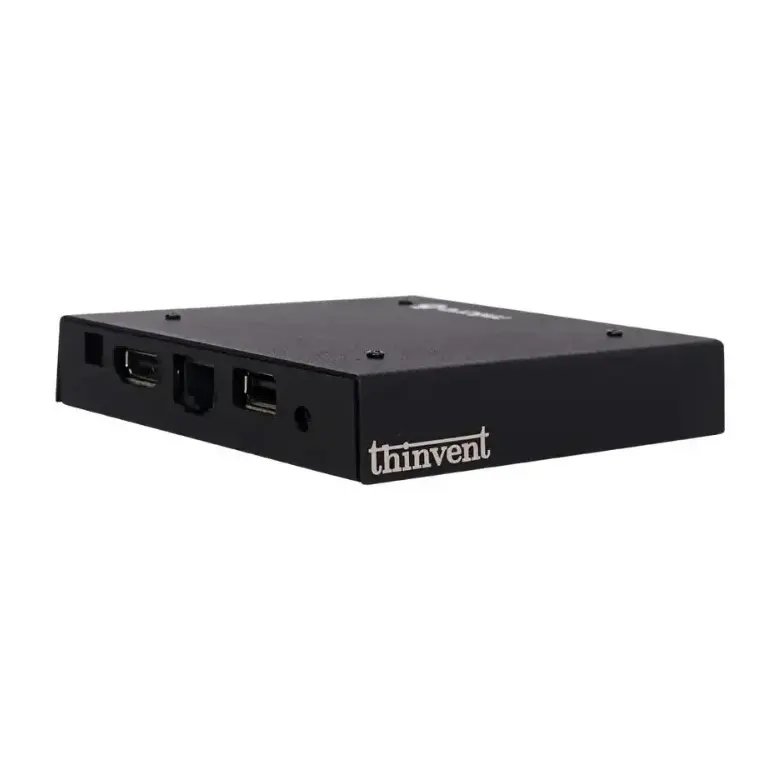
While Thinvent does not manufacture Radxa Cubie boards, we offer a superior alternative for professional and industrial applications with our Aero Series Fanless Mini PCs. These systems provide the compact form factor desired in SBC projects but are built with industrial durability and performance. Featuring efficient Intel processors (like the N100), fanless aluminum heatsink designs for silent and reliable operation in harsh environments, and support for multiple operating systems, they are ready for 24/7 deployment. Ideal for digital signage, kiosks, IoT edge computing, and thin client setups, Thinvent's mini PCs deliver the stability and support that commercial projects require.