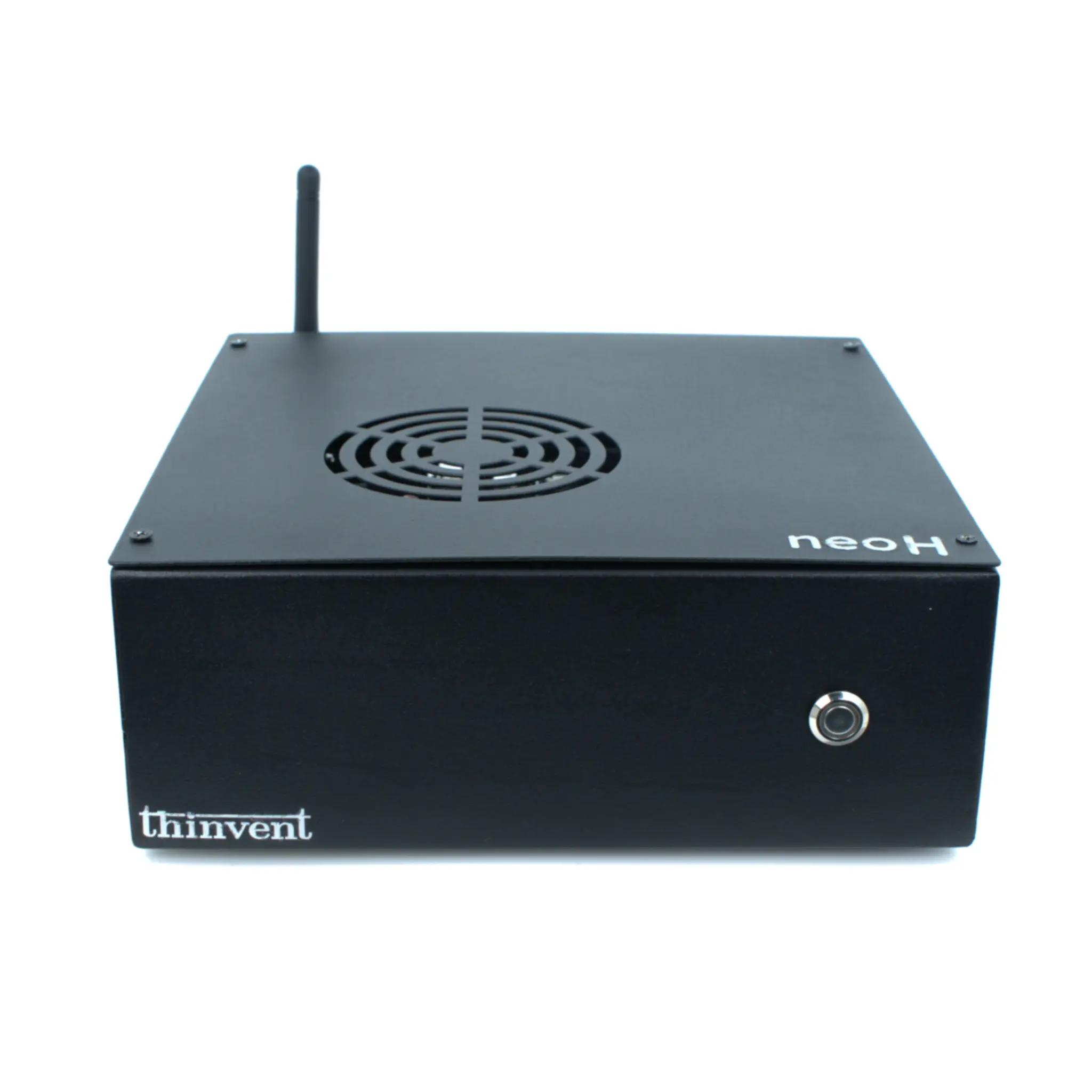
Why Choose a Raspberry Pi 4 Alternative?
While the Raspberry Pi 4 is a popular single-board computer for hobbyists and prototyping, its limitations—such as limited RAM (up to 8GB), reliance on microSD storage, and lack of industrial-grade reliability—often drive users to seek more robust alternatives. Compact mini PCs offer superior performance, expandability, and durability for applications requiring 24/7 operation, professional workloads, or advanced connectivity. These devices are designed as drop-in replacements that maintain a small footprint while delivering better processing power, storage options, and thermal management.
Key Specifications to Consider
When evaluating Raspberry Pi 4 alternatives, focus on processor performance, memory capacity, and storage type. The Raspberry Pi 4 uses a Broadcom BCM2711 quad-core Cortex-A72 ARM processor (up to 1.8GHz) with up to 8GB LPDDR4 RAM. Modern alternatives often feature Intel processors like the N100 (4 cores, up to 3.4GHz) or ARM Cortex-A55/A53 chips with higher clock speeds and more efficient architectures. For storage, alternatives typically offer eMMC (up to 64GB) or SSD (up to 512GB) instead of microSD, providing faster read/write speeds and better reliability. Additionally, many alternatives include dual-band WiFi, multiple USB ports, and HDMI outputs for versatile connectivity.
Use Cases and Applications
Compact mini PCs serve as excellent Raspberry Pi 4 alternatives across various scenarios:
-
Home automation and IoT hubs: Use a fanless ARM-based thin client with Thinux™ Embedded Linux for low-power, always-on operation.
-
Digital signage and kiosks: Deploy an Intel N100-based mini PC with 4-8GB RAM and SSD storage for smooth media playback and remote management.
-
Lightweight server or NAS: Choose a model with 16-32GB RAM and multiple USB 3.2 ports for file sharing, web hosting, or Docker containers.
-
Educational and development platforms: ARM-based options with 4GB RAM and 64GB eMMC provide a familiar Linux environment for coding and learning.
Comparison: Raspberry Pi 4 vs. Compact Mini PC Alternatives
| Feature | Raspberry Pi 4 (8GB) | Thinvent Micro 6 Pro (ARM) | Thinvent Treo Mini PC (Intel N100) |
|---|---|---|---|
| Processor | Cortex-A72 (4 cores, 1.8GHz) | Cortex-A55 (4 cores, 1.9GHz) | Intel N100 (4 cores, 3.4GHz) |
| RAM | 8GB LPDDR4 | 4GB Onboard | 4-32GB DDR4 |
| Storage | microSD (up to 256GB) | 64GB eMMC | 128-256GB SSD |
| WiFi | Dual-band | Dual Antenna | Optional (via adapter) |
| OS Support | Raspberry Pi OS | Thinux™ Embedded Linux | Ubuntu, Windows 11 Pro, FreeDOS |
| Power Consumption | ~5-7W | ~5W | ~15W |
| Price Range | ~$75 | ~$100-150 | ~$150-250 |
Thinvent's Range of Raspberry Pi 4 Alternatives
Thinvent offers a diverse lineup of compact mini PCs that serve as reliable Raspberry Pi 4 replacements, tailored for different performance and budget requirements. For low-power applications like IoT or embedded systems, our Micro 5 and Micro 6 Pro thin clients feature ARM Cortex-A53/A55 processors with 2-4GB RAM and 16-64GB eMMC storage, running Thinux™ Embedded Linux for efficient operation. For more demanding workloads such as digital signage or light computing, the Treo and Aero mini PCs utilize Intel N100 or Core i3/i5 processors, offering up to 32GB DDR4 RAM and 512GB SSD storage, with options for Windows 11 Pro or Ubuntu Linux. All models maintain a compact form factor, fanless cooling (on ARM variants), and industrial-grade reliability, making them ideal for 24/7 deployment in commercial, educational, or industrial environments.