Raspberry Pi computers are a popular series of low-cost, credit-card-sized single-board computers (SBCs) designed for educational, hobbyist, and light industrial applications. They are built around ARM-based system-on-a-chip (SoC) processors and are renowned for their accessibility, GPIO (General Purpose Input/Output) pins for hardware interfacing, and strong community support. While excellent for learning and prototyping, their consumer-grade components and typical plastic enclosures may not be suitable for demanding, 24/7 industrial environments that require extended temperature ranges, higher reliability, and robust connectivity.
For professional and industrial applications where a Raspberry Pi's capabilities are a starting point but greater performance, durability, and support are needed, industrial-grade compact PCs offer a compelling alternative. These systems, often fanless and built with industrial components, provide x86 architecture (like Intel processors) for broader software compatibility, superior I/O options, and enhanced reliability. Key specifications to consider include low-power, multi-core processors (e.g., Intel N-series), ample DDR4/DDR5 RAM (8GB to 16GB+), solid-state storage, and rich connectivity including multiple Gigabit Ethernet ports, USB 3.2, and HDMI/DisplayPort outputs.
Typical use cases for these compact industrial systems mirror and extend those of Raspberry Pi projects, including digital signage, IoT gateways, thin clients, kiosks, light edge computing, and factory automation. The primary advantage is their rugged, fanless design which allows for deployment in harsh, dusty, or vibration-prone environments without the risk of fan failure. They also offer greater expansion potential through M.2 slots and more robust power delivery systems compared to most SBCs.
| Feature | Typical Raspberry Pi | Industrial Compact PC Alternative |
|---|---|---|
| Architecture | ARM-based SoC | x86 (Intel/AMD) |
| Build Quality | Consumer-grade PCB | Industrial-grade, metal chassis |
| Cooling | Often passive or small fan | Fanless, heatsink design |
| Operating Temp | Limited commercial range | Wide industrial range (e.g., -20°C to 70°C) |
| I/O & Expansion | GPIO, limited USB/Ethernet | Multiple GbE, USB 3.2, optional serial, M.2 |
| Software Support | Linux-centric, some Windows | Full Windows, Linux, and RTOS support |
| Reliability | Good for prototyping | Designed for 24/7 continuous operation |
Thinvent's Industrial-Grade Compact PCs
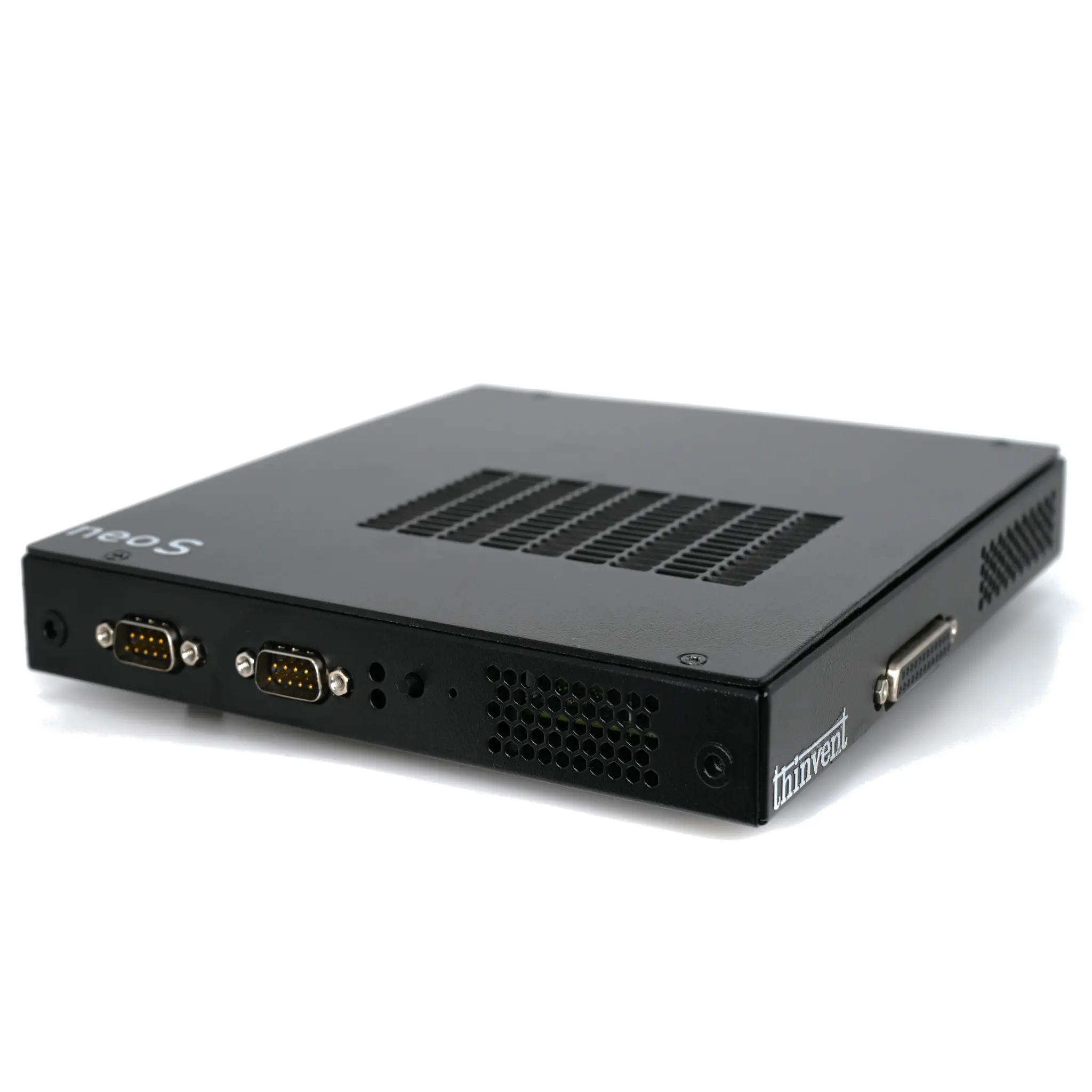
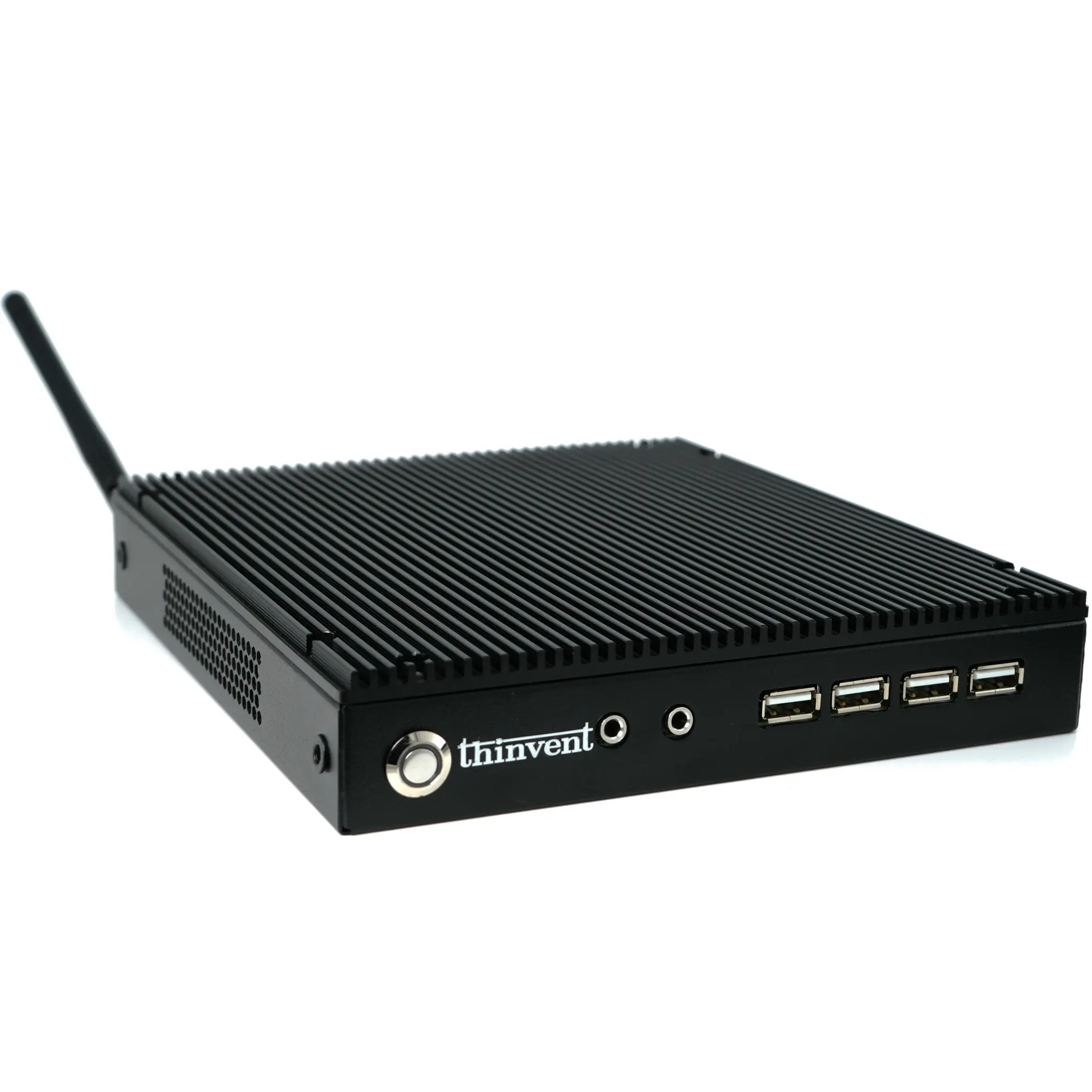
Thinvent offers a range of robust, fanless mini PCs that serve as powerful, reliable alternatives for applications where a Raspberry Pi's form factor is ideal but industrial-grade performance is required. Our Aero series, for example, features efficient Intel processors like the N100, providing a balance of performance and low power consumption. These systems come pre-configured with substantial memory and fast SSD storage, and are available with a choice of operating systems including Windows 11 IoT/Pro, Ubuntu Linux, or a bare-bones FreeDOS option for custom imaging. Built for durability in embedded and edge environments, Thinvent PCs provide the connectivity, software compatibility, and ruggedness needed for professional deployments worldwide.