Raspberry Pi Price - Raspberry Pi Alternative Mini PCs & Industrial Computers

What is a Raspberry Pi and What Are Its Alternatives?

The Raspberry Pi is a popular series of small, affordable, single-board computers (SBCs) designed for education, hobbyist projects, and light computing tasks. While excellent for learning and prototyping, its consumer-grade components and lack of robust I/O or industrial certifications can limit its use in commercial, industrial, or 24/7 operational environments. For professional applications requiring higher reliability, greater performance, extended temperature ranges, and commercial support, industrial-grade mini PCs and embedded systems serve as powerful alternatives.

Key Specifications and Technical Advantages of Industrial Alternatives

Industrial alternatives to the Raspberry Pi, such as fanless mini PCs, offer significant upgrades in build quality and capability. They typically feature more powerful x86 processors (like Intel Celeron, Pentium, or Core series), support for standard DDR4/DDR5 SO-DIMM memory (up to 64GB), and M.2 NVMe SSD storage. Key technical advantages include:

  • Rugged Design: Fanless, all-metal chassis for silent, dust-resistant operation in harsh environments.

  • Wide Power Input: Supports 9-36V DC input for vehicle and industrial power systems.

  • Extended Temperature Range: Operates reliably from -20°C to 70°C.

  • Rich I/O: Multiple Gigabit Ethernet ports, USB 3.2/4.0, COM serial ports, and dual HDMI/DisplayPort outputs.

  • Long-term Availability: Industrial-grade components with longer product lifecycles than consumer SBCs.

Professional Use Cases and Applications

These robust systems are engineered for demanding scenarios where a standard Raspberry Pi may not suffice:

  • Digital Signage & Kiosks: Driving multiple high-resolution displays in retail, hospitality, and public spaces.

  • Industrial Automation: Acting as a gateway or controller in manufacturing lines, often interfacing with PLCs via serial ports.

  • Edge Computing & IoT Gateways: Collecting, processing, and transmitting data from sensors in smart factories, agriculture, and energy.

  • Thin Clients & VDI: Providing a secure, manageable endpoint for virtual desktop infrastructure in offices and call centers.

  • In-Vehicle Computing: Powering fleet management, surveillance, and passenger infotainment systems.

Comparison: Raspberry Pi vs. Industrial Mini PC

Feature Raspberry Pi (Typical) Industrial Mini PC (Typical)
Processor ARM-based SoC x86 (Intel/AMD)
Memory Soldered, LPDDR4 (up to 8GB) Socketed, DDR4/DDR5 SO-DIMM (up to 64GB+)
Storage microSD card, limited M.2 on some models M.2 NVMe SSD, 2.5" SATA bay
Operating Temp 0°C to 50°C (commercial) -20°C to 70°C (industrial)
Power Input 5V DC via USB-C 9-36V DC wide-range input
I/O & Expansion Limited GPIO, USB, Ethernet Multiple GbE, COM ports, USB, expansion slots
Reliability Consumer-grade, for light use Industrial-grade, designed for 24/7 operation
OS Support Linux-based, limited Windows Full Windows, Linux, and embedded OS

Thinvent's Industrial-Grade Raspberry Pi Alternatives

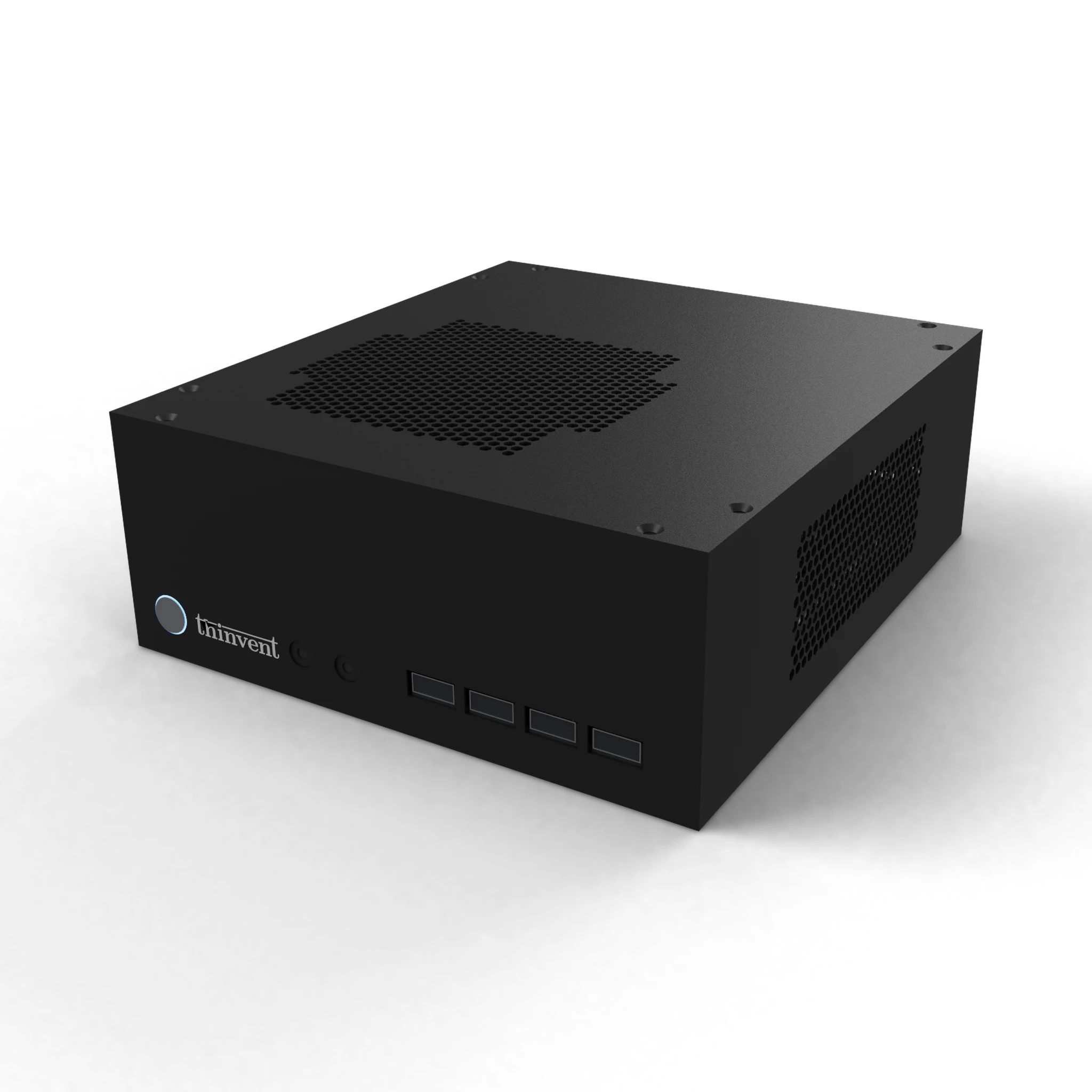
Thinvent offers a comprehensive range of fanless industrial computers and mini PCs that serve as superior, reliable alternatives to the Raspberry Pi for professional deployments. Our product lines, such as the Aero Mini PC series, are built with industrial durability in mind, featuring fanless cooling, wide-voltage DC input, and robust metal enclosures. They are pre-configured with powerful Intel processors (like the efficient N-series), ample DDR4 RAM, and fast SSD storage, and are available with your choice of operating system, including Windows 11, Ubuntu Linux, or a lightweight embedded OS. For applications demanding ruggedness, silent operation, and commercial longevity, explore Thinvent's solutions.

製品

フィルター
Reset filters 74344
Loading filters...

Loading filters...