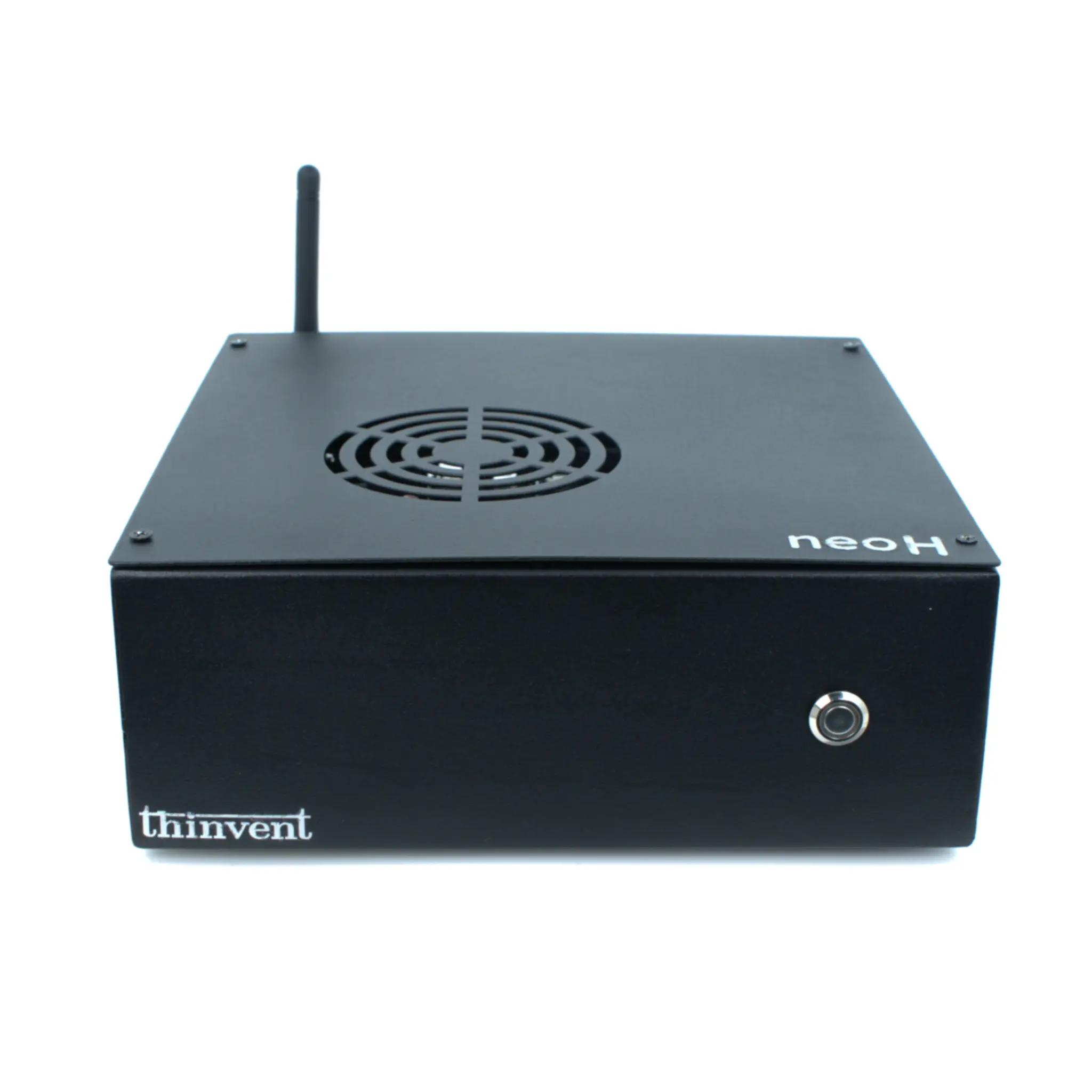
What are RDP Thin Clients for VDI?
Remote Desktop Protocol (RDP) thin clients are specialized, low-power endpoint devices designed to connect to a centralized Virtual Desktop Infrastructure (VDI). Unlike traditional PCs, these devices do not run a full desktop operating system or host applications locally. Instead, they act as a secure window to a virtual desktop hosted on a server, transmitting only keyboard, mouse, and display data. This architecture centralizes computing power, data, and management, making it ideal for environments requiring high security, simplified IT management, and consistent user experiences across multiple locations.
Key Specifications and Technical Details
Modern RDP thin clients are engineered for efficiency and reliability in VDI environments. Key specifications include:
-
Processor: Typically feature low-power, fanless processors from ARM (like Cortex-A53/A55) or Intel (Atom, Celeron N-series). These provide sufficient performance for decoding video streams without generating excess heat.
-
Memory & Storage: Equipped with modest onboard RAM (2GB-8GB) and eMMC or SSD storage (16GB-128GB), sufficient for the thin client OS and connection software.
-
Connectivity: Include multiple display outputs (HDMI), USB ports for peripherals, and reliable wired Gigabit Ethernet for optimal network performance. Some models offer dual-band Wi-Fi for flexible deployment.
-
Operating System: Run a lightweight, secure embedded OS like Thinux™ Embedded Linux or a stripped-down Windows IoT, which boots quickly and is resistant to malware.
-
Form Factor: Often compact, fanless, and designed for VESA mounting, saving valuable desk and space.
Use Cases and Applications
RDP thin clients are deployed across various industries to deliver secure, managed desktop access:
-
Corporate Offices & Call Centers: Provide standardized, secure desktops for task workers, ensuring data never leaves the data center.
-
Healthcare (Hospitals, Clinics): Enable access to Electronic Health Records (EHR) systems from any bedside or station while maintaining strict HIPAA/GDPR compliance.
-
Education (Schools, Libraries): Offer a consistent learning environment for students and easy management for IT staff, with robust hardware that withstands heavy use.
-
Manufacturing & Retail: Power digital signage, point-of-sale (POS) systems, and kiosks with reliable, always-on operation.
Comparison: ARM vs. Intel-Based Thin Clients
| Feature | ARM-Based Thin Clients | Intel-Based Thin Clients |
|---|---|---|
| Typical Processor | Cortex-A53, A55 (4-core) | Intel Celeron N100, Atom series |
| Power Consumption | Very Low (often 5-10W) | Low to Moderate (10-15W) |
| Performance Profile | Excellent for basic RDP/VDI, web apps | Good for RDP/VDI, can handle slightly more local processing |
| Thermal Design | Completely fanless, silent | Often fanless for N-series |
| Cost | Generally lower | Slightly higher |
| Ideal For | High-density deployments, task workers, kiosks | Environments needing flexibility for light local apps |
Thinvent RDP Thin Clients for VDI
Thinvent offers a robust range of RDP-ready thin clients and mini PCs perfectly suited for VDI deployments. Our Micro series thin clients, powered by efficient ARM processors, provide an ultra-low-power, fanless solution for basic virtual desktop access. For scenarios requiring a bit more local processing capability or support for specific protocols, our Treo and IPC series devices feature Intel processors like the N100. All Thinvent devices are built for 24/7 reliability, feature secure operating systems like Thinux™, and come in compact, mountable form factors. This ensures you can find a cost-effective, durable, and high-performance endpoint to complete your virtual desktop infrastructure.