What Makes a Server Ideal for Jellyfin?
Jellyfin is a powerful, open-source media server that streams your personal media collection to any device. The key to a smooth experience lies in hardware that can handle real-time video transcoding. Transcoding converts video formats on-the-fly to match the playback capabilities of your client devices (e.g., a 4K HDR file to a 1080p SDR stream for a mobile phone). Without efficient transcoding, you'll face buffering and playback issues.
The most critical component for Jellyfin is the CPU with integrated graphics (iGPU), specifically Intel processors with Quick Sync Video (QSV) technology. QSV offloads the heavy lifting of video encoding/decoding from the CPU cores to a dedicated media engine, dramatically reducing power consumption and CPU load while enabling multiple simultaneous 4K transcodes. ARM-based processors, while power-efficient, generally lack the mature hardware transcoding support that Intel QSV provides for Jellyfin, making them unsuitable for transcoding-heavy workloads.
Key Specifications for a Jellyfin Server
When selecting hardware for Jellyfin, prioritize these specifications:
-
Intel Processor with UHD or Iris Xe Graphics: Models like the Intel N100, i3-1215U, or i5-1240P include modern QSV engines that support hardware decoding of H.264, H.265 (HEVC), and even VP9/AV1 on newer generations. The 12th generation and newer are ideal.
-
RAM: 8GB is a good starting point for a few concurrent streams. For heavy use with multiple 4K transcodes, 16GB or more is recommended.
-
Storage: Fast SSD storage (256GB or more) for the Jellyfin operating system and metadata database. Media files can reside on external drives or network-attached storage (NAS).
-
Passive Cooling: For a 24/7 home server, fanless or silent cooling ensures quiet operation and long-term reliability.
| Specification | Entry-Level (1-2 Streams) | Recommended (3-5 Streams) | High-Performance (6+ Streams) |
|---|---|---|---|
| Processor | Intel N100 (4 cores) | Intel i3-1215U (6 cores) | Intel i5-1240P (12 cores) |
| iGPU | Intel UHD Graphics (24 EUs) | Intel UHD Graphics (64 EUs) | Intel Iris Xe Graphics (80 EUs) |
| RAM | 8GB DDR4 | 16GB DDR4 | 32GB DDR4 |
| Storage | 128GB SSD | 256GB SSD | 512GB+ SSD |
| Typical Power | ~15W | ~25W | ~35W |
Use Cases and Applications
-
Home Media Server: Stream your Blu-ray rips, home videos, and music collection to smart TVs, phones, tablets, and gaming consoles anywhere in your home or remotely.
-
Small Office / Shared Environment: Serve media to a small team or family with multiple users watching different content simultaneously.
-
Docker / Containerized Setup: Jellyfin runs excellently in Docker containers. A mini PC with sufficient RAM and an Intel iGPU allows you to run Jellyfin alongside other services like Sonarr, Radarr, and Plex.
-
Low-Power Always-On Server: A fanless mini PC with an Intel N100 processor consumes under 20W at load, making it perfect for a silent, always-on media server that won't spike your electricity bill.
Thinvent's Jellyfin-Ready Products
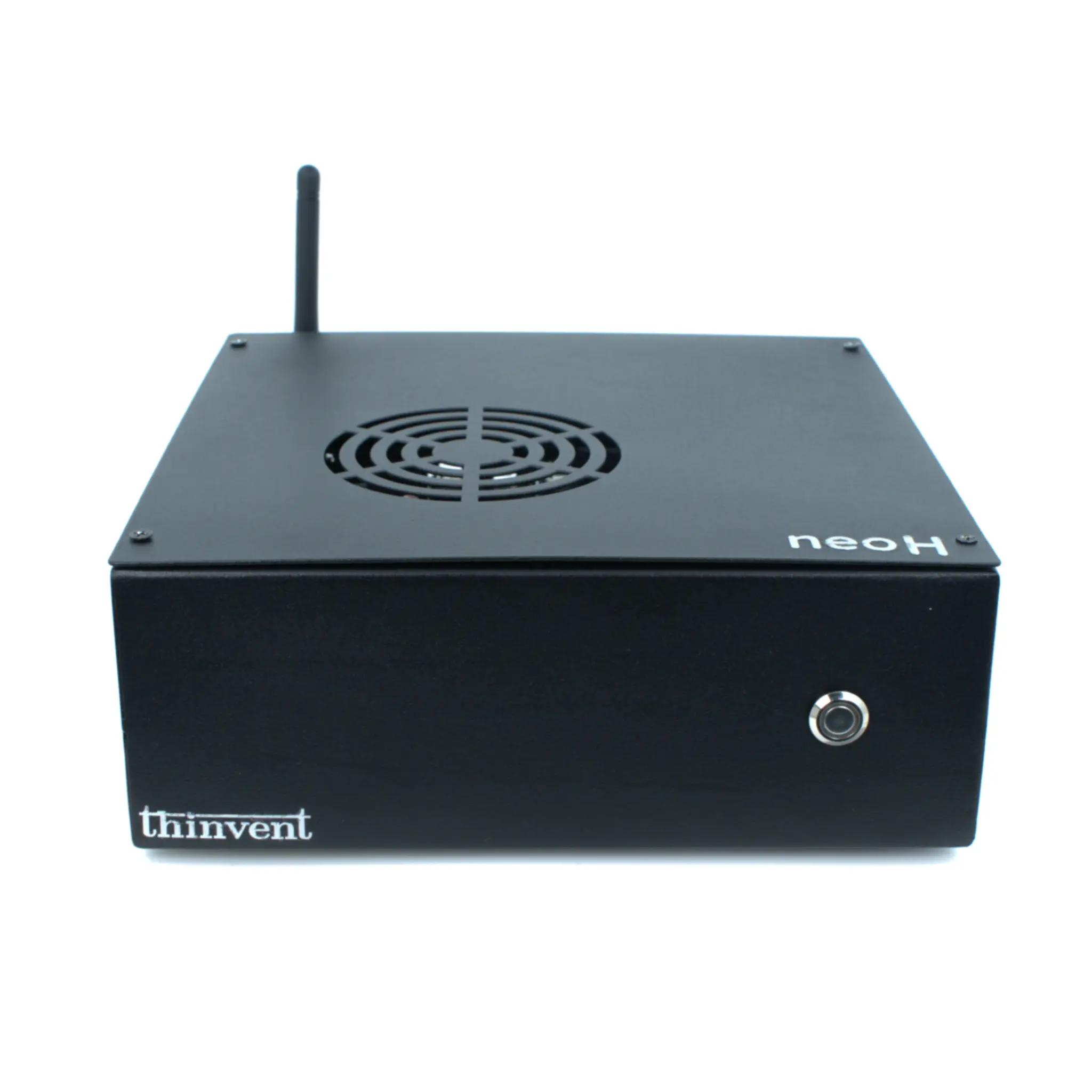
Thinvent offers a range of compact, power-efficient mini PCs and industrial computers designed for 24/7 operation, ideal for running a Jellyfin media server. Our Treo Mini PC and Aero Mini PC series feature Intel processors from the N100 to Core i5 with integrated Quick Sync Video, providing the perfect balance of performance and low power draw. The Industrial PC IPC3 and IPC5 offer robust, fanless designs with higher RAM and storage capacities for demanding multi-stream environments. All Thinvent systems are built for reliability and can be configured with Ubuntu Linux or Windows, ensuring seamless Jellyfin installation.