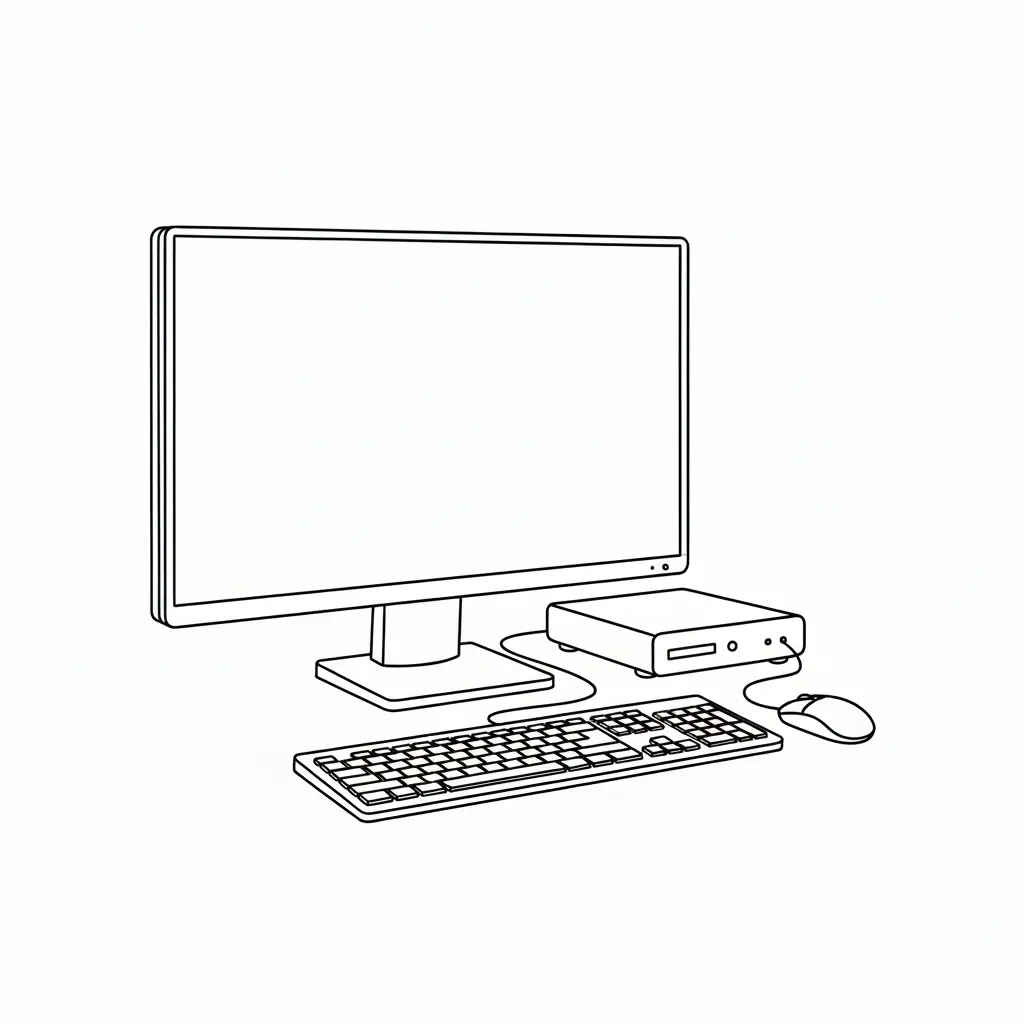
Thin Client Servers Explained
A thin client server is a central machine that runs applications and stores data, while users connect through lightweight thin client devices. With presentation virtualization, applications are installed and managed on centralized servers in the data center. Screen images are delivered to the user clients, which are called terminals or thin clients. The user devices send keystrokes and mouse movements back to the server. The thin client itself does little processing, so it can be small, quiet and inexpensive.
Enterprise IT teams use this model for centralized control, stronger security and simpler management. Administrators choose hardware, configure the back-end and provision clients from one place. Linux is well suited to thin client software because it has a small footprint, low resource requirements and high customizability. Linux thin client software runs on a wide range of hardware, from low-power devices with limited processing and memory to more capable machines.
Key Specifications to Compare
Thin clients differ mainly in processor, memory, storage and operating system. The table below lists the Thinvent thin clients on this page.
| Model | Processor | Cores | Max Frequency | Memory | Storage | Operating System |
|---|---|---|---|---|---|---|
| Micro 5R | ARM Cortex A53 | 4 | 2.0 GHz | 2 GB | 16 GB eMMC | Thinux Embedded Linux |
| Neo S (Ubuntu, 4 GB) | Intel Celeron J1900 | 4 | 2.4 GHz | 4 GB DDR3 | 32 GB MLC SSD x2 | Ubuntu Linux |
| Neo S (Windows 11 Pro, 8 GB) | Intel Celeron J1900 | 4 | 2.4 GHz | 8 GB DDR3 | 256 GB SSD | Windows 11 Pro |
| Neo S (Without OS, 8 GB) | Intel Celeron J1900 | 4 | 2.4 GHz | 8 GB DDR3 | 32 GB MLC SSD | Without OS |
| Neo S (Without OS, 4 GB) | Intel Celeron J1900 | 4 | 2.4 GHz | 4 GB DDR3 | 128 GB SSD | Without OS |
| Neo S (Windows 11 Professional, 8 GB) | Intel Celeron J1900 | 4 | 2.4 GHz | 8 GB DDR3 | 128 GB SSD + 32 GB MLC SSD | Windows 11 Professional |
| Neo S (DOS, 8 GB) | Intel Celeron J1900 | 4 | 2.4 GHz | 8 GB DDR3 | 256 GB SSD | DOS |
The Micro 5R uses an ARM processor. The Neo S models use an Intel Celeron J1900 with a 2 MB cache. Memory and storage vary across the Neo S configurations, so select the one that matches the number of users and the applications to be hosted.
Use Cases
Thin clients suit environments where many users run the same applications, such as offices, call centers, kiosks and classrooms. Because applications run on the server, updates and security patches are applied once, centrally. Sizing the server depends on the number of concurrent sessions and the applications in use. Infor's Web UI sizing guide notes that presentation virtualization centralizes applications in the data center, which is the same model these thin clients are built for.
The Thinvent range does not include an ARM Cortex A53 model with more than 2 GB of memory or an Intel processor other than the Celeron J1900. The Neo S line is the choice when a larger memory configuration or a Windows operating system is needed.
Thinvent Thin Clients for Server-Based Desktops
Thinvent has thin clients for server-based desktop deployments. The Thinvent Micro 5R runs Thinux embedded Linux on a 4-core ARM Cortex A53 processor with 2 GB of memory and 16 GB of eMMC storage. The Thinvent Neo S runs an Intel Celeron J1900 with 4 cores at up to 2.4 GHz, and is available with Ubuntu Linux, Windows 11 Pro, Windows 11 Professional, DOS or no operating system. Choose a Neo S configuration to match the memory, storage and operating system the deployment requires.