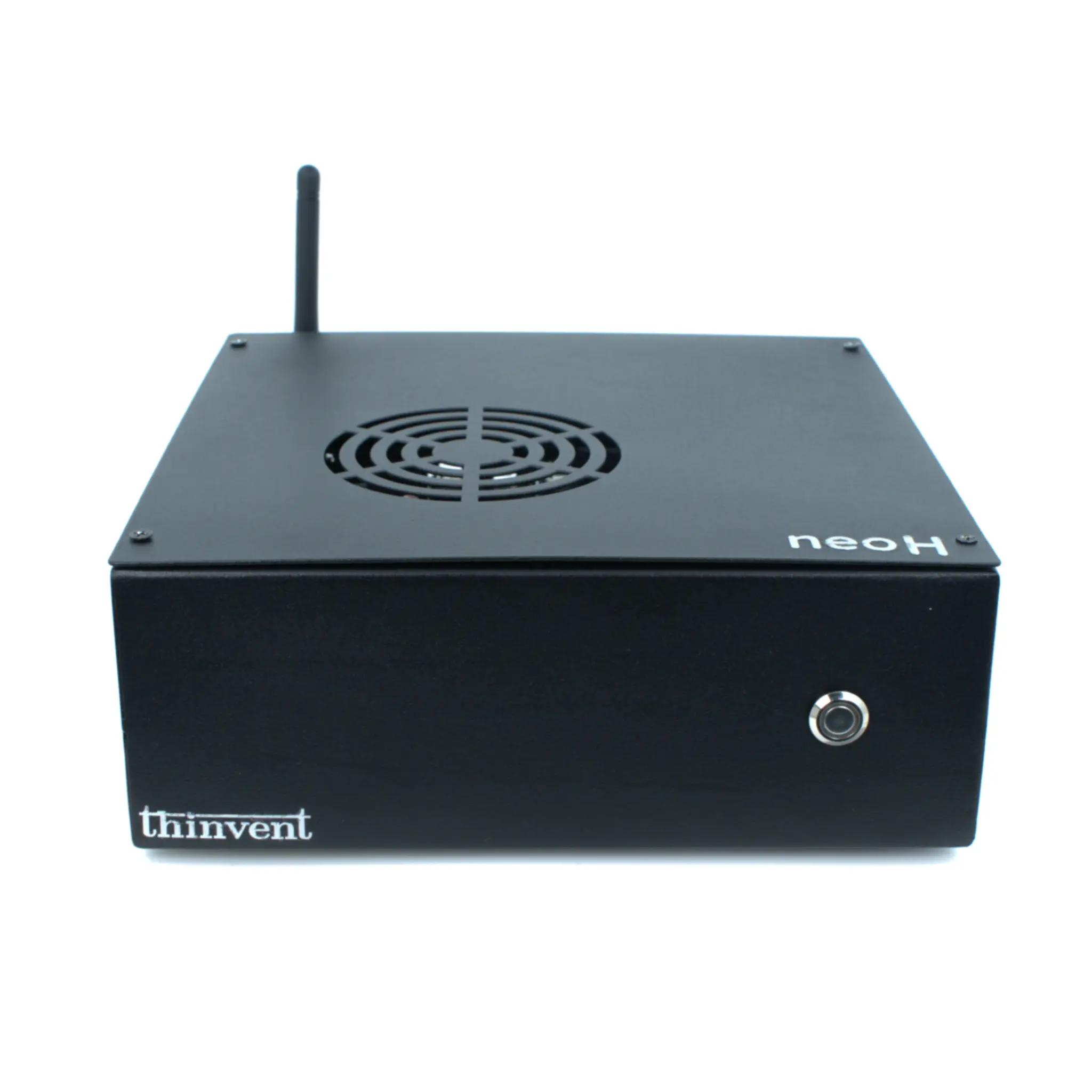
A slim client is a lightweight, network-dependent computing device designed to connect to a central server or cloud environment where the primary processing and data storage occur. Unlike traditional desktop PCs, slim clients have minimal local hardware—typically a basic processor, limited RAM, and small storage—as they rely on the server for applications, data, and security. This architecture makes them highly secure, easy to manage, and cost-effective, with lower power consumption and a smaller physical footprint ideal for space-constrained environments.
Key Specifications and Technical Details
Modern slim clients are built around energy-efficient processors, such as Intel's N-series (e.g., N100), which provide sufficient performance for remote desktop protocols without generating excess heat. They commonly feature 4GB to 16GB of RAM, 128GB to 256GB of SSD storage for the operating system and cache, and multiple connectivity options including Gigabit Ethernet, USB ports, and HDMI outputs. A critical feature is their fanless, solid-state design, which ensures silent operation and high reliability by eliminating moving parts that can fail. They support various operating systems tailored for thin-client use, including Windows IoT, Linux distributions, and specialized embedded OS.
Use Cases and Applications
Slim clients are deployed in scenarios where centralized management, security, and simplicity are paramount. In virtual desktop infrastructure (VDI) environments, they provide employees with secure access to corporate applications and data from a centralized server. They are ideal for call centers and retail point-of-sale (POS) systems, where standardized, low-maintenance terminals are required. Educational institutions use them in computer labs to deliver consistent software experiences while minimizing IT overhead. Healthcare settings benefit from their easy sterilization and secure access to patient records. Their small size also makes them perfect for digital signage and kiosks in public spaces.
Comparison: Slim Client vs. Traditional Desktop
| Feature | Slim Client | Traditional Desktop |
|---|---|---|
| Processing Power | Minimal local CPU; relies on server | High-performance local CPU |
| Data Storage | Limited local SSD; primary data on server | Large local HDD/SSD |
| Security | High (no local data, centralized control) | Variable (local data at risk) |
| Management | Centralized, easy software updates | Individual, time-consuming |
| Power Consumption | Very low (10-25W) | Moderate to high (65W+) |
| Total Cost of Ownership | Lower (less hardware, easier IT) | Higher (more hardware, maintenance) |
| Ideal For | Standardized tasks, VDI, secure access | Graphics, engineering, local apps |
Thinvent Slim Client Products
Thinvent offers a range of robust slim client solutions designed for reliability and efficiency in demanding environments. Our Aero Mini PC series, powered by Intel N100 processors, exemplifies the slim client philosophy with fanless cooling, compact form factors, and multiple OS options including Windows 11 IoT, Ubuntu Linux, and our proprietary Thinux™ Embedded Linux. These devices are built for 24/7 operation, making them perfect for VDI, digital signage, and industrial control systems. With customizable memory, storage, and connectivity, Thinvent slim clients provide a scalable, secure foundation for any centralized computing architecture.