What Are Space Computers?
Space computers, also known as rugged industrial computers, are specialized computing systems engineered to operate reliably in extreme and harsh environments. These environments include areas with high levels of vibration, shock, wide temperature fluctuations, dust, moisture, and electromagnetic interference. Unlike standard commercial PCs, these systems are built with durability and long-term reliability as core design principles, often featuring fanless cooling, solid-state components, and conformal coating on circuit boards to withstand demanding conditions.
Key Specifications and Technical Details
The defining characteristics of space-grade industrial computers focus on resilience and stable operation. Key specifications include wide operating temperature ranges, often from -40°C to 85°C, and support for wide-range DC power input (e.g., 9-36V DC) to handle power fluctuations. They utilize fanless, heatsink-based cooling to eliminate moving parts that can fail and to prevent dust ingress. Memory and storage typically use industrial-grade, soldered, or shock-mounted components. Connectivity is robust, with multiple Ethernet ports, serial COM ports, and expansion slots (like Mini-PCIe or M.2) for adding specialized communication modules or additional storage.
Primary Use Cases and Applications
These computers are critical in industries where failure is not an option. Common applications include:
-
Industrial Automation & Control: Operating machinery on factory floors with high vibration and particulate matter.
-
Transportation & Logistics: Used in fleet management, railway systems, and maritime applications exposed to shock and temperature extremes.
-
Outdoor & Digital Signage: Powering kiosks and displays in all weather conditions.
-
Edge Computing & IoT Gateways: Collecting and processing data directly in remote or unmanned locations like oil rigs, wind farms, and agricultural fields.
-
Military & Aerospace: Meeting stringent standards for reliability in mobile and field-deployed equipment.
Comparison: Industrial vs. Commercial Computers
| Feature | Industrial / Space Computer | Standard Commercial PC |
|---|---|---|
| Operating Temperature | Wide range (e.g., -40°C to 85°C) | Narrow range (e.g., 5°C to 35°C) |
| Cooling System | Fanless, passive heatsink | Active fan-based |
| Build Quality | Metal chassis, shock/vibration resistant | Primarily plastic, minimal damping |
| Power Input | Wide-range DC (9-36V), anti-surge | Standard AC (110-240V) |
| Component Lifespan | Industrial-grade, extended lifecycle | Consumer-grade, shorter lifecycle |
| Expansion & I/O | Multiple serial, GPIO, expansion slots | Standard USB, HDMI, Ethernet |
Thinvent's Rugged Industrial Computing Solutions
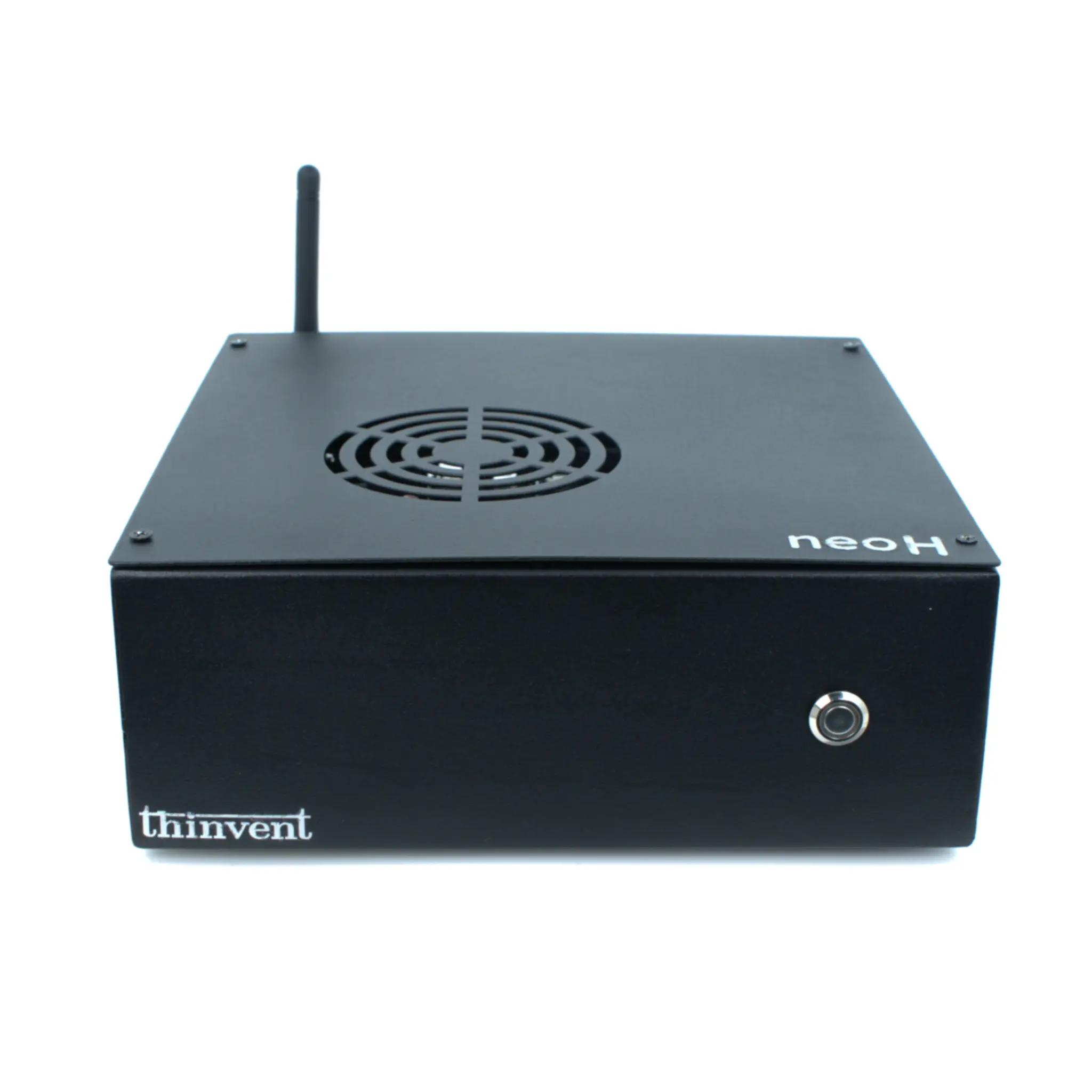
Thinvent specializes in manufacturing high-reliability industrial computers designed for space-constrained and challenging environments. Our product range includes compact Mini PCs and Industrial PCs built with fanless architectures for silent, maintenance-free operation. They feature efficient Intel processors, support for ample RAM and SSD storage, and offer flexible operating system options including Windows IoT, Linux distributions, and FreeDOS. These systems are ideal for deploying reliable computing power at the edge, in vehicles, or on the factory floor where standard computers would fail.