What is an SSD Server Storage System?
An SSD (Solid State Drive) server storage system is a computing platform designed for data-intensive applications, utilizing flash-based storage for superior speed, reliability, and efficiency compared to traditional hard disk drives (HDDs). These systems are engineered to handle demanding workloads where fast data access, low latency, and high input/output operations per second (IOPS) are critical. They are ideal for roles such as database servers, virtualization hosts, media streaming, and edge computing nodes.
Key Specifications and Technical Advantages
The core advantage of SSD storage in a server context is performance. SSDs have no moving parts, leading to faster boot times, rapid application loading, and near-instantaneous data retrieval. Key technical specifications to consider include:
-
Storage Interface: Modern systems use NVMe (Non-Volatile Memory Express) over PCIe interfaces for the highest throughput, while SATA III SSDs offer a cost-effective, high-performance alternative.
-
Endurance: Measured in Terabytes Written (TBW), indicating the drive's lifespan under write-intensive workloads.
-
Form Factor: Common server SSD form factors include 2.5-inch, M.2, and U.2, allowing for flexible integration into various chassis designs.
-
Reliability: SSDs are more resistant to physical shock and vibration, making them perfect for industrial and embedded environments. Their fanless operation, when paired with efficient processors, ensures silent and maintenance-free performance.
Applications and Use Cases
SSD server storage is transformative across numerous sectors:
-
IT & Data Centers: For database management, web hosting, and cloud caching where I/O speed is paramount.
-
Digital Signage & Media: Supports seamless playback of high-resolution video content in public displays and broadcast systems.
-
Industrial Automation: Provides reliable storage for Programmable Logic Controller (PLC) systems, Human-Machine Interfaces (HMIs), and data logging in manufacturing.
-
Edge Computing: Enables local data processing and storage in compact, rugged devices for IoT gateways and smart city infrastructure.
-
Virtualization: Ideal for hosting multiple virtual machines, requiring fast storage to allocate resources efficiently.
Comparison: SSD vs. HDD for Server Storage
| Feature | SSD (Solid State Drive) | HDD (Hard Disk Drive) |
|---|---|---|
| Speed | Extremely high (NVMe: 3500+ MB/s; SATA: 550 MB/s) | Slow (80-160 MB/s) |
| Latency | Very low (microseconds) | High (milliseconds) |
| Durability | High (no moving parts, shock-resistant) | Lower (mechanical parts prone to failure) |
| Power Draw & Heat | Lower | Higher |
| Noise | Silent (fanless systems possible) | Audible (spinning disks) |
| Cost per GB | Higher | Lower |
| Ideal For | Performance-critical apps, boot drives, caching | Archival storage, bulk data where speed is not priority |
Thinvent Industrial Computers with SSD Storage
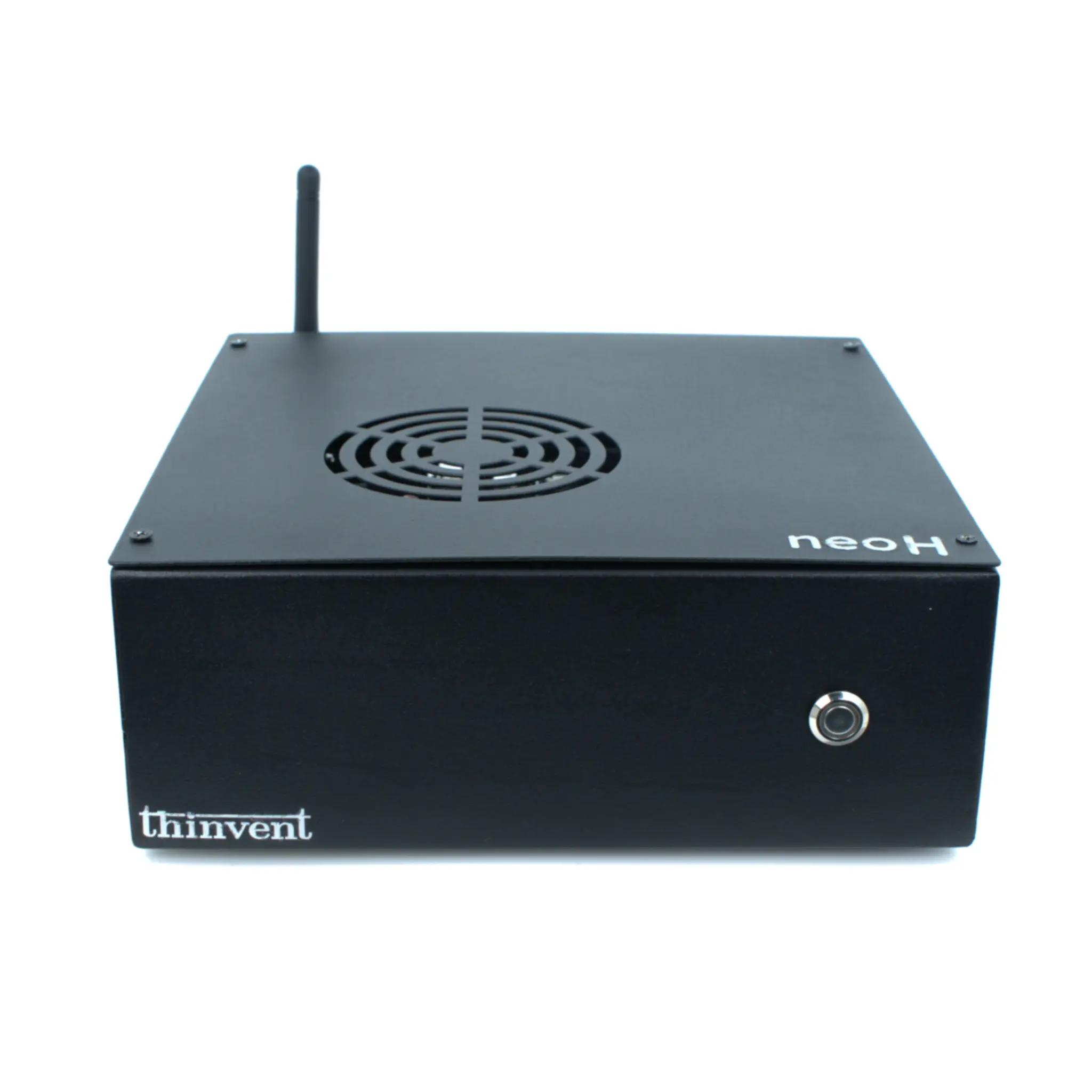
Thinvent offers a robust range of industrial computing solutions engineered with high-performance SSD storage options to meet diverse server and storage needs. Our product lines, including compact Mini PCs, powerful Industrial PCs, and space-saving Thin Clients, can be configured with various SSD capacities—from 128GB for lightweight OS deployment to 1TB+ for data-heavy applications. These systems leverage efficient Intel processors, from the N-series to Core i5, ensuring a balanced platform where fast storage isn't bottlenecked by CPU performance. Built for 24/7 operation in challenging environments, Thinvent computers provide the reliable, high-speed storage foundation required for modern server applications worldwide.