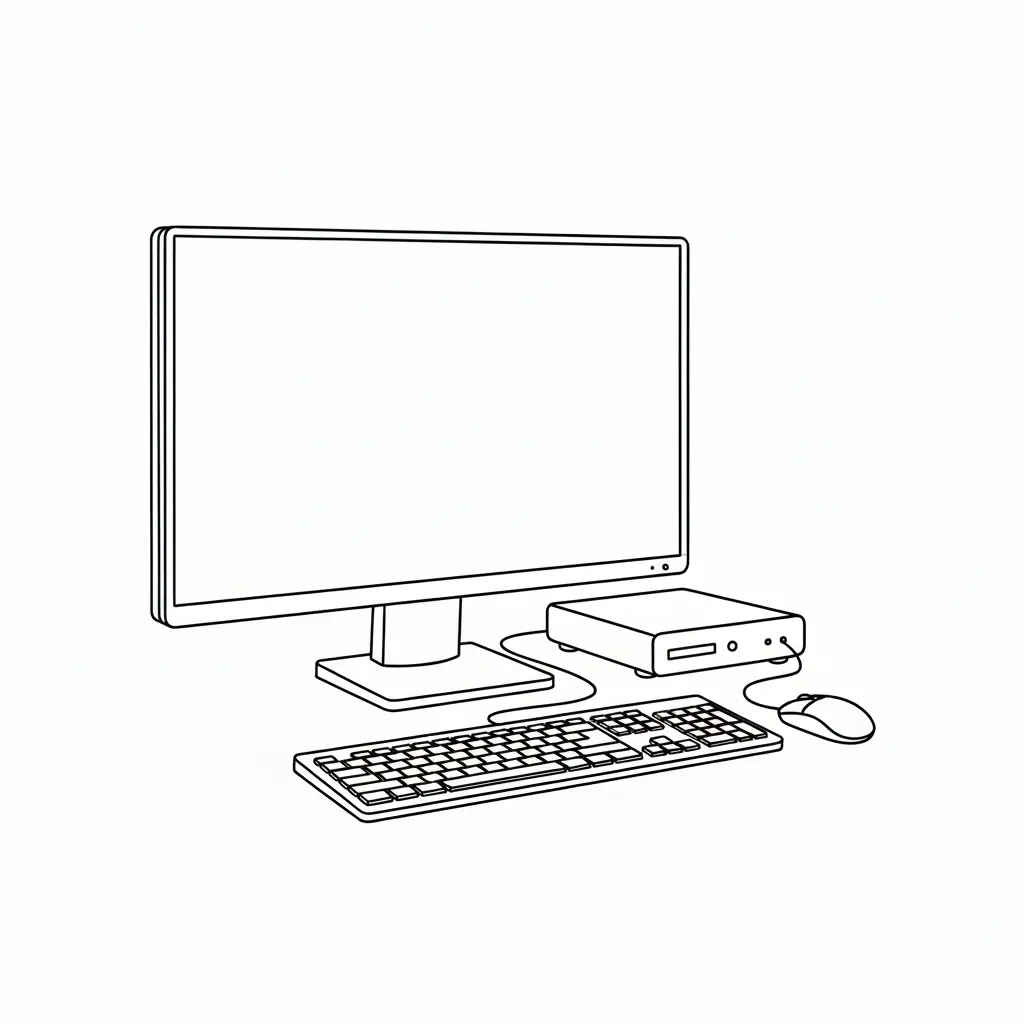
What Is a Workstation (Stacja Robocza)?
A workstation (Polish: stacja robocza) is a high-performance computer built for demanding professional tasks — engineering design, CAD/CAM, data analysis, medical imaging, and industrial control. Unlike a standard office desktop, a workstation is engineered for sustained workloads, continuous operation, and long-term reliability. In industrial and commercial settings, the term often refers to a fixed computing terminal that operators, engineers, or technicians rely on throughout the working day.
Modern workstations fall into several categories. Traditional tower workstations use powerful desktop CPUs and discrete graphics. Compact industrial workstations use fanless or low-noise designs, wide-temperature components, and rugged chassis to survive dust, vibration, and heat on a factory floor. Thin client workstations, meanwhile, run applications from a central server, reducing maintenance and improving security across large deployments.
Key Specifications to Consider
When choosing an industrial workstation, the specifications that matter most are the processor, memory, storage, connectivity, and operating system support.
| Specification | Typical Range | Why It Matters |
|---|---|---|
| Processor | Intel Celeron, N-series, Core i3/i5 | Determines application speed and multitasking |
| Cores | 4 to 12 | More cores help with parallel workloads |
| Memory (RAM) | 4 GB to 64 GB | Affects multitasking and large datasets |
| Storage | 128 GB to 1 TB SSD | Fast boot and application loading |
| Ethernet | Gigabit, single or dual port | Reliable wired networking and redundancy |
| Serial Ports | DB9 (optional) | Connects to PLCs, scales, and legacy equipment |
| Operating System | Windows 11 Pro/IoT, Linux, DOS | Compatibility with industrial software |
For most industrial workstation tasks — SCADA terminals, machine HMI, production dashboards, or engineering benches — a modern 6-core Intel Core i3 processor with 16 GB RAM and SSD storage delivers an excellent balance of performance, power efficiency, and cost.
Use Cases and Applications
Industrial workstations are deployed across many environments:
-
Factory floor terminals — operator stations for MES, SCADA, and machine control.
-
Engineering benches — CAD, simulation, and test equipment control.
-
Logistics and warehousing — inventory terminals, label printing, and dispatch systems.
-
Laboratory and medical — instrument control and data logging.
-
Kiosks and self-service — interactive terminals in public and industrial settings.
Because these systems often run 24/7, fanless cooling and a wide operating temperature range are valuable. Fanless designs remove the most common point of failure — the cooling fan — and prevent dust from being drawn into the chassis.
Choosing Between Pre-Built and Configurable Workstations
Many industrial buyers prefer configurable platforms over fixed consumer desktops. Options such as dual Gigabit Ethernet, multiple HDMI outputs, USB 3.2 Gen 2 and USB-C ports, and optional quad DB9 serial ports let a single platform serve many roles. Operating system choice also matters: Windows 11 Pro for standard commercial software, Windows 11 IoT for long-term servicing, Linux for custom applications, or DOS for legacy industrial programs.
Thinvent Workstations and Industrial PCs
Thinvent manufactures a range of industrial computers, mini PCs, thin clients, and all-in-one PCs suited to workstation roles. The Thinvent® Industrial PC IPC3, for example, pairs an Intel® Core™ i3-1215U processor (6 cores, up to 4.4 GHz, 10 MB cache) with 16 GB DDR4 RAM and a 1 TB SSD, and is available with Windows 11 Pro, Windows 11 IoT Value, DOS, or Thinux™ Embedded Linux. Optional quad DB9 serial ports support connection to PLCs and legacy industrial equipment, making it a strong fit for factory-floor and engineering workstation deployments worldwide.