What Are Industrial Computer Systems?
Industrial computer systems are specialized computing platforms engineered for reliability and longevity in demanding, non-office environments. Unlike standard commercial PCs, they are built to withstand extreme temperatures, dust, moisture, vibration, and continuous 24/7 operation. These systems form the computational backbone for automation, control, and data acquisition in sectors where failure is not an option. Key design features include fanless cooling for silent, dust-proof operation, wide-range power input, and robust enclosures, often with DIN-rail or VESA mounting options for easy integration into industrial cabinets or machinery.
Core Specifications & Technical Design
The architecture of an industrial PC prioritizes stability over peak performance. Common specifications span from low-power, efficient ARM-based processors to high-performance Intel Core CPUs, allowing for a fit-for-purpose selection. Memory and storage typically use soldered or industrial-grade components to resist shock and vibration, with options like eMMC flash or SSDs. Critical I/O includes multiple serial ports (RS-232/485), isolated digital I/O, and industrial Ethernet protocols. Power supplies are designed for wide voltage input (e.g., 9-36V DC) to handle electrical noise and fluctuations common in factories or outdoor installations.
Primary Applications and Use Cases
These rugged systems are deployed across numerous critical industries. In Factory Automation, they control PLCs, HMIs, and robotic arms on the production line. For Transportation & Logistics, they power in-vehicle computing, fleet management, and automated guided vehicles (AGVs). In Digital Signage & Retail, they drive kiosks and menu boards in high-traffic areas. They are also essential for Machine Vision systems performing quality inspection and for Edge Computing nodes processing data locally in IoT networks, reducing latency and bandwidth needs.
Comparing ARM-Based and x86-Based Industrial Systems
Choosing between ARM and x86 (Intel) architectures depends on the application's requirements for processing power, software ecosystem, and power consumption.
| Feature | ARM-Based Systems (e.g., Cortex A55) | x86-Based Systems (e.g., Intel Core i5) |
|---|---|---|
| Core Strength | Power efficiency, low heat, cost-effective | High performance, complex computation |
| Typical Use | Thin clients, digital signage, basic control | Machine vision, data analytics, advanced HMI |
| Power Draw | Very low (often 5V adapters) | Moderate to high (12V+ adapters) |
| Software | Linux-based (Thinux, Ubuntu), Android | Full Windows OS, Linux distributions |
| I/O & Expansion | Often limited, integrated | Greater expansion via PCIe, more ports |
Thinvent's Rugged Industrial Computing Solutions
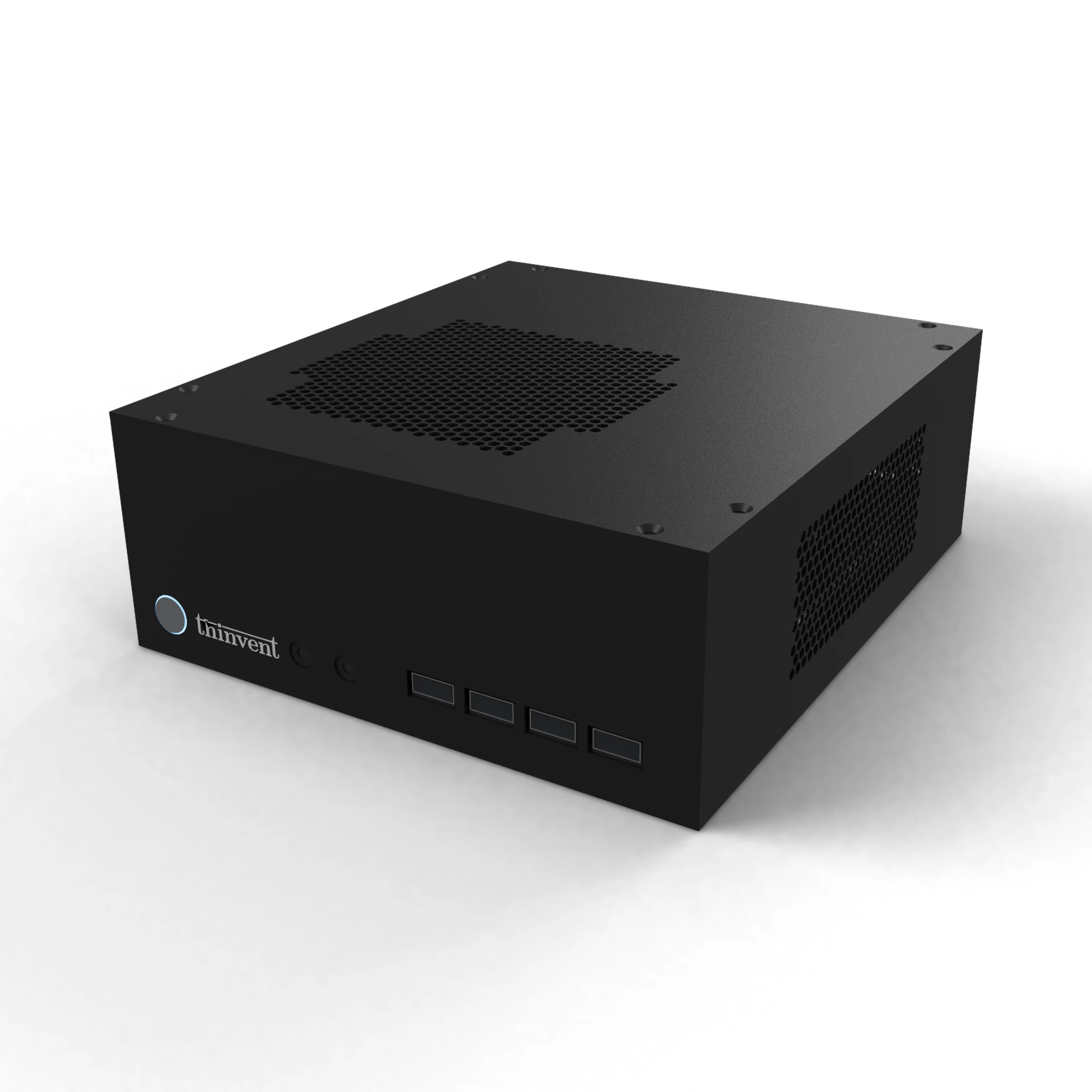
Thinvent offers a comprehensive portfolio of industrial-grade computing systems designed for global deployment in harsh conditions. Our range includes fanless Mini PCs like the Treo and Aero series, powered by efficient Intel processors, ideal for space-constrained automation. For maximum performance, the IPC series (IPC1, IPC3, IPC5) features 12th and 14th Gen Intel Core processors with ample RAM and SSD storage for demanding industrial workloads. For ultra-low-power and embedded applications, our Micro series thin clients utilize ARM Cortex processors with Thinux OS. All Thinvent systems are built with durability in mind, supporting wide operating temperature ranges and designed for reliable, long-term operation in challenging environments worldwide.