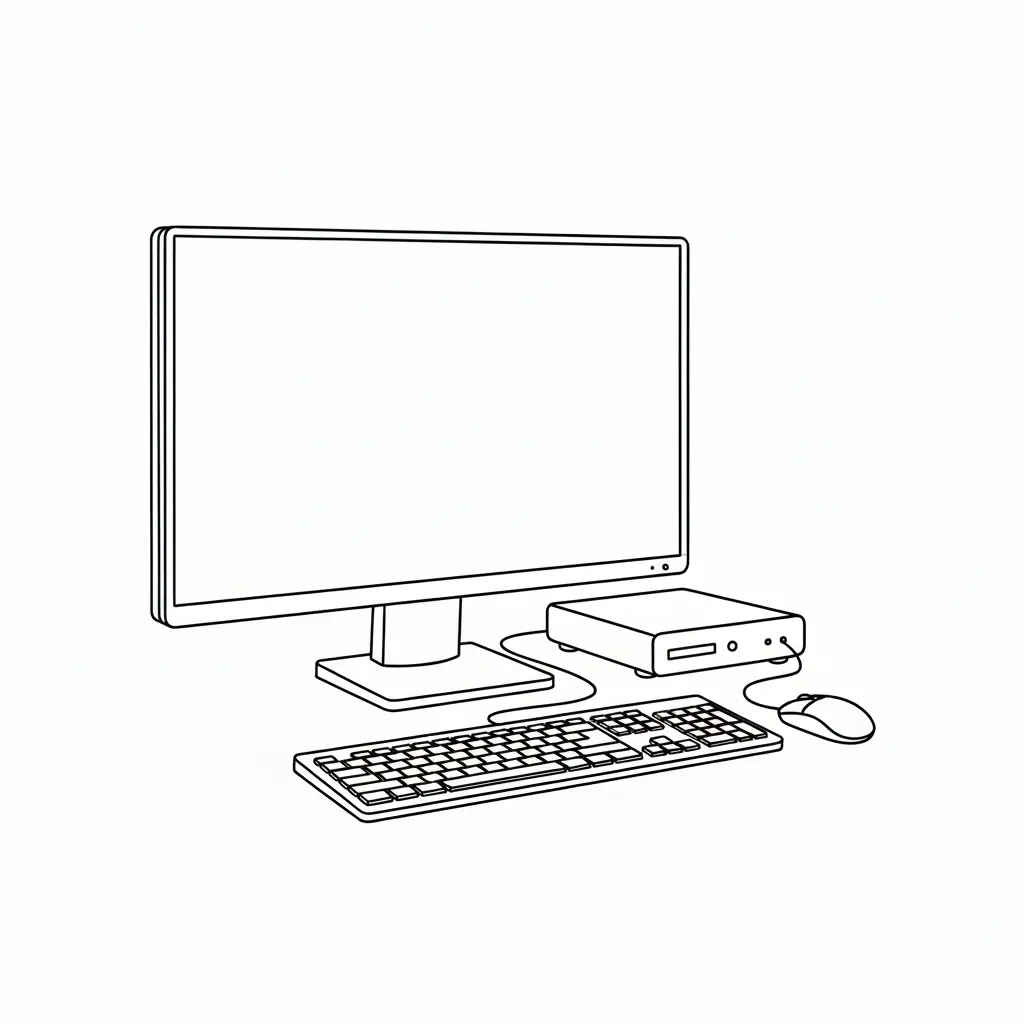
What Is the Difference Between a Thick Client and a Thin Client?
A thin client relies mainly on a central server for processing, storage and applications. A thick client, also called a fat client, contains most or all of the components needed to run software on its own. Thick clients have their own processing power and storage, so they can run applications locally. They are typically more powerful and can handle more complex tasks than thin clients.
Key Differences
The two designs differ in several areas. The main factors are security, deployment cost and processing power. Hardware cost, licensing and maintenance also differ between the two. Each organization sets its own priorities, so the right choice depends on which of these factors matters most.
| Factor | Thin Client | Thick Client |
|---|---|---|
| Processing | Mainly on the central server | On the local device |
| Storage | Mainly on the central server | On the local device |
| Hardware cost | Lower | Higher |
| Local application support | Limited | Full |
Use Cases
Thin clients suit environments where many users run the same applications from a central server, such as offices, call centers, kiosks and digital signage. Thick clients suit tasks that need local processing power, such as complex applications and workstations that run software without a constant server connection.
Thinvent Thin Clients
Thinvent's range includes thin clients built on Intel Celeron J1900 processors and on ARM Cortex A53 processors. The Neo S series uses the Intel J1900 processor, with 4 cores at up to 2.4 GHz and 2 MB of cache. Neo S models come with 4 GB or 8 GB of DDR3 RAM and 32 GB to 256 GB of SSD storage. Operating system options include Windows 11 Pro, Ubuntu Linux, DOS and no OS. The Micro 5R uses an ARM Cortex A53 processor with 4 cores at up to 2.0 GHz, 2 GB of onboard RAM, 16 GB of eMMC storage and Thinux embedded Linux. The Micro 5R also includes WiFi 6 and Bluetooth. The Neo S models do not include WiFi.