Thin vs Thick Client in Cloud Computing: Understanding the Differences
In cloud computing, the choice between thin and thick clients depends on where processing power is allocated. A thin client is a lightweight endpoint that relies entirely on a central server for application execution, data storage, and processing. It typically has minimal hardware resources—often an ARM or low-power Intel processor, 2–8 GB RAM, and limited local storage—and acts primarily as a display terminal for virtual desktops or cloud applications. By contrast, a thick client (also called a fat client) is a fully capable computer that runs applications locally, with its own processor, memory, and storage. In cloud computing environments, thick clients may still access cloud services but perform significant local processing, reducing server dependency.
Key Specifications and Technical Differences
The fundamental distinction lies in hardware requirements and network reliance. Thin clients typically feature fanless designs, low-power processors (e.g., ARM Cortex-A53, Intel N100), 2–4 GB RAM, and 16–64 GB eMMC storage. They boot from a minimal embedded OS and stream desktops via protocols like RDP, VNC, or Citrix HDX. In contrast, thick clients use mainstream processors (Intel Core i3/i5/i7), 8–32 GB RAM, and 256 GB+ SSDs, running full operating systems like Windows 11 Pro or Ubuntu Linux. Below is a comparison table highlighting typical specifications:
| Feature | Thin Client | Thick Client |
|---|---|---|
| Processor | ARM Cortex-A53/A55, Intel N100 | Intel Core i3/i5/i7 (12th–14th Gen) |
| RAM | 2–8 GB (often onboard) | 8–32 GB (DDR4/DDR5) |
| Storage | 16–64 GB eMMC | 256 GB–1 TB SSD |
| Power Consumption | 5–15W | 15–65W |
| Cooling | Fanless (passive) | Active (fan) |
| Operating System | Thinux Embedded Linux, ThinOS | Windows 11 Pro, Ubuntu Linux |
| Network Dependency | High (requires constant connection) | Low (can work offline) |
| Management | Centralized (virtual desktop infrastructure) | Decentralized (local admin) |
Use Cases and Applications
Thin clients excel in environments requiring centralized management, security, and low total cost of ownership. Common use cases include:
-
Virtual Desktop Infrastructure (VDI): Healthcare, finance, and call centers where data must remain on secure servers.
-
Education: Computer labs with hundreds of seats managed from a single server.
-
Retail & Hospitality: POS systems and kiosks needing rugged, low-power endpoints.
-
Remote Work: Secure access to corporate desktops via VPN or cloud gateways.
Thick clients are better suited for:
-
High-Performance Tasks: CAD/CAM, video editing, data analytics requiring local GPU/CPU power.
-
Offline Work: Field engineering, manufacturing floors with intermittent connectivity.
-
Software Development: Compilers and IDEs that benefit from local resources.
-
Gaming & Simulation: Applications demanding low-latency rendering.
Thinvent's Thin and Thick Client Solutions
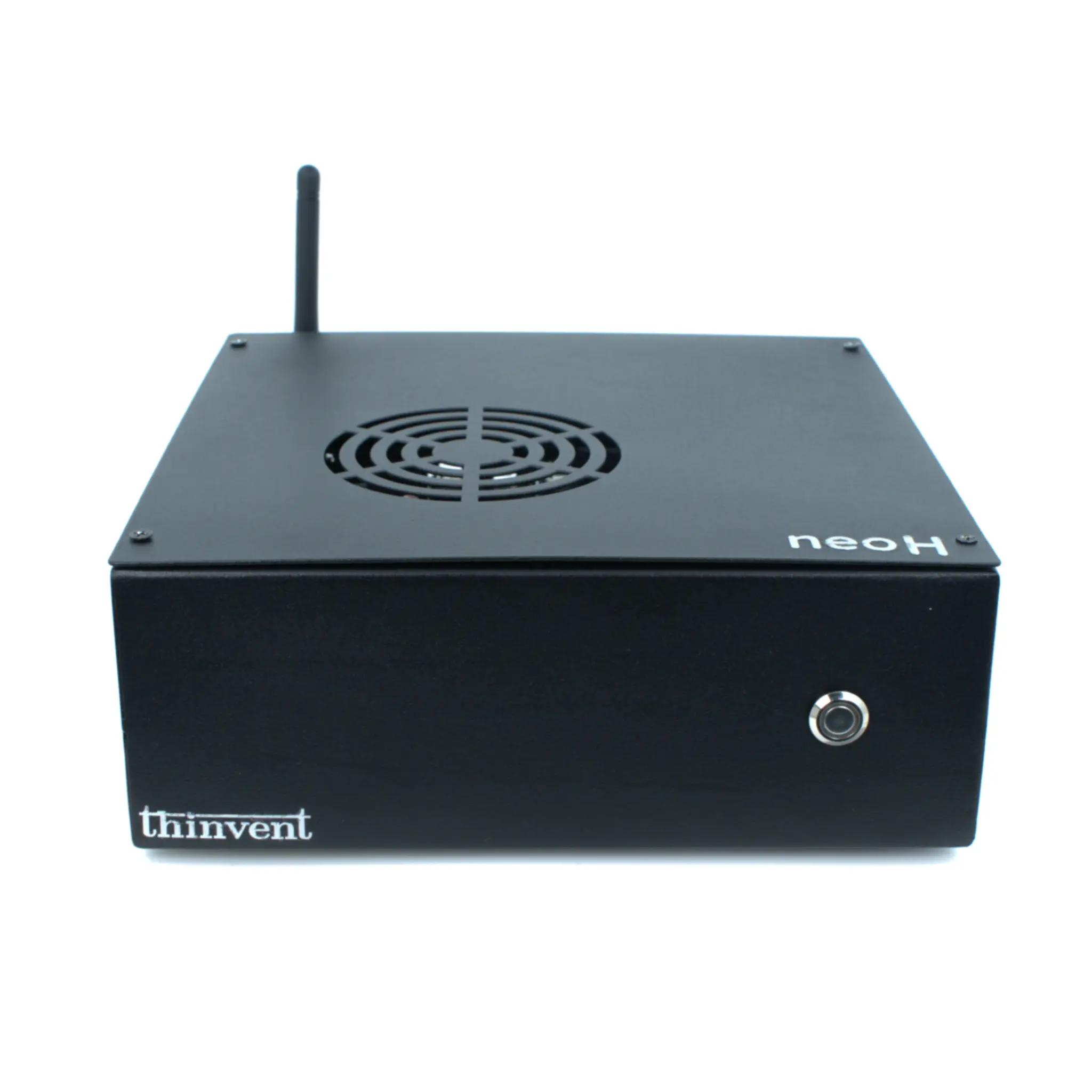
Thinvent offers a comprehensive range of both thin and thick client devices tailored to cloud computing environments. For thin client deployments, our Micro series features ARM Cortex processors (A53, A55) with 2–4 GB RAM, 16–64 GB eMMC storage, and Thinux Embedded Linux—ideal for VDI and cloud desktop access with zero local data risk. For thick client requirements, our Aero and Treo Mini PCs provide Intel N100, Core i3, and Core i5 processors (12th–14th Gen) with up to 32 GB DDR4 RAM and 512 GB SSD, running Windows 11 Pro or Ubuntu Linux. Industrial workloads are supported by our IPC series (IPC1, IPC3, IPC5), offering fanless designs with Intel N100 or Core i5-1240P processors, 8–16 GB RAM, and 256–512 GB SSD storage for demanding edge computing and cloud hybrid scenarios. All Thinvent products are engineered for reliability, energy efficiency, and seamless integration with leading cloud platforms.