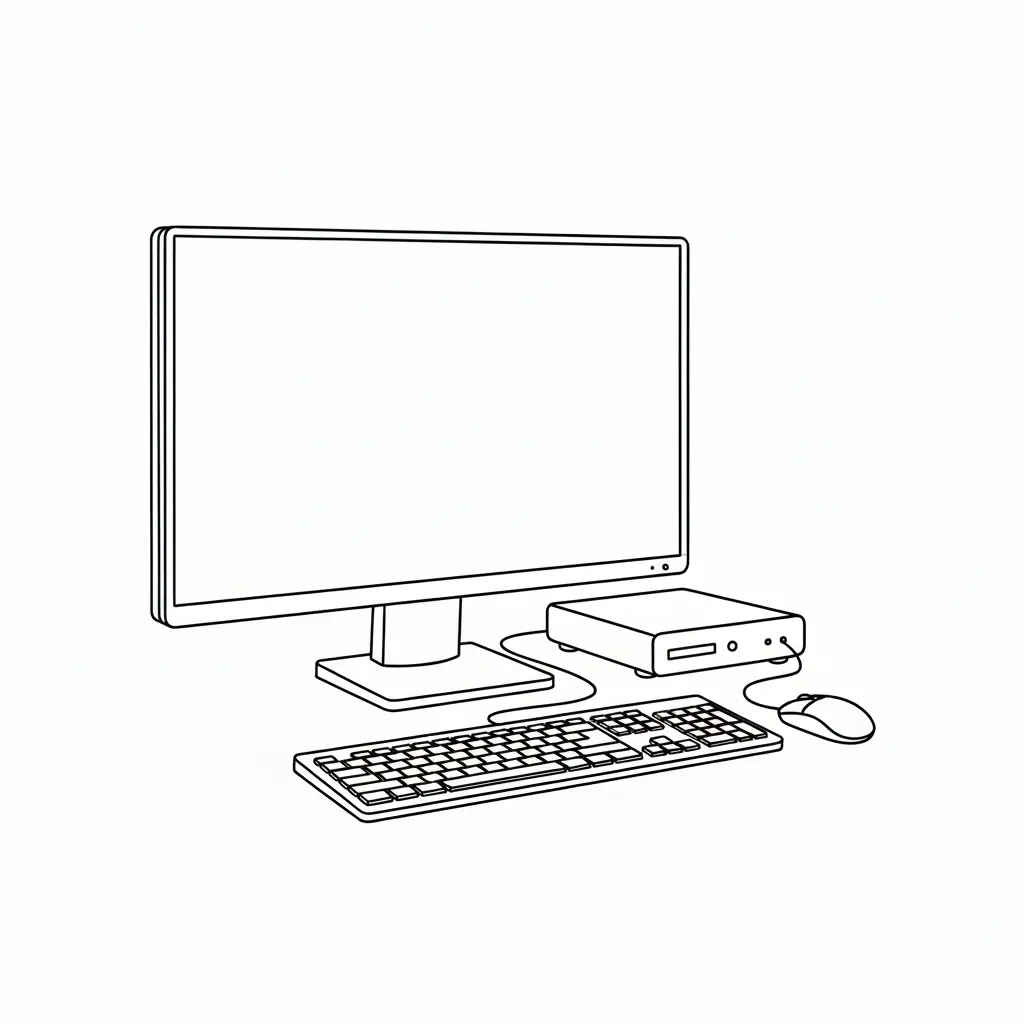
What is a thin client?
A thin client is a compact computer that runs a remote desktop or server-hosted applications. Most processing happens on the server, so the thin client needs only a small processor, modest memory and a flash storage drive. This design lowers hardware cost, power draw and maintenance work across a fleet of endpoints.
Thinvent thin clients use two processor families. The Thinvent Micro 5R uses an ARM Cortex A53 processor with 4 cores running up to 2.0 GHz. It has 2 GB of onboard RAM, 16 GB of eMMC storage, WiFi 6, Bluetooth and an HDMI 2.0 port. It runs Thinux, an embedded Linux operating system. The Thinvent Neo S series uses the Intel Celeron J1900 processor with 4 cores running up to 2.4 GHz and 2 MB of cache. Neo S models have 4 GB or 8 GB of DDR3 RAM and 32 GB to 256 GB of SSD storage. Neo S models do not include WiFi.
Key specifications
| Feature | Thinvent Micro 5R | Thinvent Neo S |
|---|---|---|
| Processor | ARM Cortex A53, 4 cores | Intel Celeron J1900, 4 cores |
| Max frequency | 2.0 GHz | 2.4 GHz |
| Cache | Not listed | 2 MB |
| Memory | 2 GB onboard RAM | 4 GB or 8 GB DDR3 RAM |
| Storage | 16 GB eMMC | 32 GB MLC SSD, 128 GB SSD or 256 GB SSD |
| Wireless | WiFi 6 and Bluetooth | No WiFi |
| Operating systems | Thinux embedded Linux | Ubuntu Linux, Windows 11 Pro, DOS, Thinux or no OS |
Use cases
Thin clients suit kiosks, digital signage, point-of-sale terminals, call centres, libraries and classrooms. Organisations use them to run virtual desktops and cloud applications from a central server. The Micro 5R suits low-power, wireless deployments. The Neo S series suits multi-user office work and Windows-based remote desktop setups, especially where a wired network is available.
Thinvent thin clients
Thinvent has thin clients with ARM and Intel processors, storage from 16 GB to 256 GB, and operating systems including Thinux, Ubuntu Linux, Windows 11 Pro and DOS. Buyers can choose a model with or without an operating system and with or without WiFi.