What is a Thin Client for Networking?
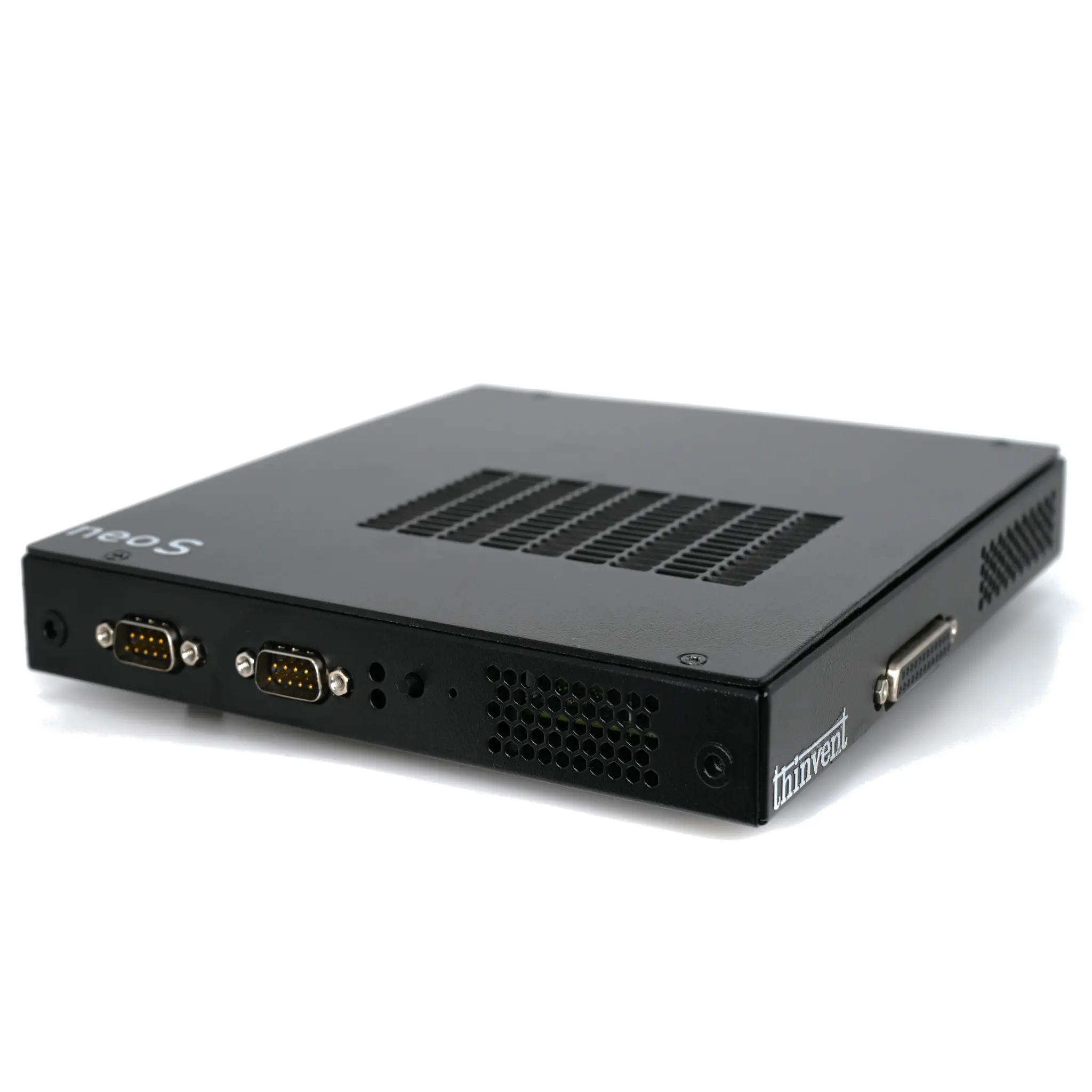
A thin client for networking is a lightweight, secure endpoint device designed to connect to a centralized server or cloud environment where the primary computing and data storage occur. Unlike traditional desktop PCs, thin clients have minimal local processing power, storage, and software, relying on the network to deliver applications and a desktop experience. This architecture is fundamental to Virtual Desktop Infrastructure (VDI), desktop-as-a-service (DaaS), and centralized computing models, offering significant advantages in security, manageability, and total cost of ownership.
Key Specifications and Technical Advantages
Modern industrial thin clients are engineered for reliability in networked environments. Key specifications include energy-efficient, fanless processors (like Intel's N-series) that ensure silent, maintenance-free operation. They typically feature modest but sufficient RAM (e.g., 8GB or 16GB) and small solid-state drives (e.g., 128GB SSD) primarily for the operating system and caching. Their core strength lies in robust connectivity: Gigabit Ethernet ports for stable, high-speed network access, multiple USB ports for peripherals, and display outputs like HDMI. The absence of moving parts (fans, hard drives) makes them ideal for 24/7 operation in harsh or dusty industrial settings.
Primary Use Cases and Applications
Thin client networking is deployed across diverse sectors where security, centralized control, and endpoint simplicity are paramount.
-
Enterprise VDI: Providing secure, standardized desktop access for office workers, call centers, and remote employees.
-
Healthcare: Accessing Electronic Health Records (EHR) systems from nursing stations or patient rooms, ensuring data never leaves the secure server.
-
Manufacturing & Industrial Control: Operating HMIs (Human-Machine Interfaces) and SCADA systems on the factory floor, where durability and consistent performance are critical.
-
Education: Deploying in computer labs and libraries, allowing easy management of software and user profiles across hundreds of devices.
-
Financial Services & Retail: Running transaction terminals and digital signage, where devices are easily managed and secured against local data breaches.
Comparison: Thin Client vs. Traditional Desktop for Networking
| Feature | Thin Client | Traditional Desktop PC |
|---|---|---|
| Local Processing | Minimal; relies on server | High; performs tasks locally |
| Local Storage | Very low (for OS) | High (for applications & data) |
| Security | High (data centralized, less local attack surface) | Variable (data at endpoint, higher risk) |
| Management | Centralized, simple to update and deploy | Individual, complex, time-consuming |
| Hardware Cost | Lower per unit | Higher per unit |
| Total Cost of Ownership | Lower (reduced IT overhead, energy use) | Higher (management, upgrades, energy) |
| Suitability | Task-based, standardized workflows | Power-user, graphics-intensive, offline work |
Thinvent's Industrial Thin Client Solutions
Thinvent offers a robust range of fanless industrial thin clients built for demanding networking environments. Our devices, like the Aero Mini PC series, are powered by efficient Intel processors and are designed for silent, reliable 24/7 operation. They support a variety of operating systems tailored for thin client deployments, including Windows 11 IoT/Pro, Ubuntu Linux, and our own Thinux™ Embedded Linux, providing flexibility for different IT infrastructures. With durable, compact form factors and a focus on essential, reliable connectivity, Thinvent thin clients are engineered to deliver a secure, manageable, and cost-effective endpoint solution for your VDI and centralized computing projects.