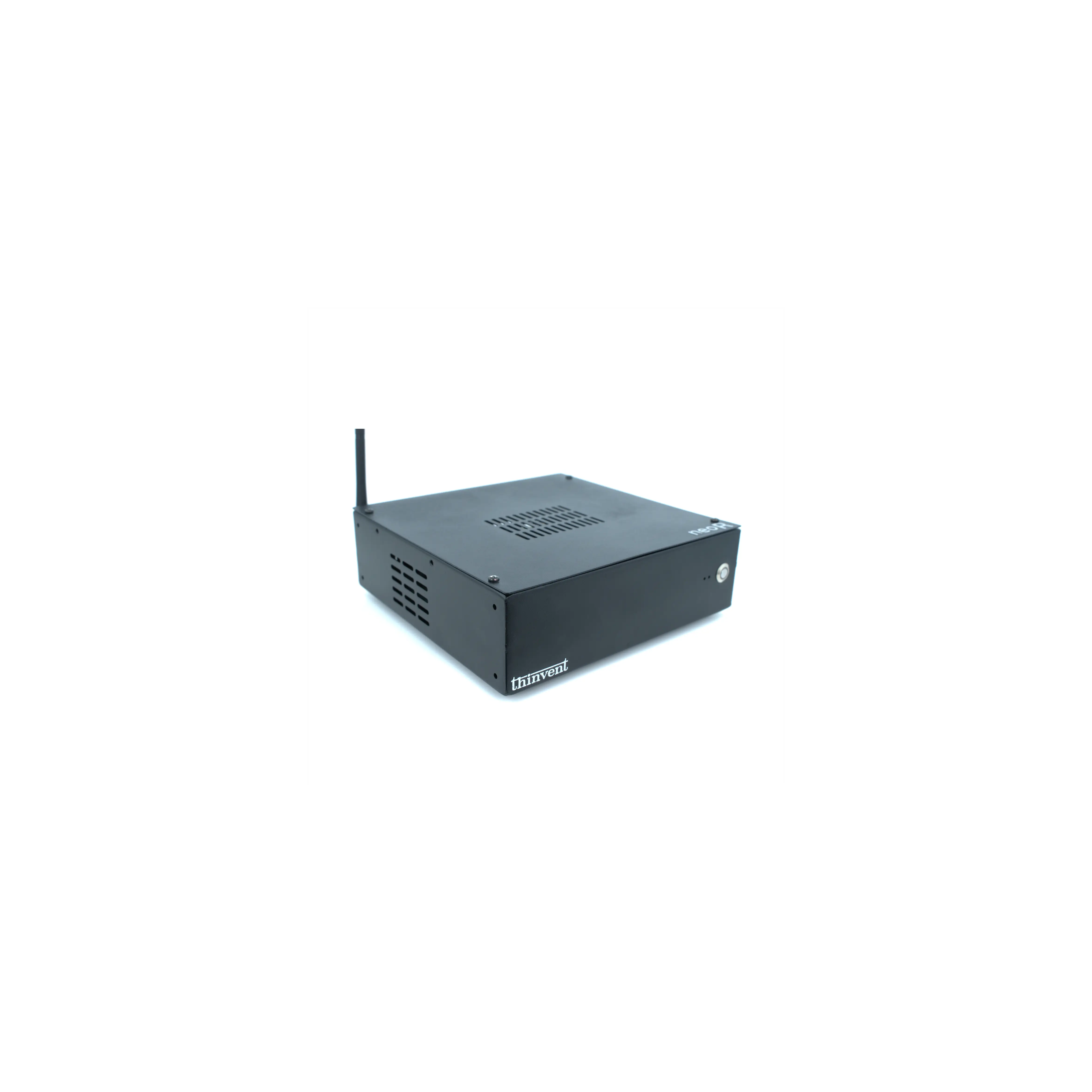
What Are Thin Clients?
Thin clients are streamlined, network-dependent computing devices designed to connect to a central server or cloud environment where the primary processing and data storage occur. Unlike traditional desktop PCs, they have minimal local hardware—such as low-power processors, modest RAM, and small solid-state storage—relying instead on the server for applications, data, and security. This architecture makes them exceptionally efficient, secure, and cost-effective for centralized IT management.
Key Specifications and Benefits
Modern thin clients, like those based on ARM Cortex or Intel processors, offer a balance of sufficient local processing for smooth display rendering and network communication with remarkable energy efficiency. Typical specifications include 2GB to 4GB of RAM, 16GB to 64GB of eMMC storage, and fanless designs for silent, reliable operation. Their primary benefits are:
-
Reduced Total Cost of Ownership (TCO): Lower hardware costs, minimal energy consumption (often using 5V-12V adapters), and simplified IT management.
-
Enhanced Security: With no local data storage or user-installable software, they are less vulnerable to malware and data theft.
-
Centralized Management: IT administrators can deploy, update, and troubleshoot software and policies from a single server for all endpoints.
-
Reliability & Longevity: Fanless, solid-state designs with fewer moving parts result in higher reliability and lower failure rates in demanding environments.
Ideal Use Cases and Applications
Thin clients are the optimal solution for scenarios requiring multiple, identical, and secure workstations. Common applications include:
-
Virtual Desktop Infrastructure (VDI): Accessing centralized Windows or Linux desktops from Citrix, VMware, or Microsoft environments.
-
Call Centers & Office Workstations: For CRM, ERP, and web-based applications where performance needs are consistent and moderate.
-
Digital Signage & Kiosks: Running scheduled content or interactive applications in retail, hospitality, or public spaces.
-
Educational Labs & Libraries: Providing students with controlled, uniform access to educational software and resources.
-
Industrial & Embedded Settings: Due to their rugged, fanless designs, they are perfect for factories, healthcare, and thin-client terminals in harsh conditions.
Comparison of Thin Client Architectures
| Feature | ARM-Based Thin Clients (e.g., Cortex A53/A55) | x86-Based Thin Clients (e.g., Intel N100, Core i3/i5) |
|---|---|---|
| Core Strength | Ultimate power efficiency, low heat, very low cost. | Broader software/hardware compatibility, higher performance for local tasks. |
| Typical Use | Lightweight VDI, web terminals, single-application kiosks. | More demanding VDI, legacy application support, local multimedia processing. |
| Power Draw | Very low (e.g., 5V/2A ~10W) | Low to Moderate (e.g., 12V/5A ~60W) |
| OS Flexibility | Often runs embedded Linux (Thinux™). | Can run embedded Linux, full Ubuntu, or Windows IoT/Pro. |
| Ideal For | Cost-sensitive, high-density deployments where efficiency is paramount. | Environments needing x86 compatibility or a performance boost for certain local functions. |
Thinvent's Range of Thin Client Solutions
Thinvent offers a comprehensive portfolio of thin clients and mini PCs tailored for diverse business computing needs. Our Micro series (Micro 5, Micro 6 Pro) features ultra-efficient ARM processors with integrated WiFi, perfect for space-constrained and cost-effective deployments. For scenarios requiring x86 architecture and higher performance, our Treo and IPC series utilize Intel processors like the N100, i3-1215U, and i5-1240P, providing robust support for a wider range of VDI protocols and applications. The Aero series represents our high-performance tier, featuring the latest Intel Core processors like the 14th Gen i5-120U for demanding professional workloads. All Thinvent devices are engineered for reliability with fanless cooling where applicable, multiple OS options (Thinux™, Ubuntu, Windows), and are built to deliver secure, manageable, and efficient computing solutions for enterprises worldwide.