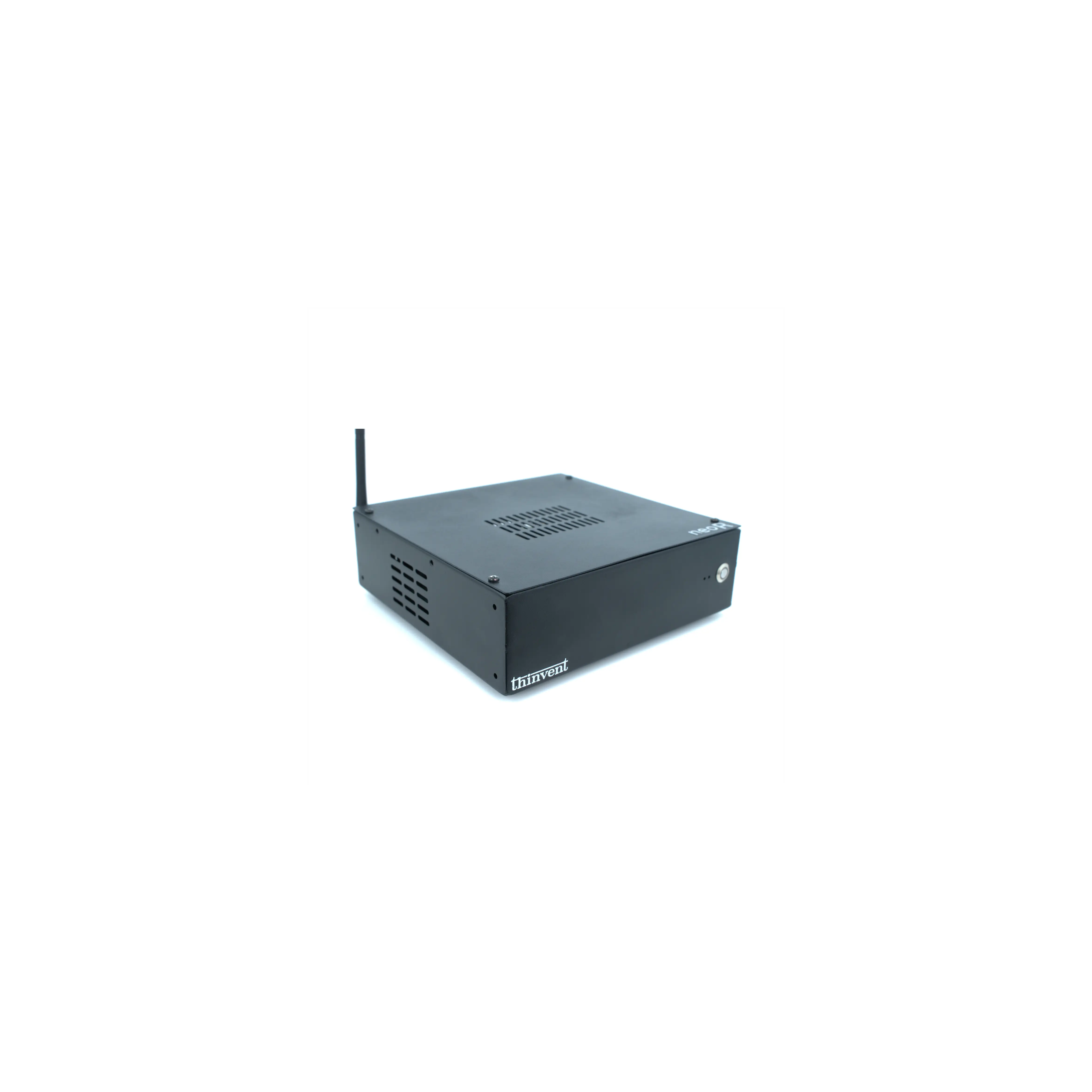
What Are Thin Clients?
Thin clients are streamlined computing devices designed to connect to a central server or cloud environment where the primary processing and data storage occur. Unlike traditional desktop PCs, they have minimal local hardware, relying on the network for most computing tasks. This architecture offers significant advantages in manageability, security, and total cost of ownership for businesses. Thin clients are ideal for environments where users run standardized applications, such as virtual desktops (VDI), web-based tools, or terminal services.
Key Specifications and Benefits
Modern thin clients, like those powered by Intel's efficient processors, balance performance with low power consumption. A typical configuration for a robust thin client includes a quad-core Intel processor (e.g., N100), 16GB of RAM, and a fast SSD for the local operating system. This hardware profile ensures smooth performance for connecting to virtual desktops, running office applications, and handling multimedia content. Key benefits include:
-
Centralized Management: IT administrators can deploy, update, and secure all thin clients from a central location.
-
Enhanced Security: With no local data storage (or minimal, encrypted storage), the risk of data theft from a lost or stolen device is drastically reduced.
-
Energy Efficiency: Thin clients consume far less power than standard desktops, lowering electricity costs and supporting green IT initiatives.
-
Reduced Downtime: Hardware failures are less disruptive; a thin client can be quickly replaced without complex data recovery procedures.
Ideal Use Cases and Applications
Thin clients are deployed across various industries to streamline operations. Common applications include:
-
Call Centers & Office Workstations: Providing agents and employees with secure, reliable access to CRM systems, communication tools, and productivity suites.
-
Healthcare: Accessing Electronic Health Records (EHR) systems from nursing stations or kiosks while maintaining strict patient data security (HIPAA compliance).
-
Education: In computer labs and libraries, offering students a consistent, manageable, and cost-effective computing experience.
-
Retail & Hospitality: Powering Point-of-Sale (POS) systems, digital signage, and kiosks with robust, always-on performance.
-
Manufacturing & Logistics: Running SCADA and warehouse management systems on the shop floor with durable, fanless designs that resist dust and vibration.
Thinvent's Thin Client Solutions
Thinvent offers a range of high-performance, reliable thin client solutions designed for modern business environments. Our Aero Mini PC series exemplifies this approach, providing a versatile platform for various operating systems and deployment needs.
Thinvent Aero Mini PC (Featured Configuration): This model is built around the efficient Intel® Processor N100, featuring 4 cores, a max frequency of 3.4 GHz, and 6MB cache. Paired with 16GB of DDR4 RAM and a 128GB SSD, it delivers responsive performance for virtual desktop interfaces and everyday business applications. A key advantage is its flexible operating system support, allowing businesses to choose the optimal software environment.
| Feature | Specification | Benefit for Thin Client Use |
|---|---|---|
| Processor | Intel® Processor N100 (4 cores, up to 3.4 GHz) | Efficient performance for VDI, multimedia, and office tasks. |
| Memory | 16 GB DDR4 RAM | Ensures smooth multitasking and application performance. |
| Storage | 128 GB SSD | Fast boot times for the local OS and reliable operation. |
| OS Options | Windows 11 IoT / Pro, DOS, Thinux™, Ubuntu Linux | Flexibility to match your existing IT infrastructure and security policies. |
| Form Factor | Compact Mini PC | Saves valuable desk space and enables versatile mounting. |
| Power | 12V 2A Adapter | Low energy consumption for reduced operational costs. |
Thinvent's thin clients are engineered for reliability and ease of deployment. Available with optional keyboard and mouse bundles, they provide a complete, out-of-the-box solution for IT managers looking to simplify their endpoint strategy, enhance security, and reduce long-term maintenance costs.