What is a High-Performance Workstation PC?
A high-performance workstation PC is a specialized computer designed to handle intensive, professional-grade workloads that standard desktops cannot manage efficiently. These systems are engineered for stability, reliability, and raw computational power, featuring high-core-count processors, professional-grade graphics, substantial memory, and fast storage. They are the backbone of industries where time is money and computational accuracy is critical, such as engineering, scientific research, media production, and financial analysis.
Key Specifications for Professional Workstations
The core of a high-performance workstation is its processor. Modern professional workstations often utilize processors with exceptionally high core and thread counts, such as the AMD Ryzen Threadripper series, which can feature up to 64 cores. This architecture is essential for parallel processing. Complementing this is a robust memory subsystem, with support for 128GB, 256GB, or more of Error-Correcting Code (ECC) RAM to ensure data integrity during long calculations. Storage is typically a combination of high-speed NVMe SSDs for the operating system and active projects, paired with large-capacity HDDs or additional SSDs for archives. Professional-grade, certified GPUs from NVIDIA RTX or AMD Radeon Pro series are also standard for graphics-intensive tasks.
Primary Use Cases and Applications
These powerful machines are indispensable in specific professional environments:
-
Content Creation & 3D Rendering: For video editors working with 8K footage, 3D artists creating complex scenes, and animators, workstations drastically reduce render times.
-
Engineering & Computer-Aided Design (CAD): Applications like AutoCAD, SolidWorks, and Revit benefit from the high single-thread performance and stability for modeling, and the multi-core power for simulations and analysis.
-
Scientific Computing & Data Science: Running complex simulations, financial modeling, genomic sequencing, and training machine learning models requires the parallel processing capabilities of a high-core-count workstation.
-
Software Development: Compiling large codebases, running multiple virtual machines for testing, and emulation are significantly faster on workstation-class hardware.
Thinvent's Industrial-Grade Computing Solutions
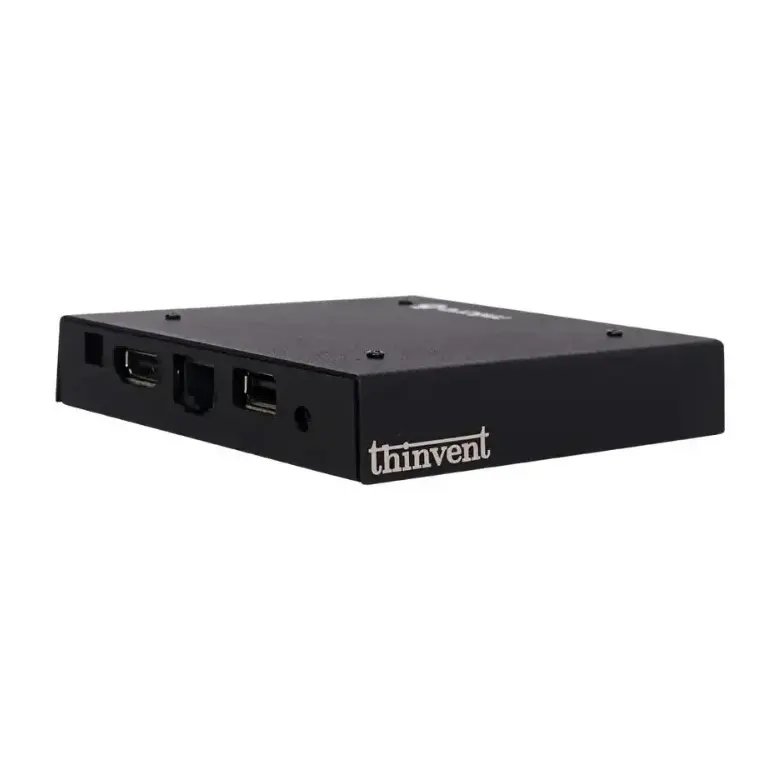
While Thinvent specializes in robust, fanless, and compact industrial computers, mini PCs, and thin clients, our philosophy of reliability and performance aligns with the needs of professional environments. For users whose demands fall within the powerful Intel Core processor spectrum, our industrial PCs offer a compelling blend of durability and capability.
Thinvent Industrial PCs for Demanding Tasks: Our lineup includes systems built with Intel's latest Core processors, which provide excellent performance for many professional applications that require a reliable, space-efficient, and often fanless solution.
| Model Series | Example Processor | Cores/Threads | Typical Use Case |
|---|---|---|---|
| Aero Mini PC | Intel Core 5 120U (14th Gen) | 10 Cores | General professional workloads, software development, light CAD |
| Industrial PC (IPC) | Intel Core i5-1240P (12th Gen) | 12 Cores | Digital signage, automation control, edge computing for analytics |
| Industrial PC (IPC) | Intel Core i3-1215U (12th Gen) | 6 Cores | Kiosks, point-of-sale, monitoring stations, basic design work |
These systems are built for 24/7 operation in challenging environments, featuring wide temperature tolerance, shock and vibration resistance, and rich I/O connectivity—making them ideal for industrial design labs, manufacturing floors, and field deployment where extreme reliability is as important as processing power.