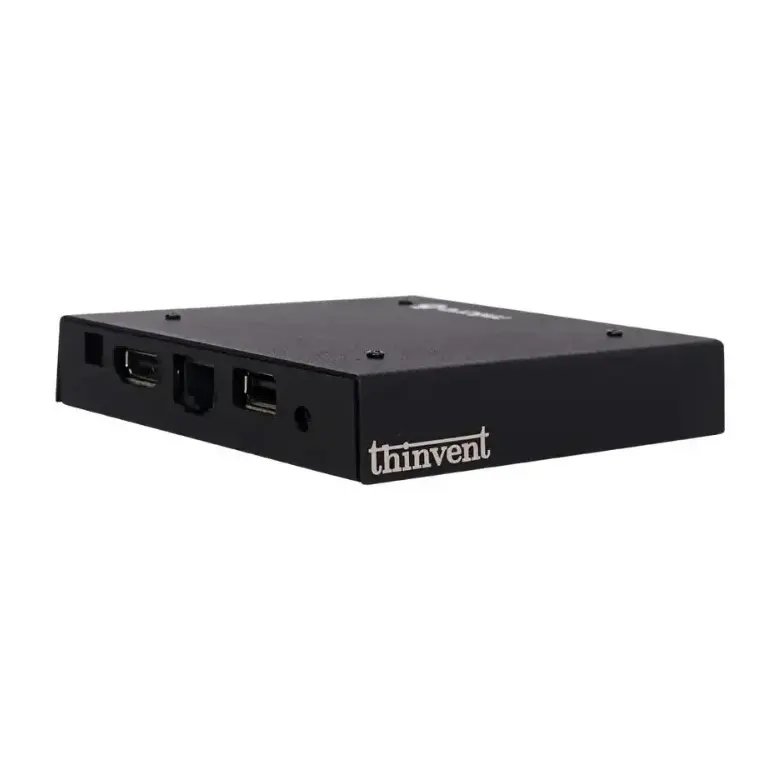
What Does "TIMI PC" Mean?
"TIMI PC" is not a standard, formally defined term in computing. In technical glossaries and abbreviation lists, TIMI appears as a generic acronym with no single fixed meaning in the IT world — it is not an established product category, form factor, or specification like "mini PC," "thin client," or "industrial PC." In practice, when people search for "TIMI PC," they are usually looking for a small, compact, low-power computer — the kind of machine that sits quietly on a desk, behind a monitor, or inside a control cabinet. If you arrived here looking for a compact, reliable computer, the sections below explain the actual categories of small computers available and how to choose between them.
The Real Categories Behind "Small PC" Searches
Most searches that land on vague terms like "TIMI PC" are really about one of four well-defined product types:
-
Mini PC — a full desktop computer in a small chassis, typically fanless, running Windows or Linux, used for office work, digital signage, kiosks, and edge computing.
-
Thin Client — a lightweight endpoint that connects to a remote desktop or virtual desktop infrastructure (VDI). It uses very little local processing power and centralises management.
-
All-in-One (AIO) PC — a computer with the system board built into the display, giving a single-cable, clutter-free workstation.
-
Industrial PC (IPC) — a ruggedised computer built for factories, warehouses, and outdoor cabinets, with wide-temperature operation, fanless cooling, serial ports, and DIN-rail or panel mounting.
Key Specifications to Compare
When evaluating any small computer, these are the specifications that matter most:
| Specification | What It Affects | Typical Options |
|---|---|---|
| Processor | Speed, multitasking, power draw | Intel N95/N100/N150, Core i3/i5 (12th–14th gen) |
| Cores | Parallel workloads, virtualisation | 4, 6, 10, 12 |
| Memory (RAM) | Number of apps, VMs, browser tabs | 4 GB to 64 GB DDR4/DDR5 |
| Storage | Local data, OS footprint | 128 GB to 1 TB SSD |
| Cooling | Dust tolerance, noise, lifespan | Fanless (passive) vs. active fan |
| Networking | Throughput, redundancy | Gigabit Ethernet, dual-port options |
| Ports | Peripherals, legacy equipment | HDMI, USB 3.2 Gen 2, USB-C, DB9 serial |
| Operating System | Software compatibility | Windows 11 Pro, Ubuntu Linux, without OS |
Use Cases and Applications
Fanless small-form-factor computers are chosen wherever reliability and quiet operation matter more than raw size. Common deployments include:
-
Factory floors and machine control — industrial PCs with serial (DB9) ports talk to PLCs, scales, and legacy controllers, while fanless designs survive dust and vibration.
-
Retail and hospitality — mini PCs drive point-of-sale terminals, digital menus, and kiosk displays.
-
Healthcare and banking — thin clients keep patient or customer data centralised on secure servers rather than on the endpoint.
-
Education and call centres — AIO PCs and thin clients reduce desk clutter and simplify IT management across many seats.
-
Edge and IoT gateways — low-power Intel N-series processors handle data collection and local processing where a full server would be overkill.
Choosing the Right Machine
If your workload is light — web apps, remote desktop, signage — a 4-core Intel N-series mini PC or thin client with 8 GB RAM is usually sufficient. If you run local databases, multiple virtual machines, or heavy multitasking, look for a 6- to 12-core Intel Core i3 or i5 with 16–32 GB RAM and a 512 GB or 1 TB SSD. For harsh environments, prioritise fanless cooling, wide-temperature ratings, dual Gigabit Ethernet, and genuine serial ports over raw clock speed.
Thinvent's Small-Form-Factor Range
Thinvent builds fanless mini PCs, thin clients, all-in-one PCs, and industrial computers around Intel processors, designed for quiet, dust-tolerant, continuous operation. The industrial IPC range pairs Intel Core i3 and i5 processors (up to 12 cores) with up to 64 GB RAM, 1 TB SSD storage, dual Gigabit Ethernet, HDMI and USB-C connectivity, and optional quad DB9 serial ports for machine and legacy equipment integration. Operating system options span Windows 11 Pro, Windows 11 IoT, Ubuntu Linux, Thinvent's own Thinux embedded Linux, FreeDOS, or no OS at all — so you can standardise on the platform your deployment requires, whether that is a factory control cabinet, a retail kiosk, or a virtualised desktop fleet.