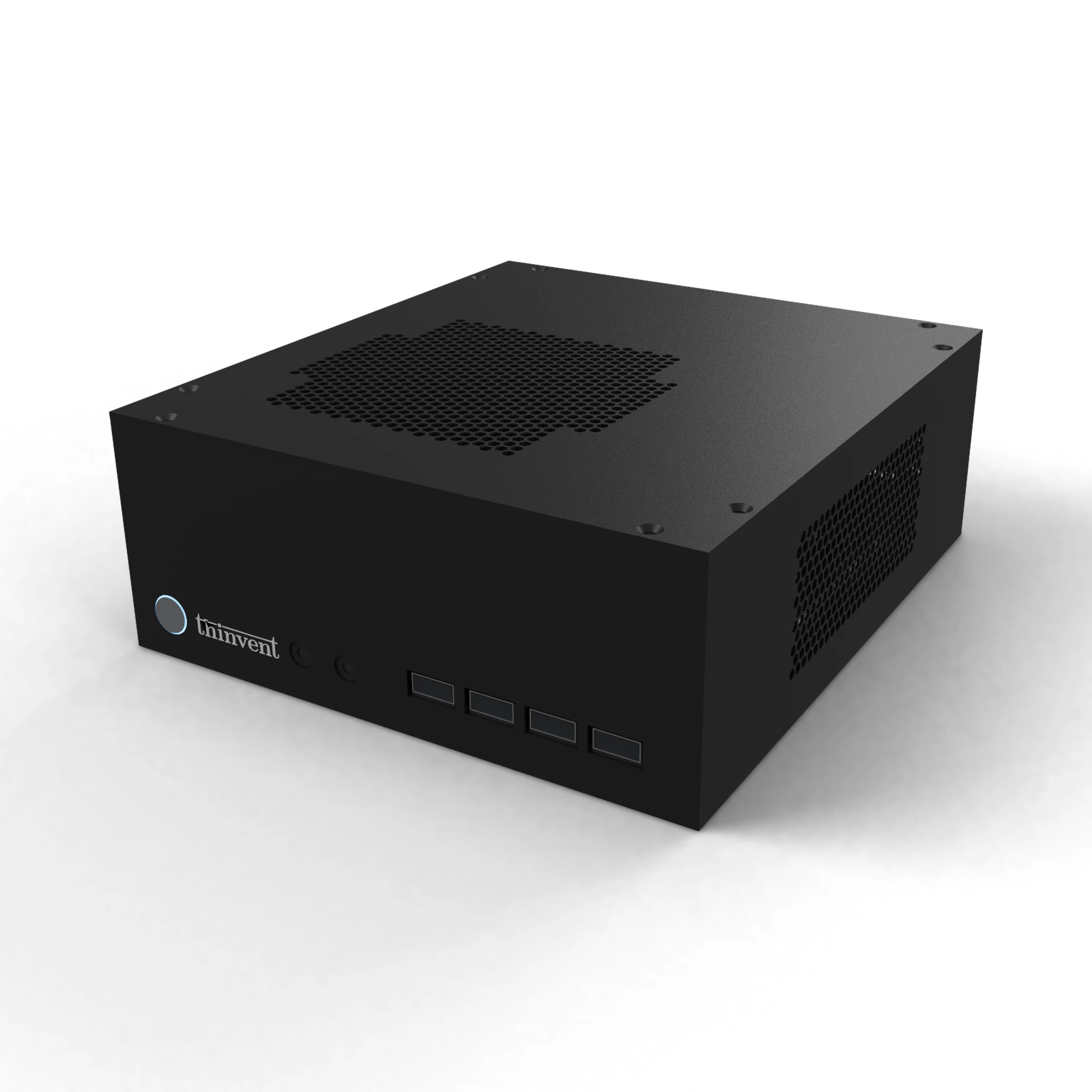
Industrial Computers For Train Enquiry CMS Systems
A Train Enquiry Customer Management System (CMS) is a critical digital interface for passengers and railway staff, requiring hardware that is reliable, compact, and capable of 24/7 operation in public environments. Industrial computers are the ideal backbone for these systems, offering the durability, consistent performance, and low maintenance needed for real-time information display, ticketing queries, and passenger assistance kiosks. Unlike standard consumer PCs, these systems are built to withstand continuous use, dust, and variable power conditions commonly found in railway stations.
Key Specifications For Railway CMS Hardware
The core requirements for a Train Enquiry CMS computer include a balance of processing power, memory, storage, and robust connectivity. Based on the sample products, an optimal configuration features an efficient Intel processor like the 12th Gen N100 (4 cores, up to 3.4 GHz), paired with ample RAM (16GB DDR4) and fast storage (128GB SSD). This ensures smooth operation of the CMS software, database queries, and multiple display outputs. A critical feature is the fanless, ventless design which prevents dust ingress—a major cause of failure in dusty station environments—and allows for silent, maintenance-free operation. The use of a standard 12V DC power input also simplifies integration with backup power systems.
Applications and Use Cases
Industrial mini PCs are deployed in various roles within railway station infrastructure:
-
Passenger Information Kiosks: Standalone terminals providing real-time train schedules, platform information, and station maps.
-
Ticket Counter/Enquiry Desks: Powering the primary CMS software for staff to assist passengers with bookings, cancellations, and live status updates.
-
Digital Signage Controllers: Driving large display boards that show arrival/departure lists and important announcements.
-
Back-Office Data Management: Handling database synchronization and network communication for the entire station's enquiry network.
Comparison: Industrial vs. Consumer PCs for CMS
| Feature | Industrial Mini PC (e.g., Fanless Design) | Standard Consumer Desktop |
|---|---|---|
| Durability | Fanless, sealed chassis resistant to dust, debris, and humidity. | Vented cases with fans that suck in dust, leading to overheating. |
| Reliability | Designed for 24/7 continuous operation with stable performance. | Not rated for constant, high-uptime use; prone to wear. |
| Maintenance | Virtually maintenance-free; no internal cleaning required. | Requires regular cleaning of fans and heatsinks. |
| Power Supply | Often uses low-voltage DC input (e.g., 12V), compatible with UPS/battery systems. | Typically uses standard AC power, less flexible for backup integration. |
| Operating Environment | Withstands wider temperature ranges and vibrations. | Suitable only for controlled office environments. |
Thinvent Solutions For Railway CMS
Thinvent's Aero Mini PC series is engineered to meet the stringent demands of railway and transportation CMS applications. The featured models, powered by the efficient Intel N100 processor with 16GB RAM, provide the necessary computational power in an ultra-compact, fanless form factor. This design is crucial for preventing system failures caused by dust accumulation in busy stations. Thinvent offers these systems with multiple operating system options—including Windows 11 IoT/Pro, Ubuntu Linux, and Thinux™ Embedded Linux—allowing seamless integration with proprietary CMS software. The availability of bundled keyboard and mouse sets provides a complete hardware solution for quick deployment at ticket counters and enquiry desks worldwide.