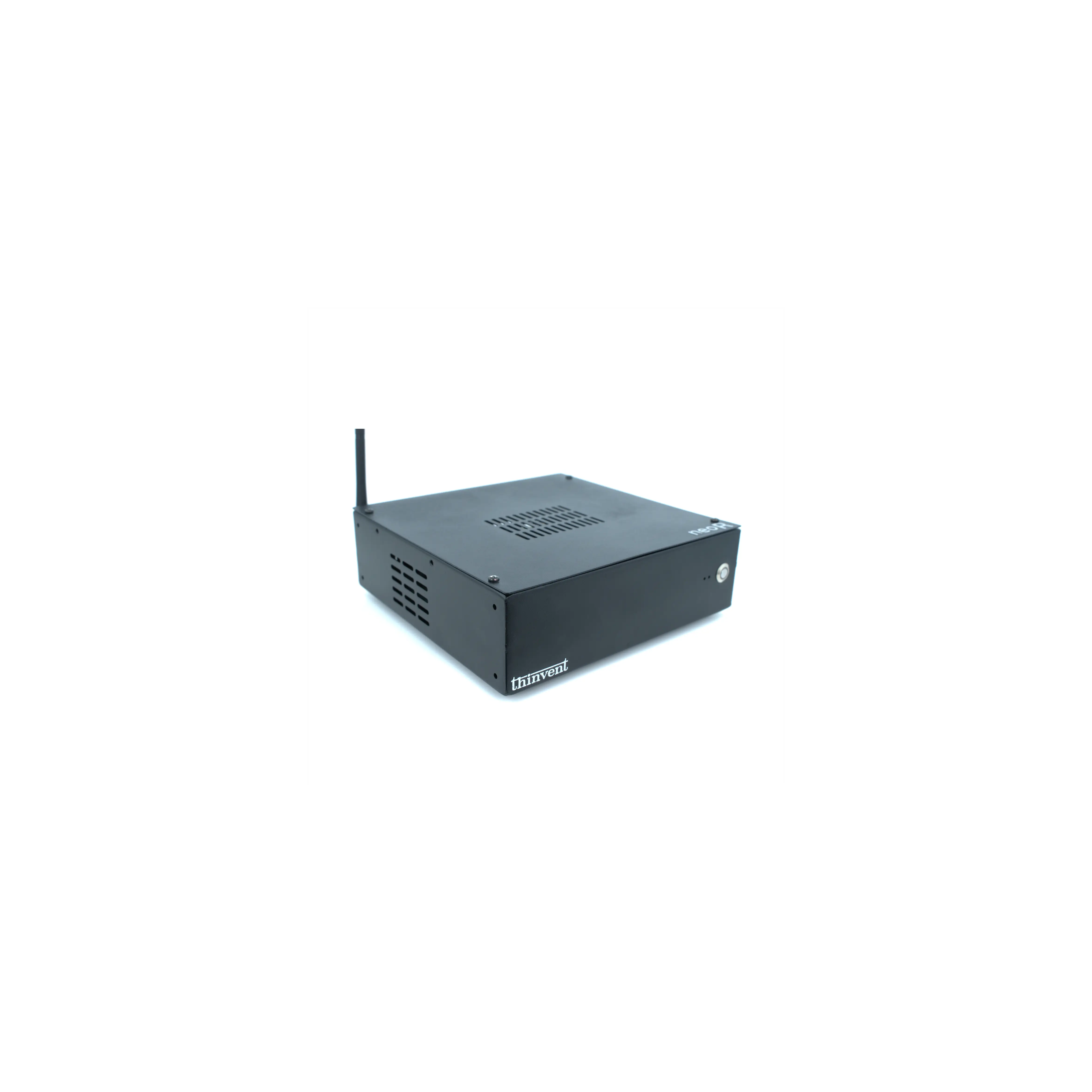
What Are Compact Industrial Computers?
Compact industrial computers are specialized, small-form-factor computing devices engineered for reliability and performance in demanding, non-office environments. Unlike consumer-grade mini PCs, they are built with industrial-grade components, often featuring fanless designs for silent operation and enhanced durability against dust, vibrations, and wide temperature ranges. These systems are designed for 24/7 operation and are integral to modern automation, digital signage, and edge computing solutions.
Key Specifications and Technical Advantages
These computers balance processing power with energy efficiency. They utilize a range of processors, from power-efficient ARM architectures (like Cortex A53/A55) for lightweight tasks to high-performance Intel Core and N-series processors (such as the i5-1240P or N100) for more demanding applications. Key specifications include onboard RAM (2GB to 16GB), solid-state storage (eMMC or SSD from 16GB to 512GB), and low-power adapters (5V-12V). Many models offer fanless cooling, ensuring silent operation and eliminating mechanical failure points. Connectivity typically includes HDMI, USB ports, and optional dual-band WiFi.
Primary Use Cases and Applications
Their compact size and rugged design make them ideal for space-constrained and harsh environments.
-
Digital Signage & Kiosks: Powering interactive displays, menu boards, and information terminals in retail, hospitality, and public spaces.
-
Industrial Automation & IoT Gateways: Acting as control units or data aggregation points on the factory floor for PLCs, HMIs, and sensor networks.
-
Thin Client & VDI: Providing secure, managed endpoints for accessing virtual desktops and cloud applications in enterprises and call centers.
-
Edge Computing: Processing data locally in smart cities, transportation, and security systems (video analytics) to reduce latency and bandwidth use.
-
Embedded Systems: Serving as the brain for medical devices, gaming machines, and other specialized equipment.
Comparison of Common Configurations
| Feature | ARM-Based Thin Clients (e.g., Micro 5/6) | Intel N-Series Mini PCs (e.g., Treo, IPC1) | Intel Core Series Industrial PCs (e.g., IPC3, IPC5, Aero) |
|---|---|---|---|
| Best For | Lightweight computing, thin client, basic digital signage | Balanced performance for general kiosks, edge IoT, office tasks | High-performance computing, automation, complex analytics |
| Processor | ARM Cortex (4-core, up to 2.0 GHz) | Intel Processor N100 (4-core, up to 3.4 GHz) | Intel Core i3/i5 (6-12 cores, up to 5.0 GHz) |
| Power Draw | Very Low (5V adapter) | Low (12V adapter) | Moderate to High (12V adapter) |
| Typical OS | Thinux™ Embedded Linux, Ubuntu Linux | Thinux™, Ubuntu Linux, Windows IoT | Windows 11 Pro, Ubuntu Linux |
| Key Benefit | Maximum energy efficiency, cost-effective | Excellent performance-per-watt, fanless reliability | Raw processing power for demanding applications |
Thinvent's Range of Compact Industrial Computers
Thinvent offers a comprehensive portfolio of compact industrial computers designed to meet diverse application needs worldwide. Our product lines include:
-
Micro Series: Ultra-compact, ARM-based thin clients and mini PCs like the Micro 5 Wifi and Micro 6 Pro, perfect for VDI, digital signage, and lightweight edge tasks with Thinux™ OS.
-
Treo & IPC Series: Versatile mini PCs and industrial computers featuring efficient Intel N100 and powerful Intel Core i3/i5 processors (e.g., Treo Mini PC, IPC1, IPC3, IPC5). These are ideal for kiosks, automation, and industrial control with options for Ubuntu or Windows.
-
Aero Series: High-performance mini PCs, such as the Aero Mini PC with Intel Core 5 120U processor, designed for compute-intensive applications like advanced digital signage, edge analytics, and workstation-level tasks in a compact form factor.
All Thinvent systems are built for reliability, with fanless designs where applicable, and support for various operating systems to ensure seamless integration into your professional environment.