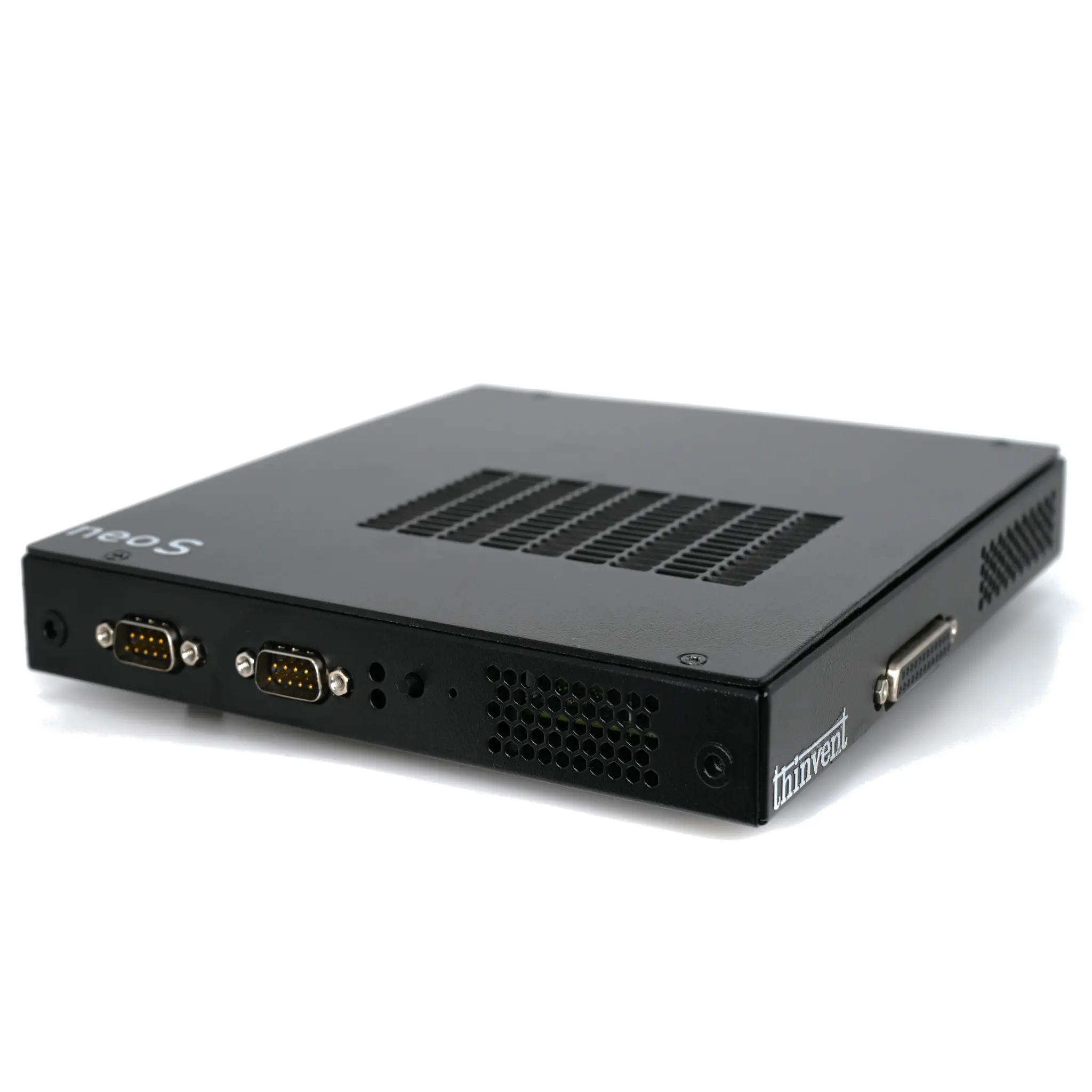
A thin client is a lightweight, network-dependent computer designed to connect to a centralized server or cloud environment where the primary computing, processing, and data storage occur. Unlike traditional desktop PCs (fat clients), thin clients have minimal local hardware—such as a basic processor, limited RAM, and small storage—because they rely on the server to run applications and manage data. This architecture makes them highly secure, energy-efficient, and easy to manage, as all software updates and security patches are deployed centrally.
Key Specifications and Technical Details
Thin clients are characterized by their streamlined hardware. Typical specifications include low-power processors (like ARM Cortex or Intel Atom/Celeron series), 2GB to 8GB of RAM, and modest solid-state storage (e.g., 16GB to 128GB eMMC or SSD). They run lightweight or embedded operating systems such as Thinux™, Ubuntu Linux, or specialized Windows IoT versions. Connectivity is a priority, featuring multiple USB ports, HDMI outputs, and reliable Gigabit Ethernet to ensure a stable connection to the host server. Their compact, often fanless form factor contributes to silent operation and durability.
Primary Use Cases and Applications
Thin clients are ideal for environments requiring centralized control, high security, and simplified IT management.
-
Virtual Desktop Infrastructure (VDI): The most common application, where users access a virtual desktop hosted on a server from any thin client device.
-
Call Centers & Office Workstations: Provides a standardized, secure workspace for tasks like data entry, CRM access, and communication software.
-
Digital Signage & Kiosks: Their reliability and low maintenance make them perfect for driving displays in retail, hospitality, and public information points.
-
Healthcare & Education: Offers secure access to patient records or educational software while preventing data loss or theft from the endpoint device.
-
Industrial & Embedded Systems: Used in manufacturing and control rooms due to their ruggedness and ability to operate in varied temperatures.
Thin Clients vs. Traditional Desktops vs. Mini PCs
| Feature | Thin Client | Traditional Desktop PC | Mini PC |
|---|---|---|---|
| Processing Power | Minimal (relies on server) | High (local CPU/GPU) | Moderate to High (local CPU) |
| Local Storage | Very Low (16-128GB) | High (500GB-2TB+) | Moderate (128GB-1TB+) |
| Primary Role | Access Terminal | Full Workstation | Compact Workstation |
| IT Management | Centralized, Easy | Decentralized, Complex | Decentralized, Moderate |
| Security | Very High (no local data) | Variable (local data at risk) | Variable (local data at risk) |
| Total Cost of Ownership | Lower (hardware + management) | Higher (hardware + maintenance) | Moderate |
Thinvent's Range of Thin Client Solutions
Thinvent offers a robust portfolio of thin clients designed for reliability and seamless integration into centralized computing environments. Our devices, like the Thinvent Micro 5 Wifi Thin Client and Micro 6 Pro Mini PC, feature energy-efficient ARM processors, embedded Thinux™ OS, and compact designs perfect for space-constrained deployments. For more demanding virtualized tasks, our Intel-based Treo Mini PC with the efficient N100 processor provides excellent performance. All Thinvent thin clients are built for 24/7 operation, featuring fanless cooling for silent performance and are backed by our global support, ensuring a dependable endpoint solution for your VDI, digital signage, or kiosk projects.