What Is The Best Computer?
The "best" computer is not a single model, but the one that is optimally configured for your specific application, environment, and performance requirements. For industrial and commercial use, the ideal computer prioritizes reliability, durability, and seamless integration over raw consumer-grade performance. Key factors include the operating environment (temperature, dust, vibration), required I/O connectivity, software compatibility, and long-term support.
Key Specifications and Technical Details
When evaluating industrial computers, focus on these core components:
-
Processor (CPU): Determines computational power. Options range from efficient Intel N-series processors for basic tasks and digital signage to powerful Intel Core i3/i5/i7 CPUs for data processing and machine vision.
-
Memory (RAM): Affects multitasking capability. 8GB is standard for many applications, while 16GB or more is recommended for data-intensive tasks.
-
Storage (SSD): Provides the operating system and application storage. NVMe SSDs offer faster speeds than SATA models. 256GB is a common starting point.
-
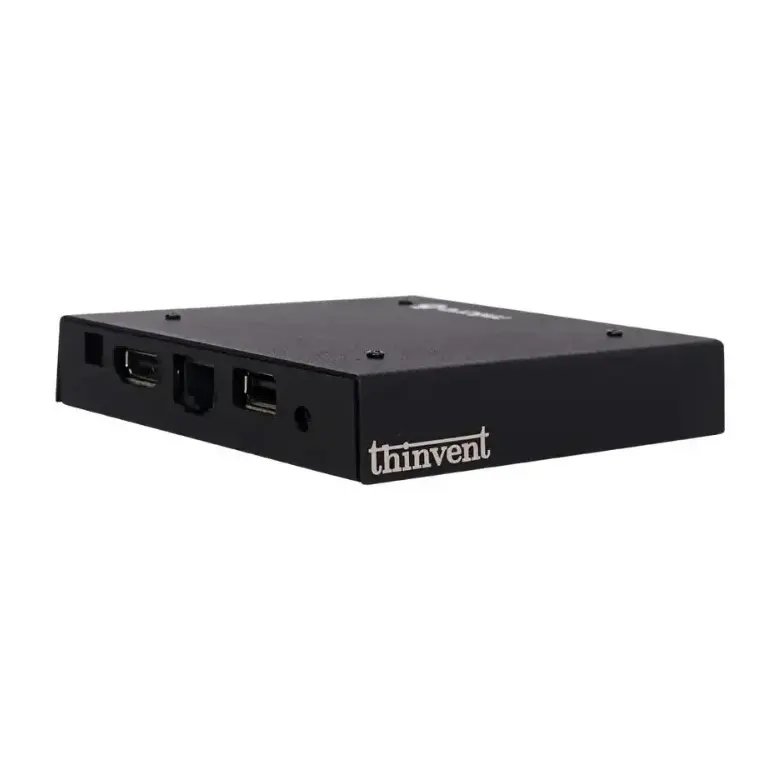
Form Factor: Includes fanless Mini PCs for silent, dust-resistant operation in kiosks; Thin Clients for virtualized environments; and All-in-One panels for interactive displays.
-
Operating System: Choice depends on software requirements, with options like Windows 11 Pro/ IoT, Ubuntu Linux, or a lightweight embedded OS for dedicated functions.
Common Use Cases and Applications
The right computer varies drastically by use case:
-
Digital Signage & Kiosks: Fanless Mini PCs with reliable 24/7 operation and multiple display outputs.
-
Industrial Automation & Control: Rugged computers with wide temperature tolerance and robust I/O (serial ports, LAN).
-
Thin Client / VDI: Low-power devices designed primarily for network connectivity to access virtual desktops.
-
Edge Computing & IoT Gateways: Compact computers that collect and process data from sensors locally before sending it to the cloud.
Comparison of Common Industrial Computer Types
| Feature | Fanless Mini PC | Thin Client | Industrial All-in-One |
|---|---|---|---|
| Primary Use | Embedded, signage, kiosk | Virtual Desktop Infrastructure (VDI) | Human-Machine Interface (HMI), interactive display |
| Key Advantage | Silent, no moving parts, durable | Low cost, centralized management, secure | Integrated display, space-saving |
| Typical Processor | Intel Celeron, Intel Core i-series | ARM, Intel Celeron/N-series | Intel Core i-series |
| I/O Focus | Multiple display outputs, COM ports | Network connectivity | Touchscreen, front-facing USB |
Thinvent's Range of Industrial Computing Solutions
Thinvent manufactures a comprehensive portfolio designed for diverse industrial challenges. Our product lines include the Aero Series of ultra-compact, fanless Mini PCs, ideal for space-constrained and harsh environments. For demanding computational tasks, we offer Industrial PCs powered by the latest Intel Core processors. Our Thin Clients provide secure and manageable endpoints for virtualized workspaces, while our All-in-One Panel PCs integrate a bright display and computing unit for interactive applications. Each product is built with industrial-grade components for long-term reliability in commercial deployments worldwide.