What Is The Best Desktop Computer?
The "best" desktop computer is not a single model but the optimal configuration for your specific workload, environment, and budget. For industrial and commercial applications, the best choice prioritizes reliability, durability, and performance stability over raw consumer-grade speed. Key factors include the processor's capability, sufficient RAM for multitasking, fast storage, and a robust, often fanless, design for 24/7 operation in harsh conditions.
Key Specifications For Industrial Desktops
When evaluating industrial desktops, focus on these core technical details:
-
Processor (CPU): The engine of the computer. For general office tasks and digital signage, efficient quad-core processors like the Intel N-series are excellent. For data processing, engineering software, or virtualization, higher-performance Intel Core i3, i5, or i7 processors from newer generations (12th, 13th, 14th) are required.
-
Memory (RAM): Essential for smooth multitasking. 8GB is a baseline for modern operating systems, while 16GB or 32GB is recommended for professional applications, multiple virtual machines, or large datasets.
-
Storage (SSD): Solid State Drives (SSD) offer vastly superior speed and shock resistance compared to traditional hard drives. A 256GB or 512GB SSD is a common starting point for system and applications.
-
Form Factor & Cooling: Industrial PCs often use compact, fanless designs. Fanless cooling eliminates moving parts, preventing dust ingress and mechanical failure, making them ideal for dusty, humid, or vibration-prone environments.
Ideal Use Cases and Applications
The right desktop varies dramatically by use case:
-
Office & General Computing: A mini PC with an Intel N100 or Celeron processor, 8GB RAM, and a 256GB SSD provides ample power for productivity software, web browsing, and communication.
-
Digital Signage & Kiosks: Fanless industrial PCs are perfect for running displays 24/7. They require reliable, low-power operation in unconditioned spaces.
-
Industrial Automation & Control: These systems demand rugged, reliable computers with multiple I/O ports (USB, Ethernet, serial) to interface with machinery, often running on Linux or embedded OS.
-
Engineering & Design Workstations: Demanding software like CAD/CAM requires high-performance CPUs (Intel Core i5/i7), 32GB+ RAM, and fast NVMe SSDs.
Comparison of Common Desktop Configurations
| Use Case | Recommended Processor | Recommended RAM | Recommended Storage | Key Feature |
|---|---|---|---|---|
| Light Office / Digital Signage | Intel N100, Celeron | 8 GB - 16 GB | 128 GB - 256 GB SSD | Fanless, Compact |
| General Business / POS | Intel i3, i5 (12th/13th Gen) | 16 GB | 256 GB - 512 GB SSD | Balanced Performance |
| Engineering / Data Processing | Intel i5, i7 (13th/14th Gen) | 32 GB - 64 GB | 512 GB - 1 TB NVMe SSD | High Core Count, Maximum I/O |
Thinvent Industrial Desktop Solutions
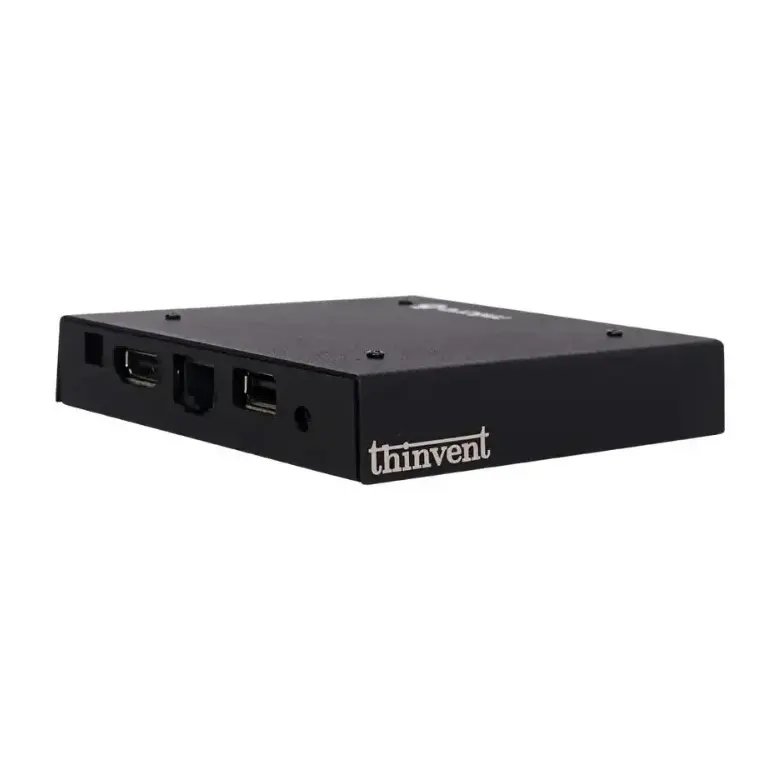
Thinvent specializes in manufacturing robust industrial desktop computers built for challenging environments. Our product range includes compact Mini PCs and powerful Industrial PCs, many featuring efficient, fanless cooling for silent and maintenance-free operation. We offer configurations based on the latest Intel processors, from the ultra-efficient N-series for embedded applications to high-performance Core series for computational workloads. Every Thinvent desktop is engineered for reliability, with wide operating temperature ranges and durable components, ensuring your operations run smoothly around the clock. Explore our range to find the perfect industrial-grade desktop tailored to your application's demands.