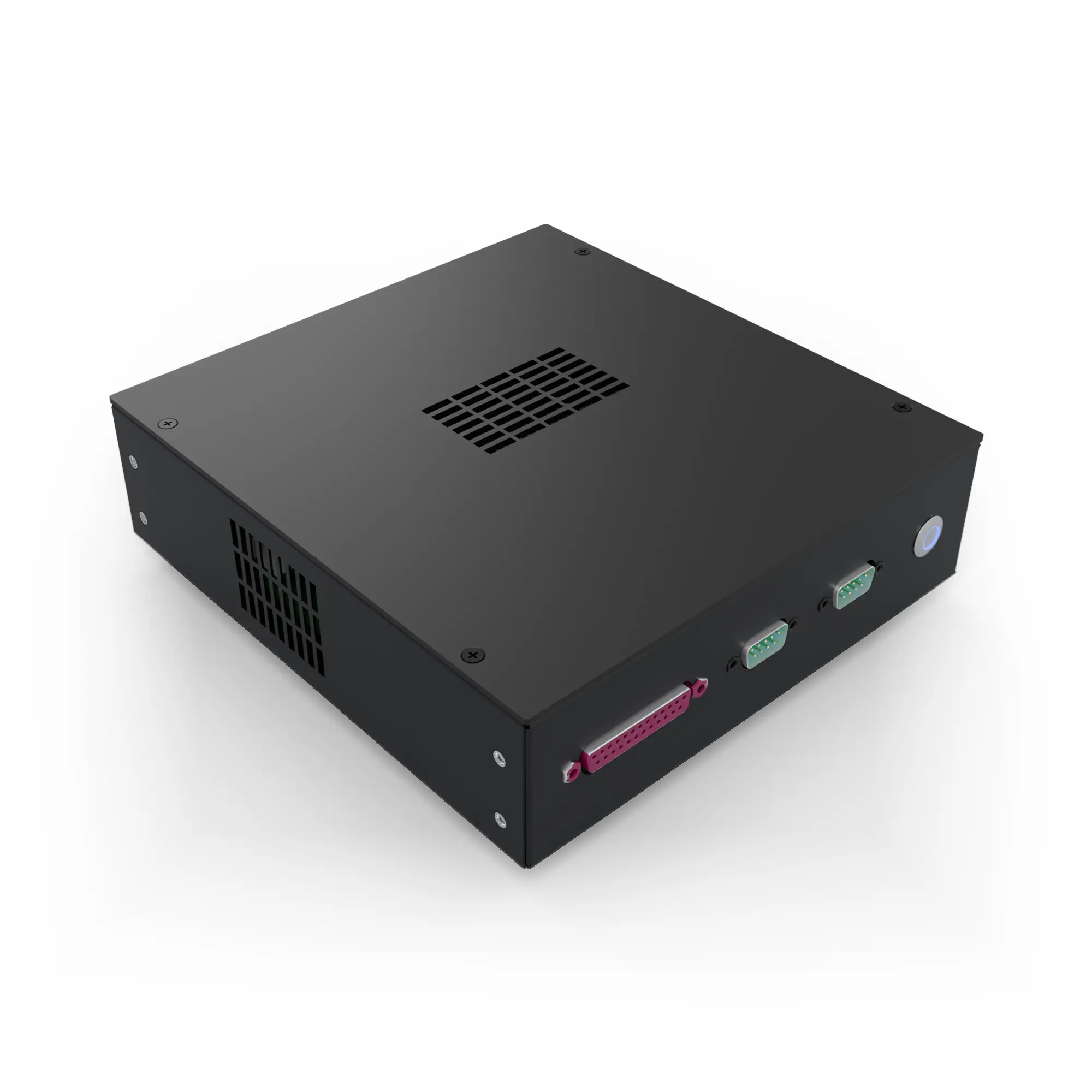
The Dell Wyse 7010 Thin Client (Z90D7) is a thin client built on a dual-core AMD G-Series APU. The closest Thinvent match is the Thinvent Micro 5R Thin Client, which is also a fanless thin client, but it uses an ARM Cortex A53 processor rather than an AMD APU. For buyers who want an Intel-based fanless thin client with Windows, the Thinvent Neo S Thin Client is the other relevant option.
Dell Wyse 7010 Z90D7 vs Thinvent Thin Clients
| Dell Wyse 7010 Z90D7 | Thinvent Micro 5R Thin Client | Thinvent Neo S Thin Client | |
|---|---|---|---|
| Processor | AMD G-Series APU | ARM Cortex A53 (Rockchip RK3528) | Intel Celeron J1900 |
| Cores/Threads | 2 cores | 4 cores, up to 2.0 GHz | 4 cores, up to 2.4 GHz |
| RAM | Not confirmed | 2 GB | 4 GB DDR3 |
| Storage | Not confirmed | 16 GB eMMC | 128 GB SSD |
| Form Factor | Thin Client | Thin Client | Thin Client |
| Operating System | Not confirmed | Thinux Embedded Linux | Windows 11 Pro |
| Cooling | Not confirmed | Fanless passive cooling | Fanless passive cooling |
| Wireless | Not confirmed | Wi-Fi 6, Bluetooth 5 | No WiFi |
Key differences
-
The Thinvent Neo S has 4 cores against the Z90D7's 2 cores, and it runs Windows 11 Pro, which the buyer can also change to Windows 11 IoT, Ubuntu Linux, Thinux Embedded Linux or no OS.
-
The Thinvent Micro 5R has Wi-Fi 6 and Bluetooth 5 on board, and the Neo S has none.
-
The Thinvent Micro 5R and Neo S are both fanless, with passive cooling and aluminium or steel housings.
-
We could not confirm the Z90D7's RAM, storage, cooling or wireless specifications, so this table does not compare them.
-
The Thinvent Micro 5R's 2 GB RAM and 16 GB eMMC are smaller than the Neo S's 4 GB RAM and 128 GB SSD, so it suits lighter, Linux-based deployments.
Which one should you choose?
Choose the Thinvent Neo S if you need a Windows 11 Pro thin client with 4 cores and an SSD. Choose the Thinvent Micro 5R if you want a compact, fanless Linux thin client with built-in Wi-Fi 6.