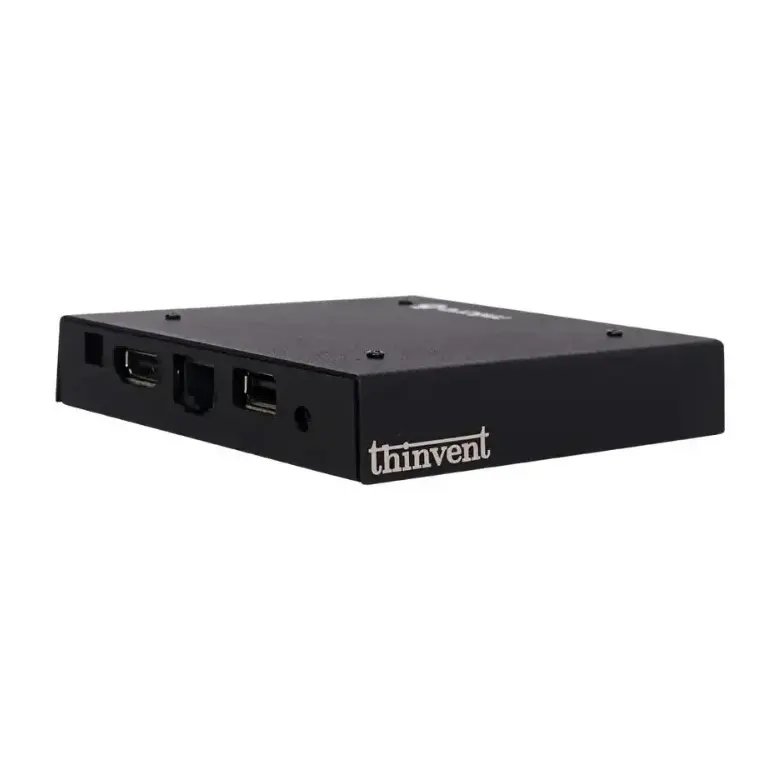
What Are Zero Client Devices?
Zero client devices are specialized, ultra-thin computing endpoints designed exclusively for Virtual Desktop Infrastructure (VDI). Unlike traditional thin clients or PCs, a true zero client has no local operating system, storage, or applications. It is a hardware appliance that connects directly to a centralized server or cloud-hosted desktop, functioning only as a conduit for user input and display output. This architecture makes them exceptionally secure, as there is no local data to be compromised, and highly reliable due to minimal moving parts and a simplified, fanless design.
Key Specifications and Technical Details
The defining characteristic of a zero client is its reliance on a dedicated hardware chipset, typically from Teradici or HP, to decode the remote desktop protocol. This chip handles all encryption and display rendering, offloading the work from a general-purpose CPU. Key specifications are therefore focused on connectivity and power efficiency:
-
Connectivity: Dual Gigabit Ethernet ports for redundancy and high-speed network access, along with multiple video outputs (HDMI, DisplayPort) for multi-monitor setups.
-
Processing: Minimal, low-power ARM-based processors or dedicated protocol chips, consuming as little as 5-10 watts.
-
Memory/Storage: Typically no local storage (SSD) and minimal onboard RAM, as all processing occurs on the server.
-
Form Factor: Extremely compact, fanless, and often VESA-mountable for discreet placement behind monitors.
Use Cases and Applications
Zero clients are the gold standard for security-focused and high-performance VDI environments. Their primary applications include:
-
Secure Workspaces: Government agencies, financial institutions, and healthcare organizations where data sovereignty and endpoint security are paramount.
-
High-Performance Computing (HPC): Engineering, design, and media production studios where users need powerful, GPU-accelerated virtual workstations delivered to a simple, reliable endpoint.
-
Call Centers and Task Workers: Environments requiring hundreds of identical, easily managed, and low-maintenance desktops.
-
Remote and Branch Offices: Simplifying IT management by centralizing all computing resources while providing a consistent user experience at any location.
Zero Client vs. Thin Client vs. Mini PC
| Feature | Zero Client | Thin Client | Mini PC (for VDI) |
|---|---|---|---|
| Local OS | None (firmware only) | Lightweight OS (Linux, Windows IoT) | Full OS (Windows, Linux) |
| Local Storage | None or minimal (for firmware) | Small SSD/eMMC (16-64GB) | Standard SSD (128GB+) |
| Processing | Dedicated protocol chip | Low-power CPU (ARM/Intel) | Standard CPU (Intel Core) |
| Security | Highest (no attack surface) | High (locked down OS) | Standard (managed endpoint) |
| Management | Centralized, very simple | Centralized, simple | More complex (individual PCs) |
| Performance | Consistent, protocol-dependent | Good for basic tasks | Excellent, but relies on local hardware |
Thinvent Solutions for VDI Endpoints
While Thinvent specializes in robust thin clients and industrial mini PCs that excel in VDI scenarios, our philosophy aligns with the core benefits of zero clients: reliability, security, and manageability. Our Thinvent Micro Series of thin clients, featuring fanless ARM processors and our secure Thinux™ embedded OS, provide a highly secure and cost-effective endpoint solution. For environments requiring more local processing flexibility or compatibility with a wider range of protocols, our Treo and Aero Mini PC Series offer Intel-powered performance in a compact form factor, capable of running full VDI broker software while maintaining excellent energy efficiency and centralized management potential. Explore our range to find the optimal balance of security, performance, and total cost of ownership for your virtual desktop deployment.