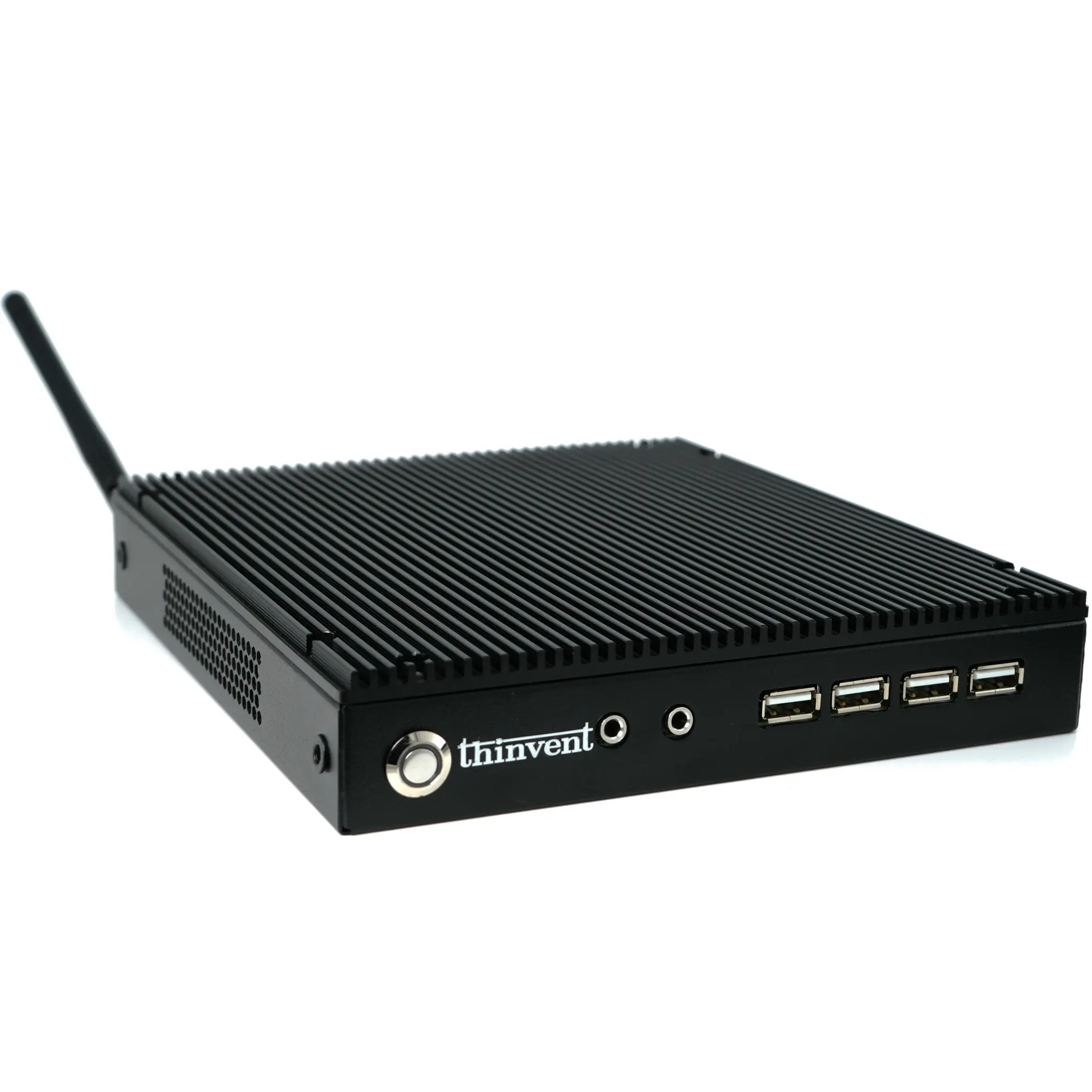
What is Zero Client Hardware?
Zero client hardware refers to specialized endpoint devices designed to connect to a centralized server or cloud environment, where all processing, storage, and applications reside. Unlike traditional PCs or thin clients, zero clients have no local operating system, storage, or processing capabilities for user applications. They are essentially "dumb terminals" that rely entirely on network connectivity to a host system, typically using protocols like PCoIP, HDX, or Blast Extreme. This architecture simplifies management, enhances security, and reduces total cost of ownership.
Key Specifications and Technical Details
True zero client hardware is characterized by its minimalistic design. Key specifications include a low-power processor (often an ARM-based SoC or an Intel Atom/Celeron N-series), minimal onboard RAM (typically 2-4GB for the connection protocol firmware), and no local storage like an SSD. They feature multiple display outputs (HDMI, DisplayPort), wired Ethernet for reliable network connectivity, and USB ports for peripherals. Crucially, they lack a general-purpose OS; instead, they run embedded firmware that establishes a secure connection to the virtual desktop infrastructure (VDI) host.
Primary Use Cases and Applications
Zero clients are ideal for environments requiring high security, centralized management, and consistent user experiences. Common applications include:
-
Virtual Desktop Infrastructure (VDI): For accessing Windows or Linux desktops hosted on servers.
-
Call Centers & Office Workstations: Where users need access to a single, standardized set of applications.
-
Healthcare: For accessing Electronic Health Records (EHR) systems from nursing stations, ensuring data never leaves the secure server.
-
Education: In computer labs, providing students with access to lab software without the complexity of managing individual PCs.
-
Financial & Government Sectors: Where data security and compliance are paramount, as no data is stored on the endpoint device.
Comparison: Zero Client vs. Thin Client vs. Mini PC
| Feature | Zero Client | Thin Client | Mini PC / Industrial PC |
|---|---|---|---|
| Local Processing | None (protocol rendering only) | Limited (for OS & basic apps) | Full (independent computer) |
| Local Storage | None | Small SSD for OS (e.g., 16-64GB) | Standard SSD (128GB+) |
| Operating System | Embedded Firmware | Lightweight OS (ThinOS, Linux, Windows IoT) | Full OS (Windows, Linux) |
| Management | Centralized, very simple | Centralized, relatively simple | Individual or centralized, more complex |
| Security | Highest (no data at endpoint) | High (limited local attack surface) | Standard (requires endpoint security) |
| Best For | Static, task-specific VDI environments | Flexible VDI & cloud environments | Full computing power at the edge |
Thinvent Solutions for Centralized Computing
While Thinvent specializes in robust, fanless Mini PCs and Industrial PCs that can function as powerful thin clients or local workstations, our product philosophy aligns with the core benefits of zero-client architectures: reliability and manageability. Our compact, fanless systems offer the durability and consistent performance required for demanding VDI access points and kiosk environments. For organizations seeking a hardware endpoint that provides the reliability of a zero client with the optional flexibility of local processing, Thinvent's range of Intel-powered Mini PCs presents a compelling and versatile solution.