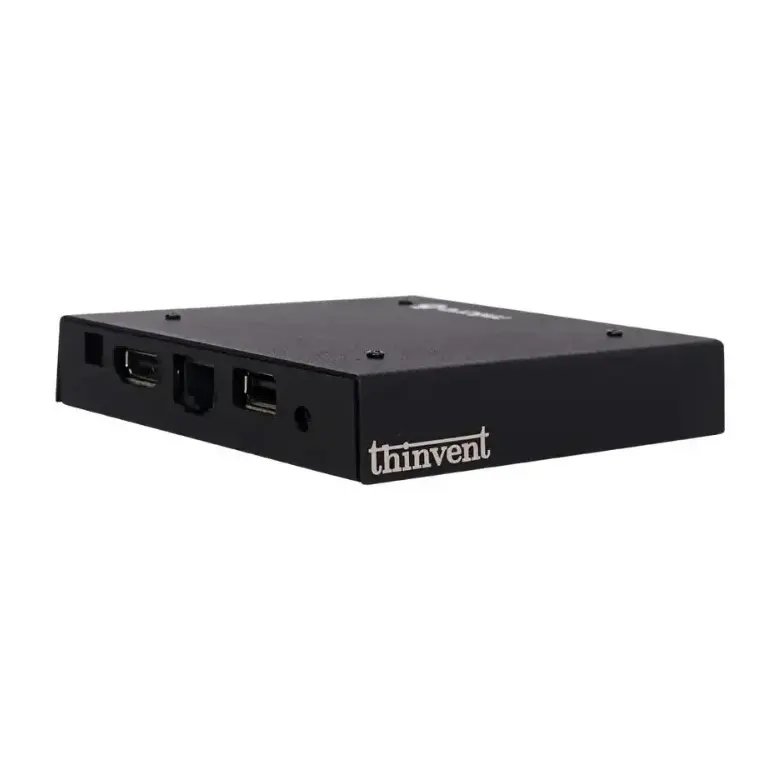
What is a Zero Client OS?
A Zero Client OS is a specialized, lightweight operating system designed for thin client and mini PC hardware. Unlike traditional desktop operating systems, it is a minimal, locked-down environment that typically provides only the essential functions needed to connect to a central server or cloud desktop, such as a Virtual Desktop Infrastructure (VDI) or Desktop-as-a-Service (DaaS) solution. The core principle is "zero" local management—the OS does not store user data, applications, or complex configurations locally, which drastically reduces the attack surface and simplifies IT administration.
Key Specifications and Technical Details
Zero Client OS solutions are characterized by their minimal hardware requirements and efficient software architecture. They are often built on embedded Linux kernels (like Thinux™) or other real-time operating systems. Key technical aspects include:
-
Minimal Local Storage: Uses small, reliable eMMC or SSD storage (e.g., 16GB-64GB) primarily for the OS itself.
-
Efficient Processing: Utilizes low-power ARM processors (like Cortex A53/A55) or efficient Intel processors (like the N100 series) capable of handling display protocols and network traffic without performance bottlenecks.
-
Limited Local Resources: Configured with modest RAM (2GB-8GB is common) as most processing occurs on the server.
-
Secure Boot & Locked-Down Environment: The OS is often read-only or heavily restricted to prevent unauthorized software installation or configuration changes.
-
Protocol Support: Built-in support for high-performance remote display protocols like PCoIP, Blast Extreme, Citrix HDX, and Microsoft RDP.
Use Cases and Applications
Zero Client OS platforms are ideal for environments demanding high security, centralized management, and low total cost of ownership.
-
Healthcare (Hospitals & Clinics): Provides secure access to Electronic Health Records (EHR) systems from any station, ensuring patient data remains on secure servers and compliance with regulations like HIPAA is easier to maintain.
-
Financial Services & Banking: Used in teller stations, back-office operations, and trading floors to prevent data leakage, ensure consistent application delivery, and streamline software updates across hundreds of endpoints.
-
Education (Computer Labs & Classrooms): Allows students to access personalized virtual desktops from any device, with all software managed centrally by IT. Resets to a clean state after each session.
-
Call Centers & Task Workers: Deploys a standardized, reliable workspace for agents, with all critical applications hosted centrally for maximum uptime and quick deployment of new agents.
-
Industrial & Manufacturing: Provides a rugged, fanless endpoint for shop floor systems (MES, SCADA) where environmental durability and security are paramount.
Comparison: Zero Client OS vs. Traditional Thin Client OS
| Feature | Zero Client OS | Traditional Thin Client OS (e.g., Full Linux/Windows IoT) |
|---|---|---|
| Local Processing | Minimal; only for connection protocol | Moderate; can run some local apps |
| Local Storage & Data | None or very limited; no user data stored | Some; can cache data or store user profiles |
| Security Posture | Very High; immutable, locked-down image | High; but requires more active management |
| IT Management | Extremely Simple; "set and forget" image management | Managed; may require patches and updates |
| Hardware Requirements | Very Low (ARM/low-power x86, 2-4GB RAM) | Low to Moderate (x86, 4-8GB+ RAM) |
| Best For | High-security VDI, task workers, kiosks | Flexible digital workspaces, mixed workloads |
Thinvent Products Featuring Zero Client OS Solutions
Thinvent offers a range of industrial and commercial hardware perfectly paired with Zero Client OS solutions like our proprietary Thinux™ Embedded Linux. Our devices provide the reliable, low-power, and secure foundation required for zero-client deployments.
-
Thinvent Micro Series (ARM-based): The Micro 5 Wifi and Micro 6 Pro are ideal entry points. With their fanless ARM Cortex designs, 2GB-4GB RAM, and compact form factors, they deliver exceptional energy efficiency and reliability for large-scale VDI deployments in offices, schools, and healthcare.
-
Thinvent Treo & IPC Series (Intel-based): For environments requiring x86 compatibility or slightly more local processing headroom, the Treo Mini PC and Industrial PC IPC1/IPC3 with Intel N100 or Core i3 processors are excellent choices. They offer robust performance within a locked-down Thinux™ or Ubuntu Linux